
 Morning Standard News Team
Commissioner Ariel F. Nepomuceno is once again proving that the Bureau of Customs (BOC) is no longer the “sleeping giant” of law enforcement it once was—but a relentless force for accountability.
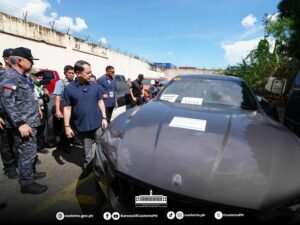
This week, the BOC under Nepomuceno’s watch made another strong statement in the fight against smuggling and corruption. Thirteen (13) luxury vehicles—linked to the controversial Discaya family and their construction firm—are now in Customs custody following the issuance of a Warrant of Seizure and Detention (WSD) by Port of Manila District Collector Alexander Gerard E. Alviar.
These are not ordinary vehicles. We’re talking about Rolls-Royce, Bentley, Lincoln Navigator, Cadillac Escalade, and other high-end brands—symbols of extreme wealth that are now under investigation for customs violations.
What stands out in this case is not just the seizure itself, but the swiftness and decisiveness of Nepomuceno’s leadership. The Commissioner has made it clear that under his administration, no violator—no matter how rich, powerful, or connected—will be spared when it comes to enforcing customs laws.
A Leader Who Means Business
Nepomuceno’s message to smugglers and tax evaders is crystal clear: the BOC will not look the other way. His order to intensify the crackdown on smuggling echoes President Ferdinand R. Marcos Jr.’s directive to uphold integrity in public service and safeguard government revenues.
By confirming irregularities in the importation and documentation of the vehicles—some with fraudulent Certificates of Payment (CPs) and others with no import entries at all—the BOC demonstrated not just vigilance, but a commitment to due process and accountability.
Nepomuceno himself emphasized that their job doesn’t stop at seizures:
“We want the public to know that we are serious about the responsibilities entrusted to us—not only in our routine operations but also in pursuing actions that will help resolve longstanding anomalies which continue to burden our people,”
He said.

This kind of leadership—one that marries discipline with transparency—is precisely what the Bureau of Customs needs to shed its old image and restore public trust.
Beyond the Headlines
It’s important to recognize that these actions aren’t mere public relations stunts. The issuance of the WSD marks only the beginning of deeper measures—forfeiture proceedings and transaction audits by the Post-Clearance Audit Group (PCAG) are already in motion.
Nepomuceno’s strategy is simple yet effective: attack smuggling on all fronts—from the point of entry to post-clearance accountability.
And in the larger context, this move also aligns with the ongoing Senate Blue Ribbon investigation into the alleged anomalous flood control projects tied to the Discaya family. The Customs’ active cooperation with the probe signals a refreshing change in the agency’s posture—from passive observer to proactive enforcer.
A Defining Moment
Commissioner Ariel Nepomuceno’s brand of leadership is reshaping the Bureau of Customs into an agency that acts with integrity, enforces the law with courage, and prioritizes public interest over political convenience.
The seizure of the 13 Discaya-linked luxury cars is not just about vehicles—it’s about restoring credibility to one of the country’s most crucial institutions.
In this fight against smuggling and corruption, one thing is clear:
Nepomuceno is not here to play politics. He’s here to clean house.

 Dr. Bernie Anabo Jr