
 Dr. Bernie R. Anabo Jr.
 Questions of qualification, alleged padrino politics, and whispers of a “positions-for-sale” racket must not be swept under the rug.
The Bureau of Customs (BOC) is supposed to be an institution where competence, integrity, experience, and merit determine who gets promoted—not connections, backroom favors, or the blessing of powerful personalities.
But disturbing allegations are now raising questions about the integrity of the promotion system inside the Bureau.
Are promotions being earned—or allegedly handed out through connections?
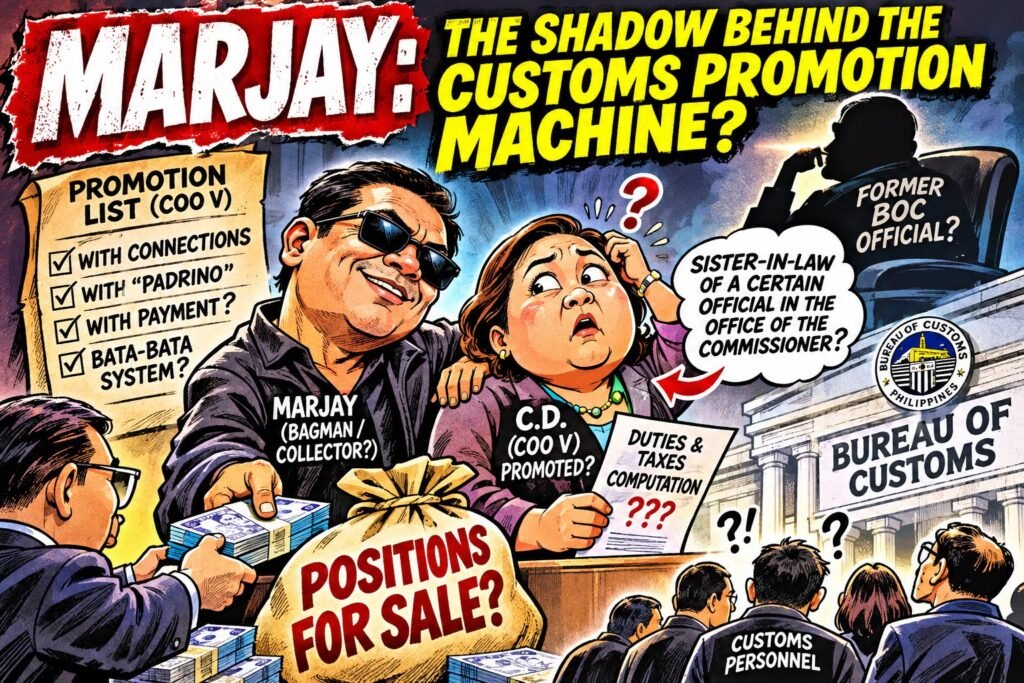
Whispers have surfaced about several personnel promoted to COO V positions despite questions being raised about their qualifications, technical competence, and readiness to assume higher responsibilities. One particular individual, identified only as S.D., is being questioned over alleged gaps in technical knowledge, including the computation of duties and taxes—fundamental functions in Customs operations.
If these allegations are true, the issue is bigger than one promotion. It strikes at the heart of the Bureau’s credibility.
How can Customs demand professionalism from its personnel if the promotion system itself is being questioned?
BATA-BATA SYSTEM: MERIT OR CONNECTIONS?
There are allegations that S.D.’s promotion may have been facilitated by connections to influential personalities—a classic example of what insiders describe as the bata-bata system.
Rumors have also circulated about a possible family connection to an official in the Office of the Commissioner. These claims remain unverified and deserve proper scrutiny, not automatic acceptance.
But the questions are legitimate:
Were the qualifications thoroughly evaluated? Was the promotion based on actual competence? Were other qualified personnel bypassed?
Customs personnel who have spent years mastering tariff classification, valuation, assessment, and revenue collection deserve a promotion system that rewards hard work—not proximity to power.
THE ALLEGED MONEY TRAIL—WHO IS COLLECTING?
Even more explosive are allegations circulating within Customs about a supposed “positions-for-sale” scheme during the tenure of a former official.
The allegations point to a certain Marjay, reportedly described by some insiders as a close associate or right-hand man of an official, who allegedly acts as a go-between in transactions involving money and appointments.
There are whispers that this individual may have served as a collector or bagman in an alleged scheme involving payments connected to positions inside the Bureau.
These are serious accusations. No one should be condemned on rumor alone. But neither should allegations involving possible corruption, influence-peddling, or the selling of government positions be dismissed without investigation.
If money was allegedly exchanged for appointments, who paid? Who received? Who arranged the transactions? And who protected the operation?
The public deserves answers—not silence, not stonewalling, and certainly not a cover-up.
MARJAY: A NAME THAT DEMANDS ANSWERS?
If Marjay’s name is being repeatedly mentioned in conversations about alleged transactions involving positions, then the proper authorities should determine whether these claims have factual basis.
Was Marjay merely an intermediary? Was there an actual collection of money? Were appointments allegedly negotiated behind closed doors? Were powerful officials involved—or are their names being irresponsibly dragged into rumors?
These questions cannot be settled through gossip. They must be answered through evidence, financial records, sworn statements, communications, and an impartial investigation.
CUSTOMS IS NOT A PRIVATE KINGDOM!
The Bureau of Customs is a government institution—not a private recruitment agency, not a personal fiefdom, and certainly not a marketplace for government positions.
Promotions must be earned. Appointments must be defensible. Officials must be accountable.
If the alleged selling of positions is nothing more than rumor, those being accused deserve an opportunity to clear their names.
But if evidence points to an organized scheme involving money, influence, and manipulation of appointments, then heads must roll—regardless of rank, connections, or political protection.
The Commissioner should not allow these allegations to linger like poison inside the Bureau.
THE BOTTOM LINE
Customs needs qualified people—not questionable promotions. It needs integrity—not alleged fixers. It needs a transparent system—not whispers of money changing hands for government positions.
Who is Marjay? Who are the alleged beneficiaries? Who supposedly collected the money? And is there a hidden network manipulating promotions inside the Bureau?
These are questions that demand answers.
Because if positions in Customs are allegedly being treated as commodities for sale, then the real casualty is not merely the promotion system.
IT IS THE INTEGRITY OF THE ENTIRE BUREAU.
An investigation—not intimidation, not silence, and not political protection—is the only way to establish the truth.