
BOC CHIEF DELIVERS BOLD REFORM TO CUT RED TAPE, SPEED UP CARGO RELEASE AND LOWER COST OF DOING BUSINESS
 Dr. Bernie R. Anabo Jr. Jimmy Saberon
RED TAPE, MOVE ASIDE!
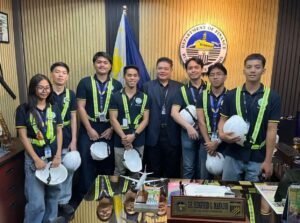
Bureau of Customs (BOC) Commissioner Atty. Charlito Martin R. Mendoza is turning his promise of customs modernization into concrete action, delivering another major reform aimed at dismantling unnecessary bureaucratic barriers, accelerating cargo clearance, and reducing the cost of doing business in the Philippines.
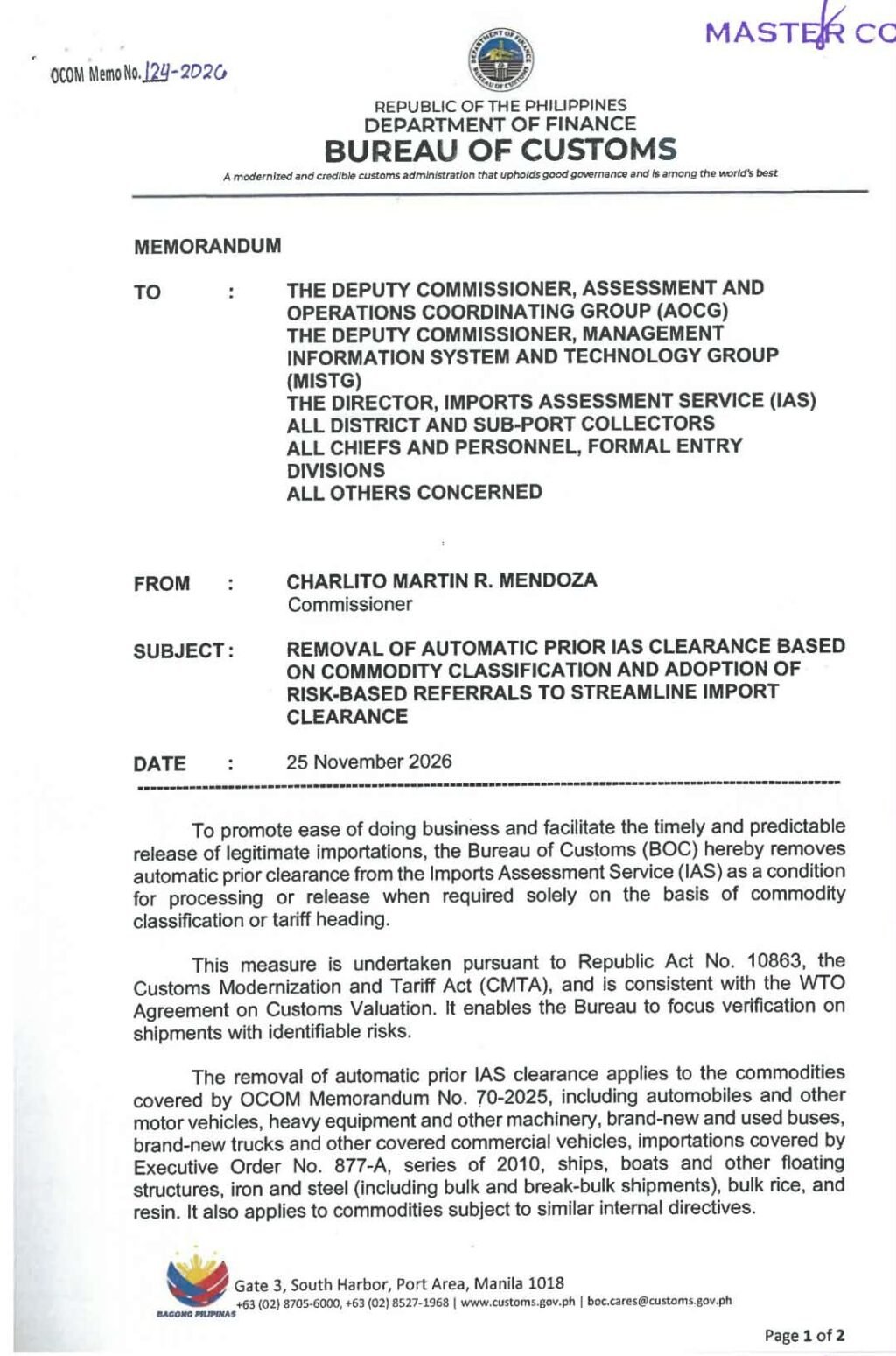
In a decisive move against needless delays, Mendoza has ordered the removal of the mandatory prior clearance from the Imports Assessment Service (IAS) when such approval is required solely because of a commodity’s classification or tariff heading.
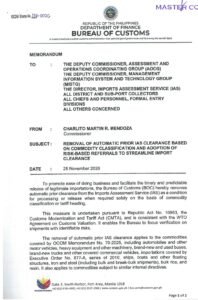
Under OCOM Memorandum Order No. 124-2026, issued on November 25, 2026, the BOC chief is eliminating an additional layer of approval that could delay legitimate import shipments and burden importers with unnecessary processing requirements.
THE BIG WIN: UP TO THREE DAYS SAVED!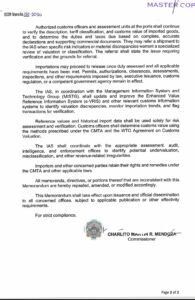
Mendoza underscored that the reform could cut cargo processing time by as much as three days—a significant breakthrough for importers, businesses, manufacturers, and other stakeholders who have long been seeking faster and more efficient customs transactions.
“Our goal is to bring down the cost of doing business in the country,” Mendoza declared, emphasizing that faster processing means quicker movement of goods and lower logistics expenses.
This is more than just a procedural adjustment. It is a direct assault on unnecessary bureaucracy that slows down trade, increases business expenses, and undermines the country’s competitiveness.
Among the commodities covered by the new directive are automobiles and other motor vehicles, heavy equipment, machinery, brand-new and used buses, brand-new trucks and covered commercial vehicles, ships and other floating structures, iron and steel shipments, bulk rice, and resin, among others.
NO MORE AUTOMATIC REFERRALS—BUT NO FREE PASS FOR VIOLATORS!
Mendoza made it clear that streamlining customs procedures does not mean weakening border protection or sacrificing government revenue.
Customs officers will continue to examine the description, tariff classification, and declared customs value of imported goods to determine the correct duties and taxes.
Referrals to the IAS will now be made when specific risk indicators or material discrepancies justify specialized review—not simply because a shipment falls under a particular tariff heading.
Every referral must also have documented grounds.
In short, legitimate shipments get faster processing, while questionable transactions remain subject to closer scrutiny.
“We continue to move toward a more risk-based approach to customs assessment,” Mendoza stressed, signaling a stronger and smarter system that prioritizes genuine risks instead of burdening every importer with unnecessary layers of approval.
TECHNOLOGY VS. UNDERVALUATION AND REVENUE LEAKAGE
But Mendoza’s reform does not stop at faster cargo releases.
He is also strengthening the BOC’s digital monitoring capabilities through improvements to the Enhanced Value Reference Information System (e-VRIS), in coordination with the Management Information System and Technology Group (MISTG).
The system will help identify valuation discrepancies, monitor importation trends, and flag suspicious transactions for verification.
Importantly, Mendoza clarified that reference values and historical importation data will serve only as risk-assessment and verification tools—not as substitute or minimum customs values.
Customs valuation will continue to follow Republic Act No. 10863, or the Customs Modernization and Tariff Act (CMTA), and the World Trade Organization Agreement on Customs Valuation.
The IAS will also work closely with assessment, audit, intelligence, and enforcement offices to detect possible undervaluation, misclassification, and other revenue-related irregularities.
Transactions requiring further investigation may be subjected to post-clearance audit, reassessment, collection of lawful deficiencies, or appropriate enforcement action.
FASTER TRADE, STRONGER COLLECTIONS, SMARTER CUSTOMS!
The message behind Mendoza’s latest directive is unmistakable: the Bureau of Customs must no longer confuse excessive paperwork with effective regulation.
The new direction is clear—remove unnecessary procedures, embrace technology, strengthen risk assessment, protect government revenues, and deliver faster services to legitimate stakeholders.
All legally required permits, clearances, inspections, and regulatory requirements remain in force. The reform simply removes an additional internal approval requirement when it is no longer justified by a specific risk.
Mendoza is aligning the BOC with President Ferdinand R. Marcos Jr.’s and Finance Secretary Frederick D. Go’s push to make the Philippines a more business-friendly and competitive investment destination.
As the Commissioner put it, the Bureau will continue reviewing its processes, removing requirements that no longer serve their purpose, and introducing improvements that stakeholders can actually feel.
UNDER MENDOZA, CUSTOMS REFORM MEANS ACTION—not just promises.
For importers and businesses, three days saved could mean millions in avoided delays and logistics expenses. For the government, smarter assessment and targeted enforcement mean better protection of revenues.
And for the country, it sends a powerful message: Philippine Customs is moving toward a system where efficiency and accountability go hand in hand.
Mendoza is making his point loud and clear: CUT THE RED TAPE. SPEED UP LEGITIMATE TRADE. CRACK DOWN ON IRREGULARITIES. PROTECT GOVERNMENT REVENUES.
That is the kind of customs reform that delivers!