 Bernie Anabo Jr.
When regulators talk, smugglers listen—and at the Manila International Container Port (MICP), the message was loud and unmistakable.
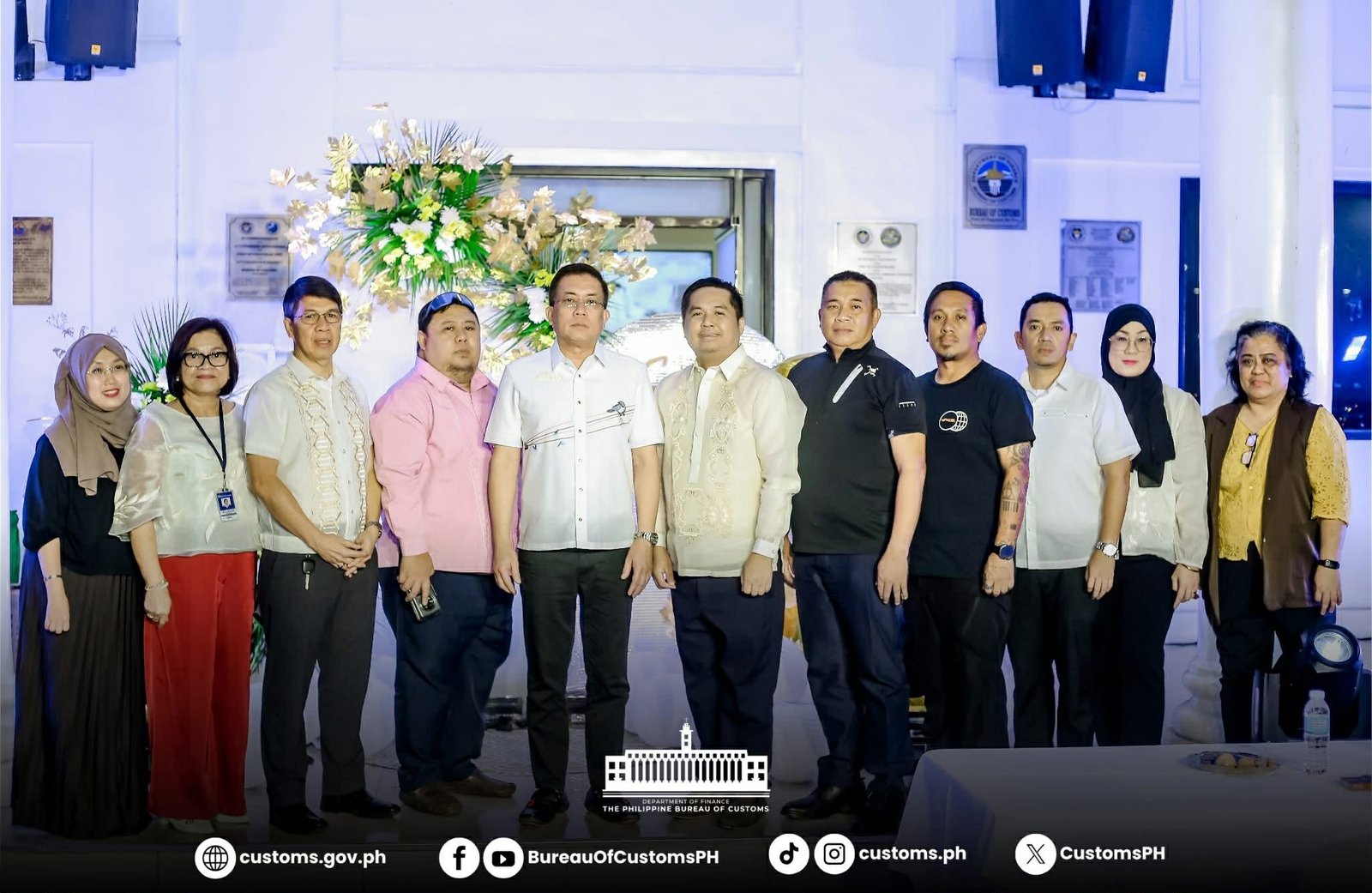
On January 7, 2026, BOC–MICP District Collector Atty. Felipe Geoffrey K. De Vera IV received BFAR-NCR Regional Director Noemi SB. Lanzuela and her senior officers for a courtesy call that quickly turned into something far more consequential: a strategic alignment aimed at tightening control over fishery imports and exports passing through the country’s busiest port.
This wasn’t a photo-op. It was a clear signal that Customs and fisheries regulators are closing ranks.
At the center of the discussion was information sharing, regulatory alignment, and faster—but stricter—procedures on inspection, clearance, and enforcement. In plain terms: less room for loopholes, more pressure on violators.
For Atty. De Vera, the message was direct and unapologetic. Close coordination with regulated agencies is no longer optional—it’s essential. With fishery products among the most abused commodities in smuggling and misdeclaration schemes, the MICP chief made it clear that compliance with fisheries and aquatic resources laws will be non-negotiable.
Under De Vera’s watch, MICP has been pushing a brand of Customs leadership that balances speed with scrutiny. Legitimate traders move faster. Rule-breakers hit a wall.

The presence of BFAR-NCR at the table strengthens Customs’ enforcement backbone, ensuring that imported and exported fishery products are properly declared, correctly documented, and lawfully cleared—not sneaked through by technicalities or weak coordination. It also reinforces the government’s commitment to protect local industries, food safety, and marine resources from abuse.
Insiders say this growing inter-agency synergy at MICP reflects a bigger shift inside the Bureau of Customs—one where district collectors are no longer operating in silos, but acting as frontline commanders in the government’s fight against smuggling and regulatory evasion.
For Atty. Geoffrey De Vera, the equation is simple: efficient ports demand disciplined enforcement, and disciplined enforcement requires agencies to move as one.
As the country’s main gateway for containerized trade, MICP remains under intense scrutiny. But if this meeting is any indication, the walls are closing in on violators—and Customs, under De Vera’s firm hand, is making sure the rules are enforced without fear or favor.
In today’s ports, cooperation is power.
And at MICP, power is clearly being exercised.