 Jimmy Saberon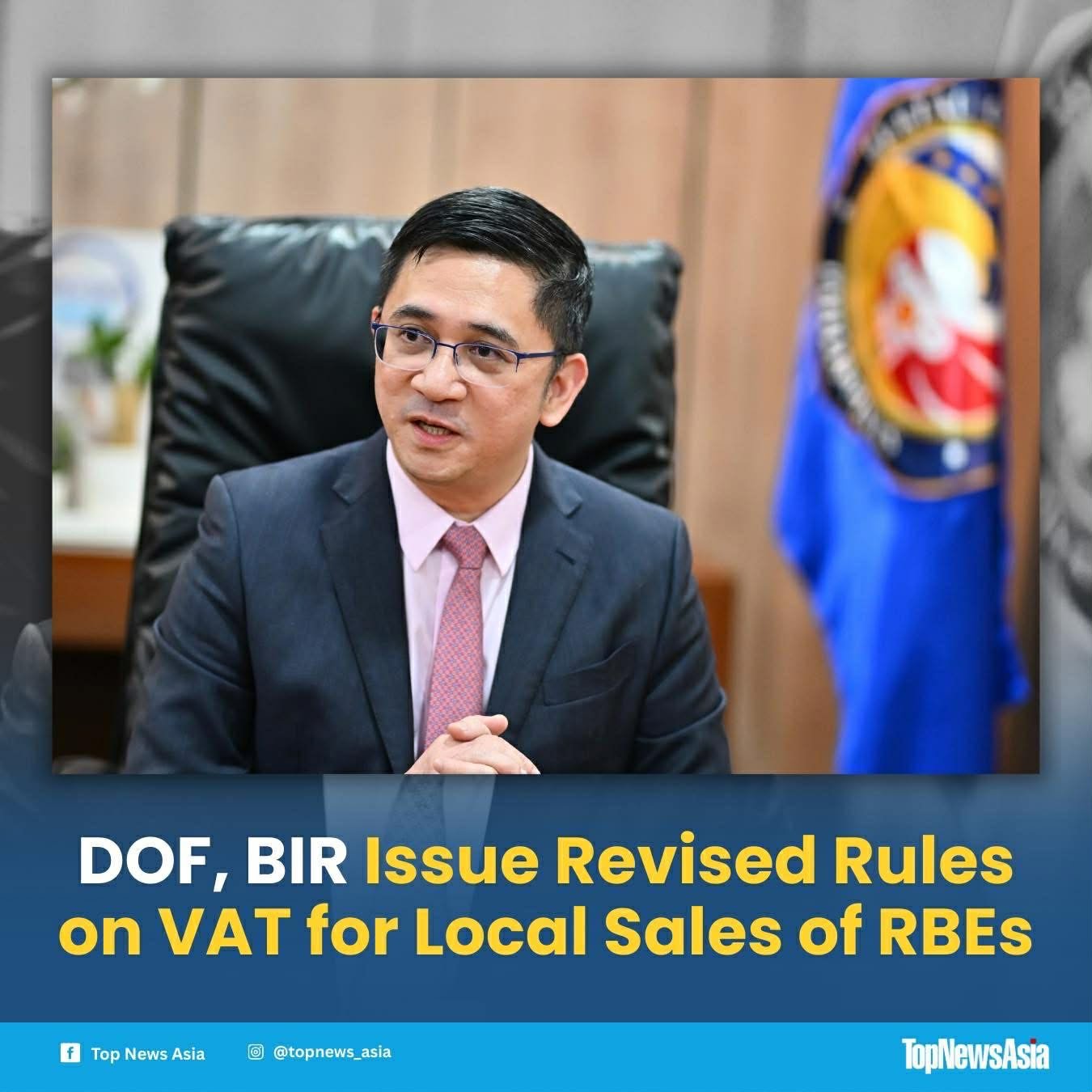
Mendoza: Clearer guidelines to protect incentives, ensure a fair tax system
MANILA, Philippines — The Department of Finance (DOF) and the Bureau of Internal Revenue (BIR) have issued revised rules clarifying the imposition of value-added tax (VAT) on local sales of Registered Business Enterprises (RBEs), seeking to address stakeholder concerns and ensure consistent implementation of the CREATE MORE Act.
Revenue Regulations (RR) No. 1-2026, released by the BIR, amends RR No. 9-2025 and provides updated guidelines on Section 295(D) of the National Internal Revenue Code, as amended by Republic Act No. 12066.
The regulation outlines how VAT applies to local sales transactions involving RBEs, particularly those operating within economic zones and freeports.
Under the revised rules, VAT filing and payment for business-to-business (B2B) transactions must generally be made on a per-transaction basis. However, buyers handling bulk shipments covered by multiple invoices may opt to make a single consolidated payment using BIR Form No. 0605, provided they present the necessary supporting documents to the Bureau of Customs before goods are released.
The regulation also allows RBEs registered under the 5 percent Special Corporate Income Tax (SCIT) or Gross Income Earned (GIE) regime to register for VAT exclusively for their local sales activities. The BIR clarified that this option will not affect their existing fiscal and non-fiscal incentives, including VAT zero-rating on local purchases and VAT exemption on importations related to registered activities.
To address potential adverse tax consequences, particularly for Domestic Market Enterprises (DMEs) that cannot recover input VAT, the new rules exclude certain enterprises and transactions from VAT coverage on local sales.
Excluded from VAT coverage are VAT-registered DMEs not entitled to zero-rating or import exemption, transactions already subject to VAT zero-rating or exemption under the Tax Code, entities registered under special laws but not availing of incentives under Title XIII, and local sales linked to non-registered business activities.
For these excluded transactions, the RBE-seller is required to file and remit the corresponding VAT directly to the BIR.
The regulation further extends until December 31, 2026, the deadline for RBEs to reconfigure their invoicing systems to reflect the term “VAT on Local Sales” in system-generated breakdowns.
BIR Commissioner Atty. Charito Martin S. Mendoza said the issuance of RR No. 1-2026 forms part of the agency’s D.A.R.E.S. initiative, which focuses on digitalization, improved taxpayer assistance, responsive regulations, enhanced enforcement, and strengthened stakeholder engagement.
“We are committed to providing clearer, more responsive tax regulations that protect legitimate incentives while ensuring fairness and transparency in the tax system,” Mendoza said.
She emphasized that the updated rules are designed to give businesses certainty in compliance while supporting the government’s broader objective of sustaining investment growth under the CREATE MORE framework.
The DOF and BIR said the revised regulation balances revenue protection with the need to maintain a competitive and investment-friendly environment, especially within economic zones and freeports.
With the clarifications now in place, tax authorities expect smoother implementation of VAT rules affecting RBEs and their domestic transactions moving forward.