 Bernie Anabo Jr.
If there is one message coming out loud and clear from the Port of Manila, it is this: no excuses, no loose ends, and no room for complacency.
District Collector Rizalino Jose “RJ” C. Torralba is turning the screws tighter at one of the country’s most critical gateways.
During the August 11 Division Heads Meeting, Torralba brought together Deputy Collectors, Subport Collectors, Division Chiefs and Support Unit Heads—not for a ceremonial gathering, but for a serious operational check-up.
The agenda was blunt: collection performance, target distribution, port operations and compliance with directives from BOC Commissioner Ariel F. Nepomuceno.
And Torralba made the position unmistakably clear: Commissioner’s directives are not suggestions. They are orders to be implemented—promptly, properly and without hesitation.
That kind of command-and-control approach is exactly what a major revenue-generating port needs.
TORRALBA: NO ROOM FOR COMPLACENCY
The Port of Manila cannot afford bureaucratic drift.
Every day of delay, every unresolved operational concern and every failure to execute a directive can have consequences—not only for revenue collection but also for the efficiency and credibility of the entire Customs operation.
 Torralba appears determined to keep every division moving in the same direction.
The message to his people is simple:
Know your target. Know your responsibility. Do your job.
That is the kind of accountability that should be demanded from every major government revenue office.
RICARTE: THE NUMBERS MATTER
Behind the collection machinery is Deputy Collector for Assessment Florante Ricarte, whose division carries a critical responsibility in ensuring that proper assessment translates into proper revenue.
Assessment is where the numbers begin—and where accuracy, vigilance and adherence to Customs rules can make the difference.
Under Torralba’s watch, Ricarte and the Assessment team are being pushed to remain focused not merely on hitting figures, but on maintaining the integrity of the collection process.
Revenue targets are not decorations on a report. They are commitments to the Filipino taxpayer.
TURIANO: OPERATIONS MUST MOVE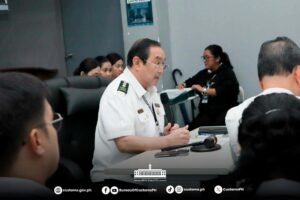
Then there is Deputy Collector for Operations Atty. Gerard Turiano, tasked with keeping the operational side of the Port moving.
Because collection performance means little if operations become sluggish, fragmented or disconnected.
Turiano’s role is crucial in translating policy into action on the ground—making sure that operational concerns are addressed and that the various units work as one machine.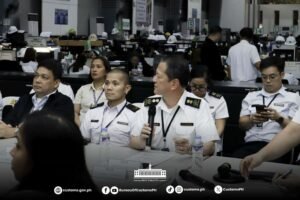
And under Torralba’s leadership, that machine is being expected to perform.
ONE PORT. ONE DIRECTION.
The bigger picture is clear.
Commissioner Nepomuceno’s Integrity, Accountability and Modernization agenda demands more than slogans. It requires collectors and division heads to execute.
At the Port of Manila, Torralba is making it clear that the chain of command must work.
No selective compliance. No waiting game. No passing the buck.
The Port of Manila is too important to operate on autopilot.
With Torralba at the helm, backed by Ricarte on assessment and Turiano on operations, the message from POM is becoming increasingly hard to ignore:
Revenue must be collected. Operations must move. Directives must be followed. And accountability must have teeth.
For the Port of Manila, business is not simply moving.
It is being pushed—hard.