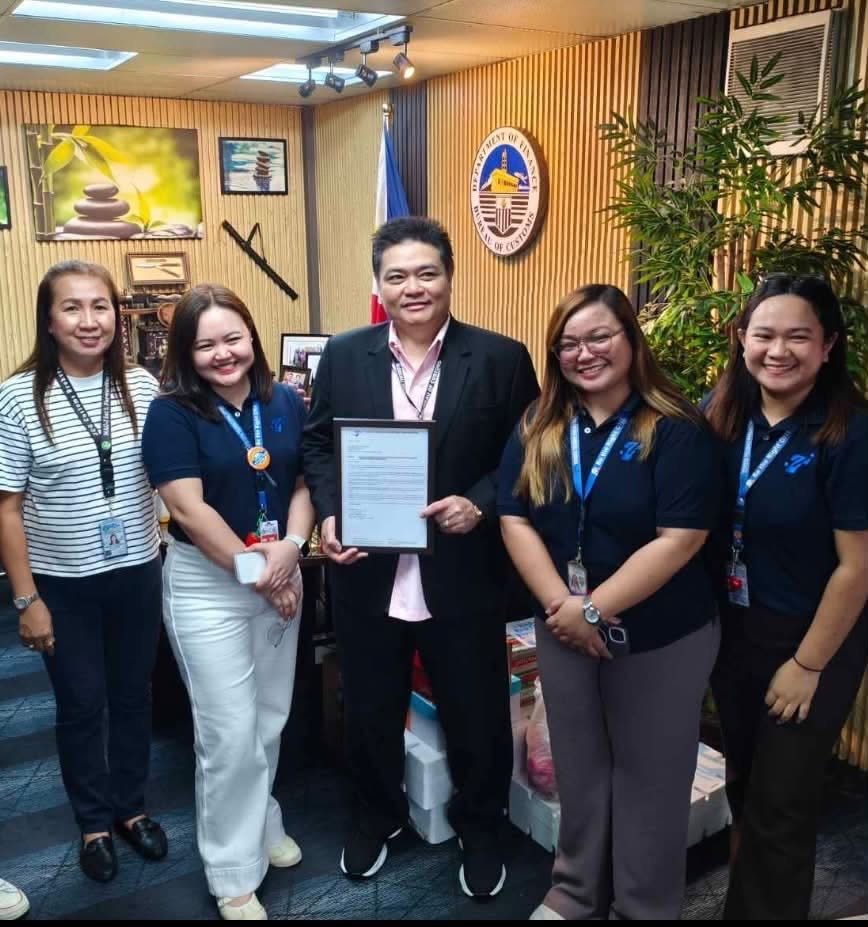
 Morning Standard News Team
A wedding dress box turned into a drug mule?
Nice try.
But smugglers who thought they could outsmart the Bureau of Customs–Port of Clark just got a brutal reality check.
Hidden not in the wedding gown—but inside the cardboard walls of the carton itself—was approximately 1.573 kilograms of suspected shabu worth ₱10.696 million.
And standing squarely in the middle of this latest anti-drug interception is Port of Clark District Collector Jairus S. Reyes, whose command is showing that when Customs profiling, technology and physical examination work together, even the cleverest concealment scheme can be cracked wide open.
THE WEDDING DRESS WAS CLEAN. THE BOX WASN’T!
The shipment came from Mexico City, Mexico, bound for Mandaluyong City, and was innocently declared as simply “Wedding Dress.”
At first glance, everything appeared normal.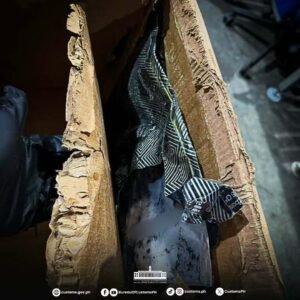
The white gown was inspected. Its ruffles were checked. Nothing suspicious was found in the garment.
But the X-ray machine was telling a different story.
Acting on derogatory information, Customs personnel subjected the shipment to X-ray scanning through the X-ray Inspection Project (XIP).
The images raised red flags.
Then came the clincher:
The carton was unusually heavy.
That was enough for the Customs examiner to dig deeper.
Not satisfied with merely inspecting the contents, the examiner went after the packaging itself.
And bingo!
When the cardboard carton was dismantled, authorities uncovered four transparent plastic pouches hidden inside its sidewalls, containing a white crystalline substance suspected to be methamphetamine hydrochloride—or shabu.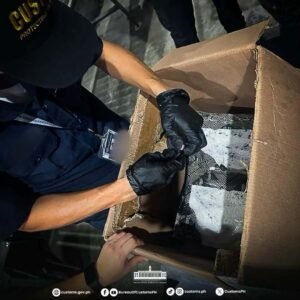
The substance weighed approximately 1,573 grams, with an estimated standard drug value of ₱10,696,400.
Initial spectrometer screening indicated the presence of methamphetamine.
The samples were subsequently turned over to PDEA Clark for laboratory analysis and confirmatory testing.
COLLECTOR REYES: NO ROOM FOR COMPLACENCY
This is where the leadership at the Port of Clark deserves the spotlight.
Collector Jairus S. Reyes has reaffirmed the Port’s commitment to strengthening profiling, examination and coordination with partner law-enforcement agencies.
And the message is unmistakable: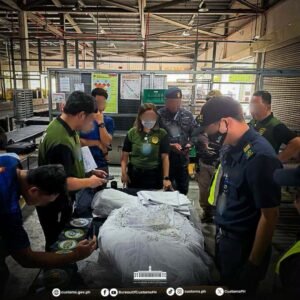
Smugglers can change their tricks. Customs must change faster.
Today, contraband may be buried in clothing.
Tomorrow, it could be hidden in toys, appliances, machinery—or, as this case dramatically demonstrates, inside the very walls of a cardboard box.
That is why technology alone is not enough.
An X-ray machine can raise the alarm.
But it still takes a sharp-eyed, persistent Customs examiner to ask the next question:
“What exactly is hiding inside this box?”
THE CARTON GAVE THEM AWAY
The smugglers apparently expected the wedding dress to become the perfect camouflage.
Wrong calculation.
The gown was clean.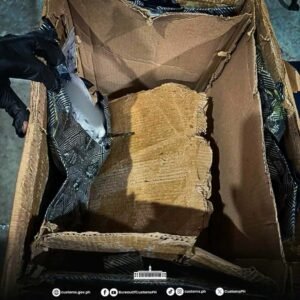
The carton was the crime scene.
That distinction matters.
It shows how sophisticated drug syndicates are becoming—and why Customs officers cannot afford routine thinking.
Commissioner Ariel F. Nepomuceno hit the nail on the head, emphasizing that smugglers are becoming increasingly ingenious and that Customs personnel must remain sharp, thorough and willing to look beyond what is immediately visible.
Under Collector Reyes, the Port of Clark is sending a clear signal:
DECLARED CARGO IS NOT A FREE PASS.
If something doesn’t add up, Customs will look again.
And again.
And again—until the truth is exposed.
₱10.696 MILLION REASON TO STAY VIGILANT
The seizure is more than another entry in the growing list of intercepted illegal drugs.
It is a warning shot to international drug traffickers attempting to penetrate Philippine borders.
A shipment can carry an innocent-sounding declaration.
It can be wrapped beautifully.
It can contain an apparently legitimate product.
But if intelligence information, X-ray images, physical characteristics and examination results point to something suspicious—
CUSTOMS WILL DIG.
And when Customs digs, smugglers can lose millions.
In this case, that means approximately ₱10.696 million worth of suspected shabu was stopped from potentially reaching the streets.
That is 1.573 kilograms of poison denied to the illegal drug market.
REYES AND THE CLARK FRONTLINE
The operation also underscores the importance of the partnership between BOC, PDEA and the Clark Inter-Agency Task Force Against Illegal Drugs.
This is what effective border protection should look like:
Intelligence. Technology. Examination. Coordination. Action.
No drama.
No shortcuts.
No looking the other way.
Just Customs doing its job—and doing it with the kind of vigilance that drug syndicates hate.
For Collector Jairus S. Reyes, the latest interception is another test of whether the Port can stay ahead of smugglers who continuously invent new ways to conceal their cargo.
The answer from Clark appears to be a resounding YES.
THE MESSAGE TO SMUGGLERS
To those who think the Philippines is an easy destination for illegal drugs:
Think again.
To those who believe a wedding dress can distract Customs:
Think again.
To those who think cardboard walls are invisible:
Think again.
And to those who believe they can outsmart the Port of Clark:
Collector Jairus Reyes and his men are looking behind the walls.
Because in Clark, the lesson is now brutally simple:
THE DRESS MAY BE WHITE.
THE BOX MAY LOOK CLEAN.
BUT IF THE X-RAY SAYS SOMETHING IS WRONG—
CUSTOMS WILL TEAR THE BOX APART.
And this time, what came tumbling out was ₱10.696 MILLION WORTH OF SUSPECTED SHABU.
One shipment stopped. One syndicate frustrated. And another warning delivered to the smugglers:
CLARK IS WATCHING.


 Bernie Anabo Jr.