
 Bernie Anabo Jr.

Drug smugglers, take note: THE GATES ARE NOT WIDE OPEN, AND THE BUREAU OF CUSTOMS IS NOT SLEEPING!
In another major blow against the country’s illegal drug trade, the Bureau of Customs (BOC), in a high-impact operation with the Department of the Interior and Local Government (DILG), Philippine Drug Enforcement Agency (PDEA), and Philippine National Police (PNP), intercepted approximately 200 kilograms of suspected shabu worth a staggering ₱1.36 BILLION at the Manila International Container Port (MICP).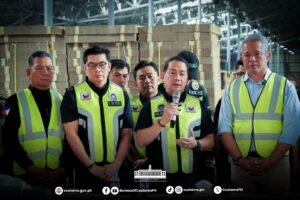
This was no ordinary shipment. It was a massive attempt to sneak dangerous drugs into the country, cleverly concealed among stacks of cartons inside a 40-foot shipping container.
But the smugglers’ elaborate scheme hit a wall.
And two Customs officials deserve particular recognition for this significant operational victory: Customs Commissioner Ariel F. Nepomuceno and MICP District Collector Atty. Felipe Geoffrey K. De Vera IV.
Their message to drug syndicates is unmistakable: THE PORTS ARE NOT YOUR PLAYGROUND!
GEOFF DE VERA: NO ROOM FOR DRUG SMUGGLERS AT MICP!
Under the leadership of District Collector Atty. Geoff De Vera, the MICP once again demonstrated why vigilance, intelligence coordination, and aggressive cargo examination are indispensable weapons against organized smuggling.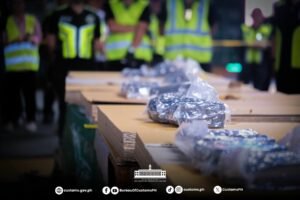
The interception did not happen by accident. It was the result of intelligence sharing, careful monitoring, X-ray scanning, and subsequent physical inspection that exposed the suspicious shipment.
Fifty boxes containing four packages each were discovered, with the seized substances initially testing positive for methamphetamine hydrochloride, commonly known as shabu.
That is 200 packages of suspected illegal drugs that could have found their way into Filipino communities had authorities failed to act.
Credit where credit is due: De Vera and his MICP personnel deserve recognition for helping ensure that the suspicious shipment did not simply pass through the country’s principal maritime gateway unnoticed.
The challenge now is to sustain that level of vigilance.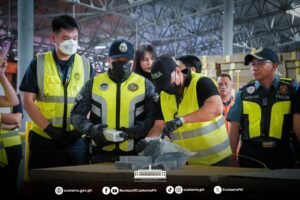
A port as critical as MICP cannot afford complacency. Every container must be treated with the seriousness it deserves, every suspicious declaration must be examined, and every intelligence lead must be acted upon.
For Geoff De Vera, the ₱1.36-billion interception is a powerful reminder that effective port leadership is measured not only by revenue collections but also by the ability to protect the country from criminal networks exploiting international trade.
NEPOMUCENO: CUSTOMS IS MORE THAN A REVENUE-COLLECTING AGENCY!
Commissioner Ariel Nepomuceno also deserves a major thumbs-up for reinforcing the BOC’s role as a frontline defender of national security.
His presence during the inspection sent a strong message that the fight against drug smuggling is not merely an operational concern left to individual ports. It is a national responsibility requiring decisive leadership from the highest levels of Customs.
Nepomuceno made it clear that the Bureau’s mandate goes beyond collecting government revenues.
Customs must also work hand in hand with the PNP, NBI, PDEA, and other law enforcement agencies to prevent illegal drugs from entering the country.
That is precisely the kind of leadership the public expects: firm, visible, accountable, and uncompromising against criminal activities.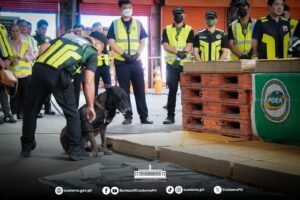
Under his administration, the BOC must continue strengthening intelligence operations, tightening border controls, and improving coordination with domestic and international counterparts.
The objective is simple: intercept illegal drugs at the border before they destroy Filipino families and communities.
INTERNATIONAL INTELLIGENCE, LOCAL ACTION!
The operation also exposed the international dimension of the suspected drug shipment.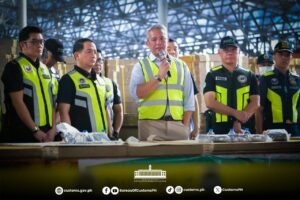
According to PDEA Assistant Secretary Renato Gumban, intelligence information originated from Vietnam’s Anti-Narcotics Police Department.
The shipment reportedly originated in Lao PDR, passed through Haiphong, Vietnam, and was subsequently routed through Hong Kong before heading to the Philippines.
The information was relayed to PDEA, whose Intelligence Service coordinated with the BOC Customs Intelligence and Investigation Service.
That intelligence allowed Customs authorities to monitor the shipment even before its arrival in the country.
The container underwent X-ray scanning, followed by physical examination, leading to the discovery of the suspected shabu.
DILG Secretary Jonvic Remulla emphasized that the operation demonstrated the importance of international intelligence-sharing and inter-agency cooperation.
PNP Lieutenant General Neri Vincent Ignacio, meanwhile, assured continued cooperation with the BOC and PDEA as investigators work to identify the consignee and trace the shipment’s intended recipients.
But the investigation must not stop there.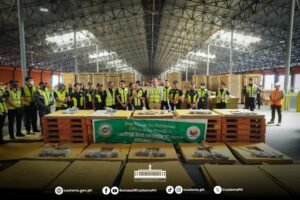
Who ordered the shipment? Who financed it? Who was supposed to receive it? And who are the individuals and networks operating behind this multimillion-peso criminal enterprise?
These are questions that demand answers.
₱11.294 BILLION IN DRUG INTERDICTIONS: CUSTOMS MEANS BUSINESS!
The latest MICP operation adds to the BOC’s broader anti-narcotics campaign.
Based on the consolidated figures for 2025 and 2026, the Bureau recorded 520 anti-illegal drug operations involving approximately ₱11.294 billion worth of seizures.
It also filed seven drug-related cases against 10 individuals during the same period, while 10 accused were convicted in two drug-related cases.
These figures underscore the magnitude of the challenge facing Customs and its law enforcement partners.
But seizures alone cannot define victory.
The real measure of success is whether authorities can dismantle the criminal networks, identify their financiers, prosecute those responsible, and prevent the same syndicates from exploiting another shipment or another port.
THE MESSAGE IS LOUD AND CLEAR: NO SAFE PASSAGE FOR DRUG SYNDICATES!
The ₱1.36-billion MICP seizure is more than a headline-grabbing accomplishment. It is a warning to international drug traffickers that the Philippines is not an easy entry point for their deadly merchandise.
For Commissioner Nepomuceno, the mission must remain relentless.
For District Collector Geoff De Vera, the responsibility is equally enormous: keep MICP alert, strengthen cargo surveillance, and make sure that no suspicious shipment escapes proper scrutiny.
The public deserves nothing less.
The battle against illegal drugs cannot be won through speeches, press conferences, or impressive statistics alone. It requires sustained operations, credible intelligence, uncompromising enforcement, and accountability at every level.
Nepomuceno and De Vera have another significant accomplishment to show for their efforts.
BUT THE JOB IS FAR FROM OVER!
One shipment intercepted is a victory. An entire drug-smuggling network dismantled is a bigger victory.
And that should be the next target.
TO THE DRUG SMUGGLERS: YOUR BILLION-PESO CARGO MAY HAVE BEEN STOPPED AT MICP, BUT THE AUTHORITIES ARE NOW LOOKING FOR THE PEOPLE BEHIND IT.
The message from Customs is clear: THE PHILIPPINE PORTS ARE NOT YOUR BACK DOOR!

 Morning Standard News Team