
 Bernie Anabo Jr.
By all accounts, this is not a soft restart. This is a hard reboot.
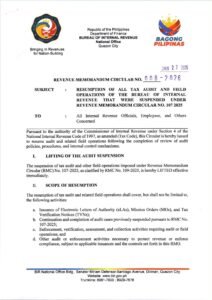
On January 27, the Bureau of Internal Revenue formally lifted its months-long suspension on tax audits—and did so with teeth—rolling out Revenue Memorandum Circular (RMC) 8-2026 and Revenue Memorandum Order (RMO) 1-2026, a sweeping overhaul that redraws how audits are done, who gets audited, and how far revenue officers can go.
And at the center of this reset is BIR Commissioner Atty. Charlito Martin “Charlie” Mendoza, who made it clear: the old ways are dead.
“We lifted the suspension because the reforms are already in place,” Mendoza said—plain, firm, and unmistakably final.
FROM SUSPENSION TO SURGICAL STRIKE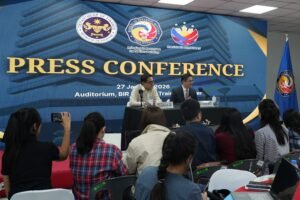
Last November 2025, the BIR hit pause on audits amid growing complaints from the business sector—allegations of abuse, overlapping audits, task-force excesses, and unpredictable assessments. Critics called it harassment. Taxpayers called it chaos.
Mendoza called it an opportunity.
Instead of brushing off the backlash, the Commissioner froze operations, opened the doors to the private sector, and rewired the audit system from the inside out.
The result? A new audit regime that is tighter, traceable, and far less prone to abuse—but no less aggressive against real tax cheats.
ONE TAXPAYER, ONE AUDIT—PER YEAR
Under RMO 1-2026, the BIR adopts a Single Instance Audit Framework: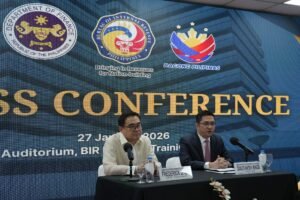
•Only one Letter of Authority (eLA) per taxpayer per taxable year
•All tax types—income tax, VAT, withholding—covered in one audit
•Multiple existing eLAs? Taxpayers can demand consolidation
Translation: no more audit pile-ons, no more “balikan” tactics, no more wearing down businesses through sheer volume.
TASK FORCES AXED, VAT UNITS SHUT DOWN
In one of the most explosive moves, Mendoza abolished audit task forces outright.
Also gone:
•VAT Audit Sections (VATAS)
•Large Taxpayers VAT Audit Units (LT-VAU)
Their powers are now returned to regular BIR offices, cutting off special units long criticized as breeding grounds for discretion—and abuse.
This is Mendoza drawing a line: audits are institutional, not personal.
DATA, NOT WHIMS
Audits will now be risk-based and system-driven, using anonymized, data-backed criteria to select taxpayers.
No names picked out of thin air.
No “recommendations.”
No fishing expeditions.
If you’re audited, the system—not a person—put you there.
NO MORE “MADE-UP” ASSESSMENTS
Mendoza was blunt on assessments:
•No unreasonable computations
•No vague findings
•No legal basis? No assessment.
Audit notices must clearly spell out:
•Facts
•Law
•Jurisprudence
And every audit interaction now requires standardized checklists, documentation, and signed minutes—locking both taxpayer and revenue officer into a paper trail.
AUDIT WITH RULES, NOT INTIMIDATION
Books can still be examined—but with reasonable options when records are voluminous or disruptive to move.
This isn’t a retreat. It’s discipline.
MENDOZA’S MESSAGE: REFORM IS NON-NEGOTIABLE
Finance Secretary Frederick Go backed the move, calling the reforms aligned with the administration’s push for ease of doing business and trust in government.
But it was Mendoza who delivered the sharpest message:
“We framed BIR D.A.R.E.S. not just as reform work—but as legacy work.”
Audit reform, he stressed, is not cosmetic. It is structural. Institutional. Designed to outlast any one commissioner.
THE TAKEAWAY
This is not the BIR going soft.
This is the BIR going precise.
Under Commissioner Charlie Mendoza, audits are back—but the gray areas are gone. The hustlers inside the system have fewer hiding places. The honest taxpayers get clearer rules. And the Bureau gets its credibility shot back into its veins.
In short:
Audit season is back—and this time, it’s by the book.
Spread the news

 Morning Standard News Team