 Bernie Anabo Jr.
When BIR Commissioner Atty. Charlito Martin R. Mendoza sits down with the Clark Development Corporation, the message is unmistakable: tax policy in one of the country’s most important economic zones must be clear, coordinated and business-ready.
On September 1, Mendoza met via Zoom with CDC President and CEO Atty. Agnes VST Devanadera to tackle tax administration and policy concerns affecting export enterprises inside the Clark Freeport Zone.
And this was no ordinary courtesy meeting.
This was a policy table.
Triangular trade arrangements. ATRIG requirements. Cross-border services. Deductible expenses peculiar to Clark locators.
These are not small technical matters. These are issues that can determine whether businesses move forward with confidence—or get trapped in uncertainty.
And Mendoza did not dodge the hard questions.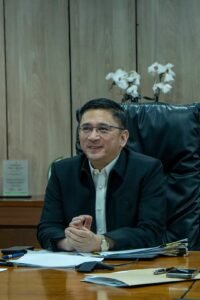
He put them squarely on the table.
MENDOZA: LET’S FIX IT.
The BIR chief committed to study CDC’s proposed regulation on triangular trade arrangements and participate in a BIR-BOC meeting to address concerns involving the Authority to Release Imported Goods (ATRIG).
That is precisely the kind of leadership taxpayers and investors expect.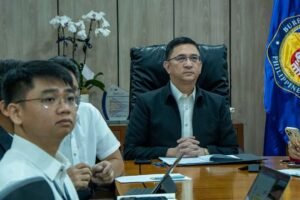
Listen. Study. Coordinate. Act.
Instead of allowing agencies to operate in separate lanes, Mendoza is pushing for greater coordination between the BIR and the Bureau of Customs where their policies intersect.
That matters.
Because for businesses operating in the Clark Freeport Zone, a tax rule is not merely a paragraph in a regulation.
It is money. It is compliance. It is investment. It is jobs.
CLARK IS WATCHING. BUSINESS IS WATCHING.
The discussion also covered taxation of cross-border services and the treatment of deductible expenses unique to CFZ locators.
These are exactly the areas where vague interpretations can create headaches for both government and business.
The objective should be simple:
Collect what is legally due—but do it with rules that taxpayers can understand and consistently follow.
That is where Mendoza’s role becomes critical.
A strong tax administration is not measured only by how much revenue is collected.
It is also measured by how effectively it removes uncertainty, closes loopholes, improves compliance and builds taxpayer confidence.
ONE TABLE, TWO AGENCIES, ONE DIRECTION
Mendoza’s team included Deputy Commissioner Larry M. Barcelo, Assistant Commissioner Mariza Uy, Head Revenue Executive Assistants Dondanon Galera and Juanito Balbastre, and Assistant Division Chief Peter Paul Dator.
The CDC delegation, meanwhile, brought in key officials and representatives of locators, including Atty. Gloria Victoria Y. Taruc, Atty. Noelle Mina D. Meneses, Ms. Caroline S. Sicat of SFA Semicon Philippines Corp., Atty. Ann Monet Sigui-Bacani of Metrojet Engineering Clark Limited, and representatives from the Department of Finance.
That lineup sends another message:
This is serious business.
CDC will facilitate a dialogue with locators concerning BIR data requests, creating another channel for government and industry to address compliance concerns directly.
And that is where Mendoza’s approach becomes even more important.
Don’t simply enforce. Explain. Don’t simply collect. Clarify. Don’t simply issue rules. Make them workable.
THE MENDOZA TEST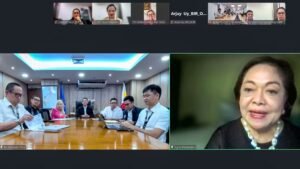
The real test now is implementation.
Can the BIR, BOC and CDC harmonize their procedures?
Can ATRIG requirements be applied without unnecessary duplication?
Can legitimate cross-border transactions be taxed properly without creating unintended burdens?
Can the peculiar business realities of Clark locators be recognized while protecting government revenue?
Those are the questions that matter.
And Commissioner Mendoza now has the opportunity to turn this dialogue into concrete policy action.
Because Clark is no ordinary economic zone.
It is a major investment and export hub—and its taxpayers need an administration that is firm on compliance but intelligent in implementation.
MENDOZA’S MESSAGE IS LOUD AND CLEAR
There should be no room for conflicting interpretations when government agencies are dealing with the same taxpayer.
There should be no unnecessary bureaucratic walls between BIR and BOC.
And there should be no disconnect between tax policy and the realities faced by legitimate enterprises.
Mendoza is putting the issues on the table.
Now comes the harder part:
TURN THE TALK INTO ACTION.
That is how tax administration earns credibility.
That is how compliance improves.
And that is how government protects revenue while keeping the Philippines open for business.
Mendoza has opened the door.
Now, let the reforms walk through it.