 Dr. Bernie Anabo Jr. Jimmy Saberon
MANILA — The Bureau of Internal Revenue (BIR) is putting the Philippines on the regional map as a model for fair, credible and effective tax dispute resolution, with Commissioner Atty. Charlito Martin R. Mendoza taking center stage in the country’s first-ever PEMNA Revenue Community of Practice Study Visit.
For three days, from September 28 to 30, 2026, the BIR National Office became the venue for a high-level exchange of tax enforcement strategies involving officials from Cambodia, South Korea and the PEMNA Secretariat—with Philippine tax dispute resolution firmly under the microscope.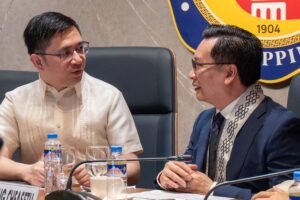
And Commissioner Mendoza delivered a message that hit at the heart of tax administration:
Taxpayers have the right to challenge assessments—but the government must also have the courage, evidence and legal authority to defend what it collects.
“The real question, therefore, is not whether disputes will arise, but how fairly, efficiently, and credibly we resolve them,” Mendoza declared.
MENDOZA: FAIRNESS IS THE BATTLEFIELD
Mendoza emphasized that a strong tax system cannot rely on collection alone.
It must also command trust.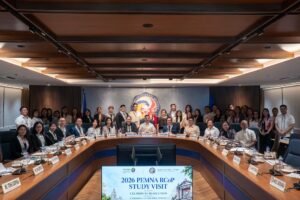
Under his leadership, the BIR highlighted the Philippine system’s two-level approach to tax disputes—providing taxpayers with administrative remedies while allowing cases to proceed to judicial review before the specialized Court of Tax Appeals (CTA).
That framework became a major reason Cambodia selected the Philippines for the landmark study visit.
The message was unmistakable: collect what is legally due, but do it through a process that can withstand scrutiny.
CAMBODIA COMES TO STUDY THE PH WAY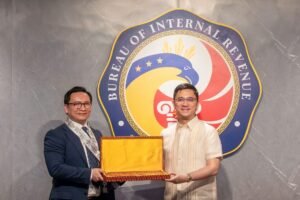
A six-member Cambodian delegation led by Dr. Seng Cheaseth, Director of the Department of Law, Tax Policy and International Tax Cooperation and Chair of the PEMNA Revenue Community of Practice, traveled to Manila to examine the Philippine experience.
The PEMNA Secretariat was represented by a team headed by Mr. Lloyd Choi, Team Manager, while an official from South Korea also participated.
Their focus?
How does the Philippines handle taxpayers who challenge the government’s assessment—and how does the government protect its right to collect legitimate taxes?
The answer was laid out through intensive discussions covering the assessment and administrative protest process under Section 228 of the National Internal Revenue Code of 1997, as amended, together with its implementing rules.
CTA: THE PHILIPPINE TAX BATTLEFIELD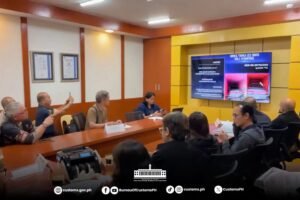
The visitors were also given a closer look at the Court of Tax Appeals, the country’s specialized judicial forum for tax controversies.
The dedicated CTA session covered its jurisdiction, structure, filing procedures and selected jurisprudence.
For foreign revenue officials, the message was clear: tax collection does not end when an assessment is issued. The assessment must be defensible when challenged.
The BIR also presented its mechanisms for compromise settlement and abatement of tax liabilities, as well as rules governing Bureau decisions and appeals.
MENDOZA OPENS THE DOOR—AND DEMANDS OPEN DIALOGUE
Rather than treating the study visit as a one-way showcase, Mendoza challenged the participating officials to exchange hard-earned lessons.
“We are your hosts for these three days, but we do not see this as a one-way exchange. We also want to learn from you,” the BIR chief said.
That approach turned the gathering into more than a ceremonial international event.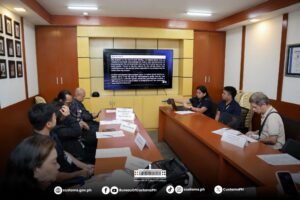
It became a working table for tax administrators confronting the same problem: how to enforce tax laws without destroying taxpayer confidence.
TAX DISPUTES ARE INEVITABLE. WEAK SYSTEMS ARE NOT.
Cambodian and Korean officials likewise presented their own dispute-resolution systems, challenges and reforms, creating a candid regional exchange of practices.
The three-day meeting ended with a roundtable discussion on lessons learned and future cooperation.
But the bigger takeaway is impossible to miss.
A powerful revenue agency is not merely one that collects more. It is one whose assessments can survive scrutiny, whose procedures inspire confidence, and whose decisions can stand on the strength of law and evidence.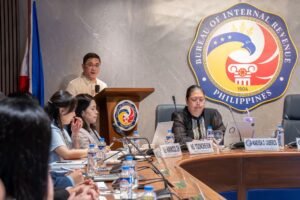
Under Commissioner Atty. Charlito Martin R. Mendoza, the BIR is signaling that message loudly—not only to Philippine taxpayers, but now to revenue authorities across Asia.
THE TAXMAN IS READY FOR THE FIGHT—BUT THIS TIME, THE BATTLE IS BEING FOUGHT WITH LAW, CREDIBILITY AND ACCOUNTABILITY.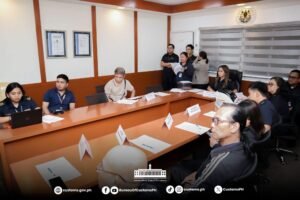
And with the Philippines chosen as the venue for the first PEMNA Revenue Community of Practice Study Visit, the BIR has placed its tax dispute resolution system squarely under the regional spotlight.
MENDOZA’S MESSAGE: COLLECT WHAT IS DUE. DEFEND IT WITH EVIDENCE. RESOLVE DISPUTES FAIRLY. AND LET THE LAW HAVE THE FINAL WORD.