 Dr. Bernie Anabo Jr

NAIA’S YAS MAPA, BATANGAS’ MIMEL TALUSAN, CEBU’S ZSAE CARRIE DE GUZMAN, CDO’S ARNALDO SAULONG, ZAMBOANGA’S MANNY ZURBITO, MANILA’S RJ TORRALBA AND MICP’S GEOFF DE VERA CHALLENGED TO KEEP THE MOMENTUM ROLLING!
THE MESSAGE IS LOUD AND CLEAR: HIT THE TARGET, CRUSH SMUGGLING, CLEAN UP THE SYSTEM, AND DELIVER RESULTS!
The Bureau of Customs is charging toward the historic ₱1-TRILLION revenue goal, and Commissioner Ariel F. Nepomuceno is making one thing unmistakably clear: there is no room for complacency, no excuse for inefficiency, and absolutely no place for corruption in an agency entrusted with protecting the nation’s borders and collecting billions in government revenues.
At the recently concluded BOC Collectors’ Conference hosted by the Port of Davao, Customs leadership rallied behind an ambitious mission—to sustain record-breaking collections while tightening enforcement, accelerating cargo disposition, and strengthening accountability across all collection districts.
The numbers are impressive, but the real battle is far from over.
From January to September 2026, the BOC collected a staggering ₱757.406 billion, beating its ₱748.494-billion target by ₱8.913 billion. That is also ₱55.735 billion higher than the collection recorded during the same period last year.
These figures represent more than financial statistics. They reflect the enormous responsibility of Customs officials to protect government revenues, facilitate legitimate trade, and stop smugglers and unscrupulous traders from exploiting the country’s borders.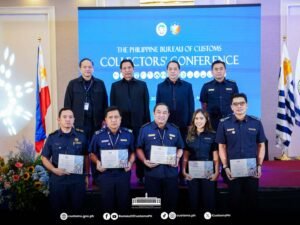
But here is the million-peso question: Can the Bureau sustain this momentum and finish the year with a historic ₱1-trillion collection?
Commissioner Nepomuceno is determined to make that happen.
NEPOMUCENO: DELIVER RESULTS, NOT EXCUSES!
Commissioner Nepomuceno deserves the spotlight for keeping the Bureau focused on revenue performance, enforcement, institutional integrity, and operational efficiency.
His message to Customs personnel was direct and unmistakable.
“We are still far from what we want to happen. Tuloy lang tayo,” the Commissioner declared.
That statement carries a challenge to every deputy commissioner, assistant commissioner, service director, and district collector: the job is not finished simply because targets have been exceeded.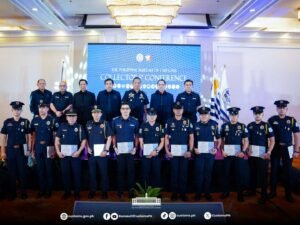
The next test is whether the Bureau can sustain the gains, close the remaining gaps, and ensure that the public receives the full benefit of stronger Customs operations.
Nepomuceno also reiterated his directive to expedite the auction and condemnation of seized and forfeited goods, including overstaying containers.
Why allow seized goods and abandoned cargo to remain tied up in ports when lawful disposition can help clear space, reduce unnecessary congestion, and protect government interests?
The directive must translate into measurable action, with every responsible office held accountable for delays.
And on corruption, the message must be even tougher: any official or employee found violating the law must face appropriate action, regardless of rank, connections, or position.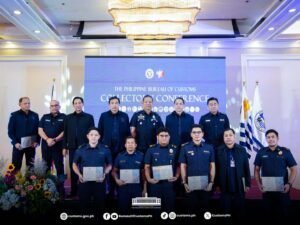
Integrity cannot be a slogan printed on a conference backdrop. It must be demonstrated in every transaction, every inspection, every assessment, and every enforcement operation.
YAS MAPA, MIMEL TALUSAN, ZSAE CARRIE DE GUZMAN: THE FRONTLINE TEST!
Among the Customs leaders whose collection districts were recognized for meeting or exceeding their targets are Atty. Yasmin “Yas” Mapa of the Port of NAIA, Carmelita “Mimel” Talusan of the Port of Batangas, and Atty. Zsae Carrie C. De Guzman of the Port of Cebu.
Their respective ports are part of the nationwide Customs machinery expected to sustain revenue growth without sacrificing lawful trade facilitation, transparency, and border protection.
For NAIA, the challenge is particularly demanding. As a major gateway for international air cargo and passenger traffic, the port must remain vigilant against prohibited and misdeclared shipments while ensuring that legitimate goods move efficiently.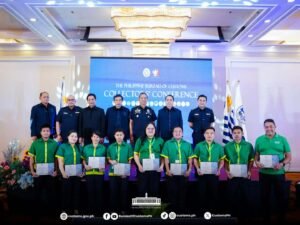
Collector Mapa’s district has an important role in ensuring that enforcement is firm, assessments are correct, and legitimate traders receive professional service.
At the Port of Batangas, Collector Talusan faces the continuing challenge of balancing revenue collection, cargo movement, and strict enforcement. The port’s performance must be judged not only by the money collected but also by the effectiveness of its controls and the quality of service delivered to legitimate stakeholders.
Meanwhile, Collector De Guzman’s Port of Cebu remains a critical link in the country’s maritime trade network. Sustaining collection performance requires close coordination among assessment, operations, intelligence, and enforcement personnel.
The message to all three leaders is simple: keep the numbers strong, keep the borders secure, and keep the system clean.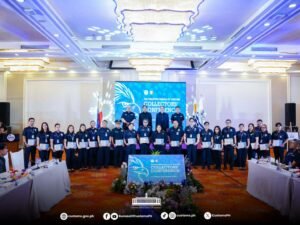
Recognition is welcome, but public service demands consistency. Today’s achievement must become tomorrow’s standard.
SAULONG AND ZURBITO: KEEP THE REGIONS IN THE GAME!
The push for ₱1 trillion cannot depend on the major ports alone.
Regional collection districts must carry their share of the burden, particularly in protecting government revenues, monitoring cargo movements, and preventing illicit trade from slipping through operational gaps.
At the Port of Cagayan de Oro, Collector Arnaldo M. Saulong is among the officials operating in a strategically important commercial gateway in Mindanao.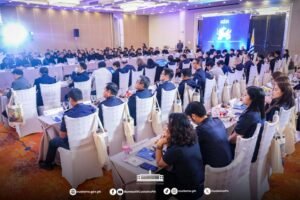
The Port of Cagayan de Oro was among the collection districts recognized for meeting or exceeding its revenue target. The port was also recognized among the top-performing offices in the conduct of public auctions.
That combination matters. Strong collection performance must be matched by responsible management of seized and forfeited goods, effective enforcement, and timely implementation of lawful disposal procedures.
At the Port of Zamboanga, Atty. Manuel “Manny” Zurbito Jr. also carries a vital responsibility in protecting the country’s customs territory and facilitating legitimate commerce.
Ports in Mindanao operate in an environment where effective coordination, intelligence-driven enforcement, and vigilance against illicit shipments are essential.
The challenge for both Saulong and Zurbito is to sustain their respective districts’ contributions to the national effort while ensuring that enforcement remains professional, evidence-based, and consistent with the law.
The ₱1-trillion mission is a nationwide operation. No collection district can afford to sit on the sidelines.
TORRALBA AND DE VERA: MANILA’S REVENUE AND ENFORCEMENT BATTLE!
The spotlight also falls on Collector Rizalino Jose C. “RJ” Torralba of the Port of Manila and Collector Atty. Felipe Geoffrey K. “Geoff” De Vera IV of the Manila International Container Port (MICP).
These major customs gateways occupy crucial positions in the country’s import and export network. Their operations affect cargo movement, trade efficiency, government collections, and the fight against smuggling.
The Port of Manila was recognized for meeting or exceeding its collection target and for its performance in public auctions. MICP, meanwhile, remains a major frontline in revenue collection and enforcement.
Both ports face an unrelenting challenge: maintain operational efficiency while making sure that misdeclaration, undervaluation, illicit imports, and other customs violations do not undermine government revenues or legitimate businesses.
The stakes are enormous.
Every improperly assessed shipment potentially deprives the government of lawful revenue. Every smuggling attempt that escapes detection undermines honest traders who comply with the rules. Every unnecessary delay in cargo processing creates costs for legitimate importers and the wider economy.
That is why the work of Torralba and De Vera must go beyond the numbers.
The public needs efficient cargo clearance, credible enforcement, and transparent procedures. Businesses need a level playing field. The government needs every peso legally due to the national treasury.
The standard must be the same for everyone.
THE ₱1.428-BILLION VAPE HAUL: ENFORCEMENT MUST BITE!
One of the conference’s major enforcement highlights was the successful operation against illicit vape products valued at approximately ₱1.428 billion, with recognition given to personnel involved, including the Customs Intelligence and Investigation Service at MICP and the Enforcement and Security Service.
That operation underscores the scale of the challenge confronting Customs.
Illicit products can threaten legitimate businesses, undermine regulatory controls, and expose the government to revenue losses. Effective enforcement therefore requires more than public announcements and photo opportunities.
It demands intelligence gathering, coordinated inspections, credible evidence, lawful seizure procedures, and the prosecution or other appropriate legal action warranted by the facts.
The same determination must be applied to other forms of illicit trade, from prohibited goods to misdeclared shipments and counterfeit merchandise.
The objective is not merely to announce a seizure. It is to make enforcement meaningful, protect the public, and prevent repeat violations.
And when investigations establish wrongdoing, accountability must follow.
ALL COLLECTORS, TAKE NOTE: NO FREE RIDE!
The Collectors’ Conference also recognized the Ports of San Fernando, Manila, NAIA, Batangas, Legazpi, Iloilo, Cebu, Tacloban, Cagayan de Oro, Zamboanga, Davao, Subic, Clark, Aparri, and Limay for meeting or exceeding their collection targets.
That is a broad display of participation in the Bureau’s revenue campaign.
But recognition should never become a comfortable resting place.
Every collector must continue to examine operational weaknesses, strengthen internal controls, improve coordination, and ensure that the pursuit of revenue does not come at the expense of lawful procedures.
The same scrutiny should apply to cargo disposition, abandoned balikbayan boxes, luxury vehicle importation cases, and other matters involving enforcement and legal accountability.
The Bureau must demonstrate that it can collect aggressively while acting fairly, enforce the law without favoritism, and modernize its operations without compromising transparency.
No collector should be judged by a single headline figure alone. Sustainable performance also means compliance with the law, credible enforcement, responsible leadership, and professional service.
THE BOTTOM LINE: ₱1 TRILLION MUST MEAN MORE THAN A NUMBER!
Commissioner Nepomuceno has placed a major challenge before the Customs organization.
The ₱757.406-billion collection for the first nine months of 2026 is a strong foundation, but the remaining months will test the Bureau’s ability to sustain performance and deliver on its national commitment.
The answer cannot be revenue collection alone.
The BOC must also demonstrate that smuggling is being confronted, seized goods are being disposed of lawfully and promptly, legitimate traders are being treated fairly, and allegations of misconduct are investigated impartially.
For Mapa, Talusan, De Guzman, Saulong, Zurbito, Torralba, De Vera, and every other district collector, the marching orders are clear: protect the revenue, secure the borders, facilitate legitimate trade, and uphold the integrity of the institution.
For Nepomuceno, the ultimate measure of success will be whether the Bureau can turn strong collections and enforcement accomplishments into lasting institutional reform.
ONE TRILLION PESOS IS THE TARGET. INTEGRITY IS THE TEST. ACCOUNTABILITY IS THE NON-NEGOTIABLE.
The Filipino people are not asking for empty promises or ceremonial victories. They are demanding a Customs service that delivers results, treats honest traders fairly, and holds wrongdoers accountable.
The race to ₱1 trillion is on.
Now the entire Bureau must prove that its performance is worthy of the public’s trust.