 Dr. Bernie Anabo Jr

The message is loud and clear: FILIPINO PRODUCTS DESERVE A BIGGER SLICE OF THE GLOBAL MARKET—and the Bureau of Customs (BOC) must help make it happen!
In a major push to empower local businesses and strengthen the country’s export industry, the BOC staged its first-ever Export Summit on October 26–27, 2026, bringing government agencies, business leaders, and industry stakeholders to one table to tackle the opportunities and obstacles facing Filipino exporters.
But this was more than just another government gathering. It was a call to action!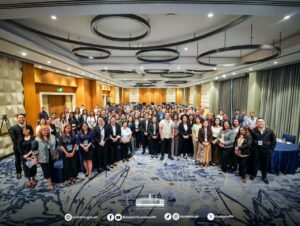
For a country brimming with hardworking entrepreneurs, skilled workers, and world-class products, the challenge is no longer simply about producing quality goods. It is about getting those products across borders faster, navigating complicated regulations, and competing aggressively in the international marketplace.
And this is where the BOC must deliver!
SANTIAGO: GOVERNMENT MUST LISTEN, ACT, AND DELIVER!
A major highlight of the summit was the message of Port Operations Service Director Atty. Melon Carlo M. Santiago, who underscored the need for government agencies to remain responsive to the concerns of exporters and ensure that policies and services keep pace with the realities of international trade.
The challenge is unmistakable: government must not become another obstacle for businesses already fighting to survive and expand in a fiercely competitive global economy.
Exporters need clear rules, efficient procedures, reliable government services, and agencies willing to listen when problems arise.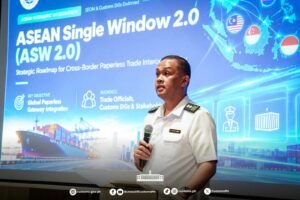
They do not need unnecessary red tape, confusing requirements, or bureaucratic delays that can weaken their competitiveness and increase the cost of doing business.
Santiago’s message puts the spotlight on a critical responsibility of public service: government must listen to the business sector, confront legitimate concerns, and translate policies into practical solutions.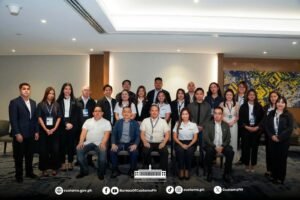
The stakes are enormous.
Every unnecessary delay can affect delivery schedules. Every confusing requirement can create additional costs. Every missed opportunity can mean lost business for Filipino entrepreneurs trying to establish their products abroad.
That is why closer coordination between government and industry is not merely desirable—it is essential.
For Santiago and the BOC’s export facilitation efforts, the real test is whether discussions lead to concrete improvements that exporters can feel when they transact with government.
The objective must be clear: make legitimate exports more efficient, strengthen compliance, and give Filipino businesses a fairer opportunity to compete internationally.
NO MORE CONFUSION: EXPORTERS NEED SOLUTIONS!
The two-day summit tackled the issues that matter to businesses seeking to penetrate overseas markets.
Participants received updates on customs procedures, Free Trade Agreements (FTAs), export-related government programs, and developments involving the ASEAN Single Window (ASW).
These are not minor technical matters. They can determine whether an exporter can maximize trade opportunities, comply with regulations, and move products efficiently through the international supply chain.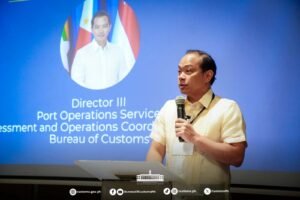
Free Trade Agreements, for example, can open doors to markets and create opportunities for Philippine products. But businesses must understand the applicable rules, including requirements governing the origin of goods, to take advantage of the benefits available to them.
Similarly, improved digital connectivity and coordination among customs administrations can help streamline the exchange of trade information and support more efficient cross-border transactions.
But information alone is not enough.
Exporters need practical guidance. They need consistent implementation. They need government agencies that coordinate instead of passing businesses from one office to another.
THE BOTTOM LINE: FILIPINO EXPORTERS NEED A GOVERNMENT THAT OPENS DOORS, NOT ONE THAT MAKES THEM KNOCK FOREVER!
The summit provided a venue for industry stakeholders to raise concerns directly with government representatives and exchange ideas on how export processes can be improved.
That kind of engagement must continue beyond the conference hall.
BUENAFE’S MESSAGE: TRUST IS THE FOUNDATION OF TRADE!
Atty. Kayrel P. Buenafe, chief of the BOC Export Coordination Division, emphasized the importance of building trust between government and the private sector.
His message carried a powerful reminder: every shipment leaving a Philippine port represents more than a commercial transaction.
It represents the investment of entrepreneurs, the labor of Filipino workers, the livelihood of families, and the ambition of businesses determined to compete beyond Philippine shores.
When a Filipino-made product reaches an international buyer, it carries the country’s reputation with it.
That is why export facilitation must go hand in hand with transparency, accountability, and predictable government service.
Trust cannot be demanded. It must be earned through consistent performance.
And when government listens to stakeholders, addresses legitimate concerns, and applies the rules fairly, it creates an environment where businesses can plan, invest, and grow with greater confidence.
NEPOMUCENO’S CHALLENGE: TAKE FILIPINO PRODUCTS TO THE WORLD!
Customs Commissioner Ariel F. Nepomuceno likewise emphasized the BOC’s commitment to making the export process simpler and more predictable for Philippine businesses.
His message was direct: Filipino products already have quality. What the country needs is greater access to markets and a smoother path for legitimate exporters.
The BOC’s responsibility is to help make that possible.
Under the leadership of Commissioner Nepomuceno, the challenge is to ensure that trade facilitation translates into meaningful improvements—not merely announcements, presentations, or policy statements.
The Bureau must continue working with the Department of Trade and Industry (DTI), the Department of Agriculture (DA), and other relevant agencies to help exporters understand requirements, navigate regulations, and maximize legitimate opportunities under existing trade arrangements.
This is particularly important for small and medium-sized enterprises that may lack the resources and technical expertise available to larger corporations.
For these businesses, accessible information and efficient government services can make a significant difference.
The ultimate goal is not to weaken customs enforcement. It is to strike the right balance: enforce the law, protect legitimate trade, prevent violations, and facilitate compliant shipments as efficiently as possible.
A STRONG CUSTOMS SERVICE SHOULD BE TOUGH AGAINST VIOLATIONS AND RESPONSIVE TO LEGITIMATE BUSINESSES.
That is the balance the country needs.
FROM SUMMIT TO ACTION: THE REAL WORK STARTS NOW!
The first-ever BOC Export Summit has placed export facilitation firmly on the table. But the bigger question is what happens next.
Will the concerns raised by exporters translate into better coordination among government agencies?
Will businesses receive clearer guidance on documentary requirements and applicable trade rules?
Will legitimate exporters experience more predictable procedures and fewer avoidable delays?
Will the lessons from the summit lead to measurable improvements in the way government serves the export sector?
These are the questions that matter.
For Director Atty. Melon Carlo M. Santiago, Commissioner Nepomuceno, and the BOC’s export facilitation team, the opportunity is clear: turn dialogue into delivery and commitments into results.
Santiago’s emphasis on responsiveness reinforces a fundamental principle of public service—government must understand the people and businesses it serves.
That means listening to stakeholders, identifying recurring problems, coordinating with the appropriate agencies, and pursuing practical solutions within the bounds of the law.
The measure of success will not be the number of participants who attended the summit. It will be the improvements that Filipino exporters experience afterward.
THE VERDICT: LET FILIPINO PRODUCTS SHINE!
President Ferdinand R. Marcos Jr. has called for stronger trade facilitation and improved Philippine competitiveness.
The BOC’s export initiatives must help advance that objective through practical, accountable, and results-oriented reforms.
The Philippines cannot afford to let complicated processes undermine the potential of its own producers.
Our farmers, manufacturers, entrepreneurs, and workers deserve a system that allows legitimate businesses to compete on a stronger footing.
They deserve clear rules, responsive institutions, and efficient services that support their ambitions without compromising the government’s duty to enforce customs and trade regulations.
Director Santiago’s message must become a continuing commitment: listen to exporters, confront bottlenecks, strengthen coordination, and make government service work for legitimate Philippine businesses.
Commissioner Nepomuceno’s challenge is equally clear: make the BOC a stronger partner in bringing Filipino products to more markets around the world.
Because the future of Philippine exports cannot be built on promises alone.
It must be built on action.
THE TIME HAS COME TO OPEN MORE DOORS FOR FILIPINO PRODUCTS, EMPOWER LOCAL ENTREPRENEURS, AND GIVE OUR EXPORTERS A FAIR SHOT AT GLOBAL SUCCESS!
The world is a competitive marketplace. The Philippines must be ready to compete—and the BOC must do its part to help Filipino businesses get there.
FILIPINO QUALITY. GLOBAL AMBITION. EFFICIENT CUSTOMS. THAT IS THE EXPORT DRIVE THE COUNTRY NEEDS!