 Dr. Bernie Anabo Jr
Once again, the Bureau of Customs (BOC) finds itself at a familiar crossroads—expected to deliver extraordinary revenues while weighed down by systemic inefficiencies and public skepticism. The ritual is now almost theatrical: the Development Budget Coordination Committee (DBCC) sets a target, the BOC scrambles to meet it, and the nation watches the blame game unfold.
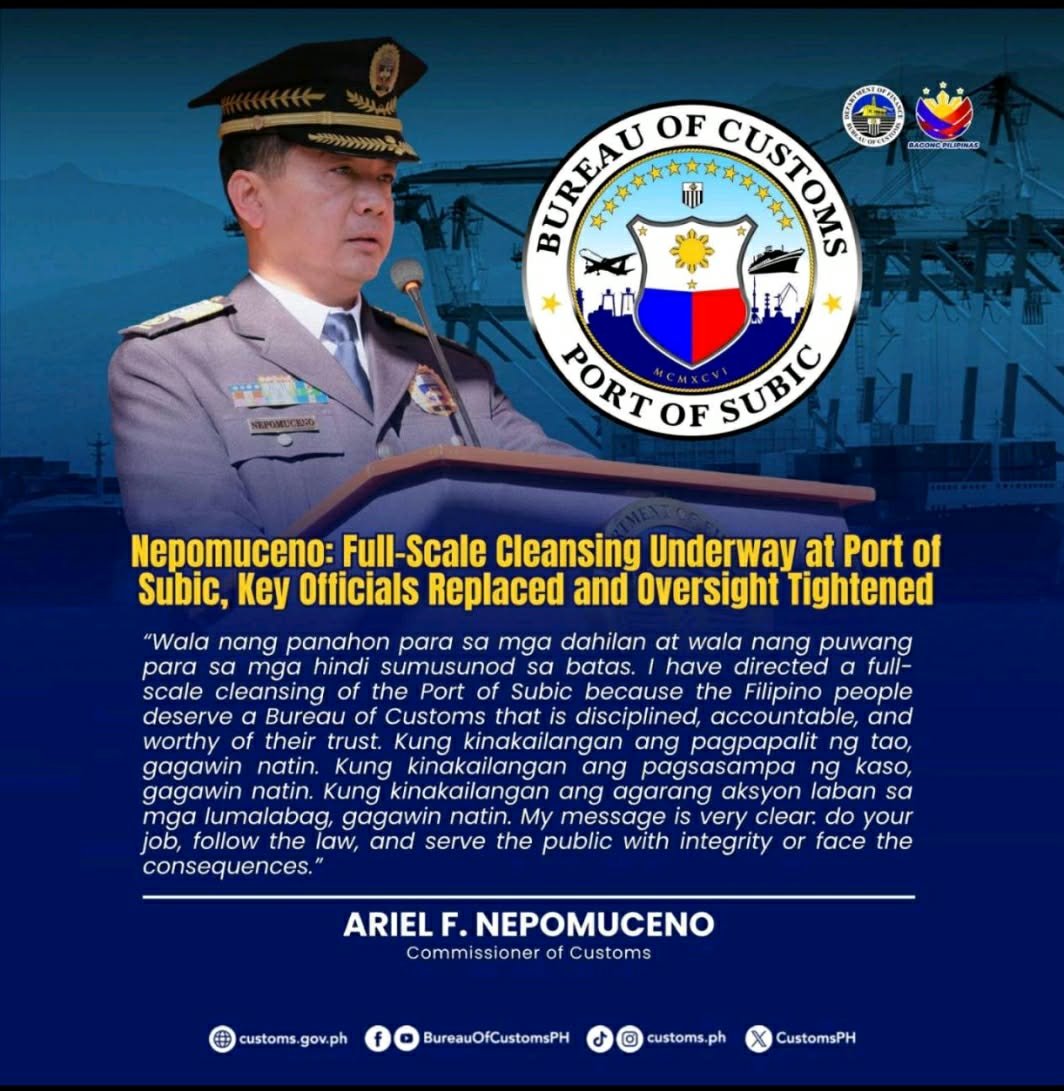
This year is no different—except for one new player: Commissioner Ariel F. Nepomuceno, appointed by President Ferdinand R. Marcos Jr., with a clear and daunting mandate—increase collection and enforce good governance.
With a background in enforcement and a reputation for discipline, Commissioner Nepomuceno’s arrival brought hope for a smarter, data-driven approach. But his first major move—a blanket 10% increase in the Rate of Assessment (ROA)—is raising eyebrows and concerns in equal measure.
Let’s be clear: this isn’t a bold leap forward. It’s a sideways shuffle into the same old trap.
A Short-Term Win, A Long-Term Loss
On paper, the move looks clever. It’s a sure way to boost numbers quickly. Apply a 10% increase across the board, and you’re guaranteed a temporary revenue bump. Headlines are made. Charts go up. Mission accomplished—at least for the quarter.
However, beneath the surface, this maneuver is a classic example of treating symptoms rather than curing the disease.
Rather than targeting the true sources of revenue leakage, the BOC has placed the burden on legitimate importers—those who play by the rules. And make no mistake: they will not eat this added cost. The increase will ripple outward, eventually landing on the laps of Filipino consumers already struggling with inflation.
⸻
Weaponizing the IAS Valuation
At the heart of this 10% directive is the use of the Internal Administration Service (IAS) valuation—a tool with a controversial history. Rather than using the WTO-mandated transaction value (the price paid for the goods), the BOC is reverting to an internal benchmark that many insiders say has been weaponized against its personnel and stakeholders.
Instead of trust, this move fosters a culture of suspicion. Instead of partnership, it builds walls. Examiners and appraisers are compelled to justify why their declared values don’t align with a figure that may have no basis in actual market reality.
The result? Importers delay shipments. Supply chains suffer. Prices rise. And compliance becomes less attractive.
⸻
A Policy That Breeds Non-Compliance
Ironically, this hike could harm the Bureau’s long-term collection goals. By making honest declarations more costly, the BOC is practically nudging traders toward technical smuggling—misdeclaration, misclassification, and undervaluation become tempting paths when the legitimate route feels punitive.
Instead of plugging leaks, the BOC may have just poked new holes in an already leaky ship.
⸻
The Billion-Peso Question: What About the Fuel?
If Commissioner Nepomuceno is truly aiming to improve revenue collection, he doesn’t need to look further than the fuel sector. The data speaks volumes: billions of pesos in potential duties lost due to glaring inconsistencies between fuel consumption and import declarations.
Fix just this one loophole, and you might recover more than any artificial 10% bump could ever dream of.
Why go after the compliant when the real goldmine of leakage lies elsewhere?
⸻
The Real Reform: Trust, Intelligence, and Integrity
Commissioner Nepomuceno is known to surround himself with some of the best minds in the field. That’s encouraging. But the Customs dilemma is not an abstract problem to be solved with spreadsheets and shortcuts. It is a human system—one that runs on trust, understanding, and principled enforcement.
The path forward requires more than a revenue shortcut. It calls for:
•Empowering honest personnel, not burdening them with arbitrary benchmarks.
•Pursuing large-scale smugglers, not squeezing legitimate businesses.
•Building a culture of partnership, not fear.
⸻
A Higher Standard Awaits
Leadership in Customs must go beyond hitting a number. True leadership builds a system that works—fair, transparent, intelligent, and attuned to the needs of both government and trade. The success of Commissioner Nepomuceno’s tenure won’t be judged by whether the Bureau hits a revenue target artificially inflated by coercive measures.
It will be measured by whether he can rebuild the Bureau’s integrity, restore stakeholder trust, and turn short-term fixes into long-term solutions.
We wait—and hope—for that kind of leadership.
Spread the news