 Dr. Bernie Anabo Jr
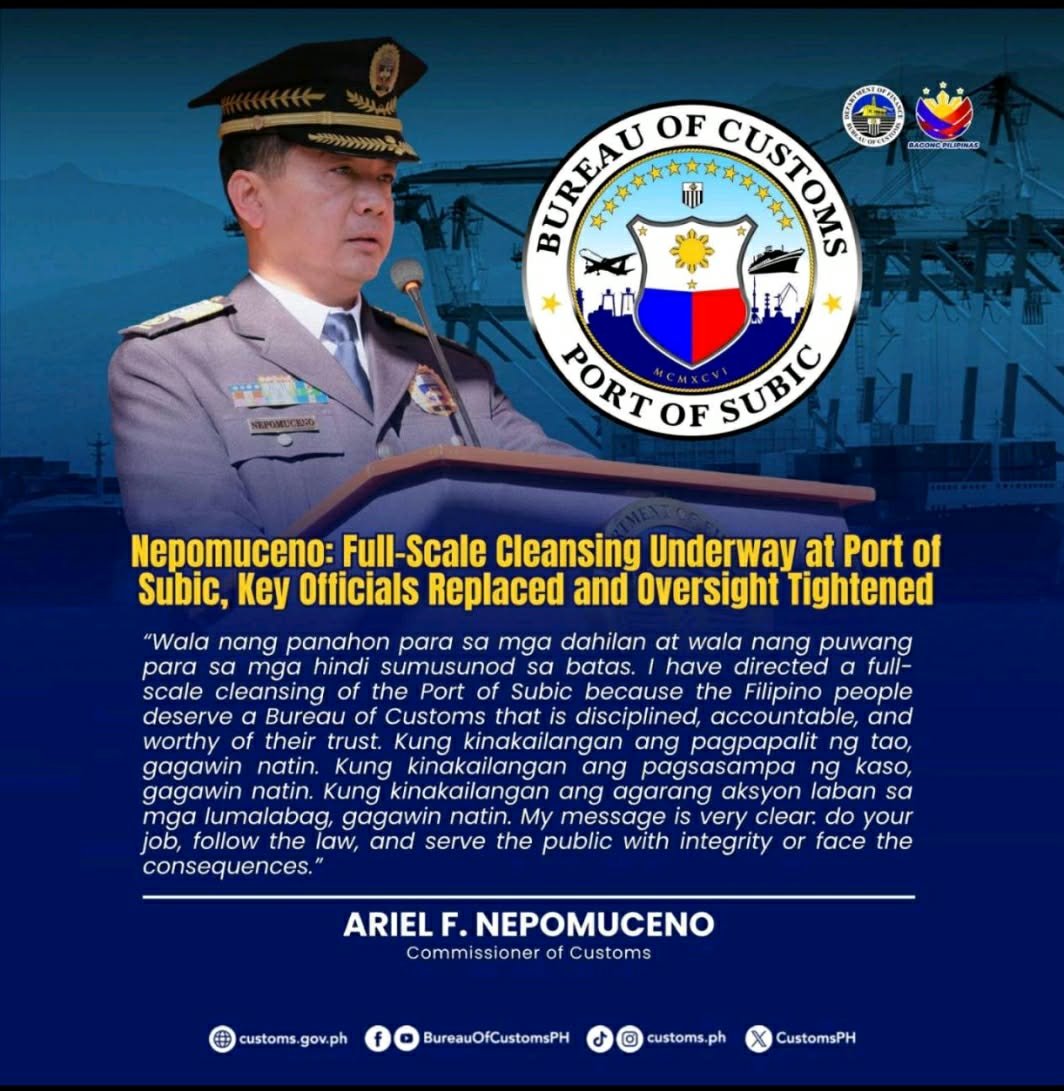
One of the defining qualities of a great leader is the ability to chart a clear and unwavering direction for his people. Commissioner Ariel Nepomuceno powerfully demonstrated this during his very first Collectors’ Conference as head of the Bureau of Customs.
In his address to the nation’s customs officials, Commissioner Nepomuceno delivered a message that was both unambiguous and deeply sincere. He spoke with candor, without embellishment, yet every word carried conviction and purpose. His sincerity was not only heard but felt, leaving a profound impression on all those present. The Commissioner’s vision for the Bureau was presented in clear terms: a call for genuine transformation rooted in integrity, professionalism, and accountability.
Commissioner Nepomuceno underscored the need for the Bureau of Customs to rise above challenges and embody the standards expected of a government institution entrusted with protecting the nation’s borders and securing much-needed revenues. He emphasized that meaningful reform requires both structural changes and the personal commitment of every official and employee. Beyond compliance, he called for a shared responsibility in restoring public trust and confidence in the Bureau.
From that day forward, the direction of his leadership was unmistakable. He seeks nothing less than a Bureau of Customs that is modern, transparent, and efficient—an institution defined by good governance and unwavering service to the Filipino people.
The challenge now lies in how the men and women of the Bureau will respond to this call. Transformation cannot be achieved by leadership alone; it demands unity, cooperation, and a collective resolve to break away from old practices and embrace reforms with courage. Commissioner Nepomuceno has laid down the vision, but it is the collective will of the organization that will determine the success of this journey.
As his tenure unfolds, all eyes are on the Bureau of Customs and its people—on how they will rise to the challenge, translate vision into action, and embody the change that Commissioner Nepomuceno has set in motion. This is more than a call for reform; it is a call to service, a call to integrity, and a call to transformation that will define not only the present leadership but also the future of the institution.