
 Bernie Anabo Jr.
NO MORE HIDING. NO MORE EXCUSES. NO MORE PLAYING GAMES.
The Bureau of Customs’ Post Clearance Audit Group (PCAG) is turning up the heat on importers as it rolls out an aggressive office-to-office visitation strategy in the issuance and delivery of Audit Notification Letters (ANLs).
This is not your ordinary letter that can simply be tucked away in a drawer.
For importers receiving an ANL, the message is crystal clear:
OPEN YOUR BOOKS. SHOW YOUR RECORDS. EXPLAIN YOUR TRANSACTIONS.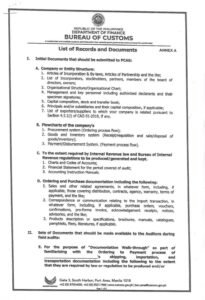
PCAG is requiring importers to account for their import transactions covering the prescribed three-year audit period, together with the supporting records and documents necessary for the examination.
And the audit does not stop at the customs declaration.
Under the information and documentary requirements being sought through the audit process—including those reflected in Annexes A and B—PCAG may examine the broader commercial operations of the company, including records concerning purchases, sales, collections, and other financial and operational information, subject to applicable laws, regulations, and procedural safeguards.
In short, the customs audit is digging beyond the shipment and into the books.
THIS IS WHERE THE RUBBER MEETS THE ROAD.
For years, the battle against revenue leakage has not been confined to what appears on an import entry.
The real question is:
DO THE DECLARED IMPORTS, FINANCIAL RECORDS AND ACTUAL BUSINESS OPERATIONS TELL THE SAME STORY?
If they do, then the importer should have nothing to fear from a legitimate audit.
But if discrepancies emerge—undervalued imports, questionable declarations, unexplained transactions, or other violations—the paper trail can become a powerful weapon in determining whether the government was deprived of lawful revenues.
That is precisely why the post-clearance audit system matters.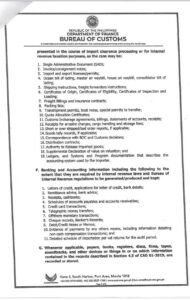
Customs enforcement should not end the moment cargo leaves the port.
COMMISSIONER NEPOMUCENO: FOLLOW THE PAPER TRAIL!
Credit must be given to BOC Commissioner Ariel F. Nepomuceno for strengthening the Bureau’s post-clearance enforcement approach.
The message from the leadership is increasingly clear: customs compliance must be measured not merely at the border, but against the importer’s actual business records.
This is where PCAG can make a difference.
A successful post-clearance audit can uncover discrepancies that may not have been immediately visible during the original processing of an import entry.
And when the records don’t match, somebody has some serious explaining to do.
ATTY. JET MARONILLA: THE AUDIT HAMMER IS NOW ON THE TABLE
The spotlight likewise falls on Assistant Commissioner for PCAG Atty. Jet Maronilla, whose group is tasked with carrying out this critical revenue-protection mandate.
The office-to-office delivery of ANLs sends a strong signal:
PCAG IS NOT WAITING FOR IMPORTERS TO COME TO THEM.
They are bringing the audit notification directly to the business doorstep.
That approach puts importers on notice that the Bureau intends to pursue accountability beyond the customs border and examine whether declared transactions are consistent with the importer’s books and actual operations.
TO IMPORTERS: THIS IS YOUR WAKE-UP CALL.
Keep your records straight.
Make your declarations accurate.
Make sure your books can withstand scrutiny.
And most importantly, don’t underestimate the power of a three-year paper trail.
Because once PCAG starts connecting the dots between importation, purchasing, sales, collections and financial records, inconsistencies can become impossible to hide.
The message is brutally simple: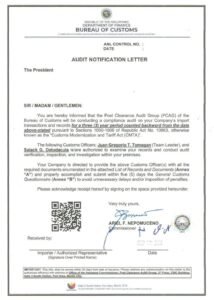
THE SHIPMENT MAY HAVE CLEARED THE PORT—BUT THE AUDIT DOESN’T END THERE.
This is the new battleground in customs enforcement.
Not just the container yard.
Not just the examination area.
THE BATTLE IS NOW IN THE BOOKS.
And with PCAG stepping up its audit campaign, importers should understand one thing:
WHEN CUSTOMS COMES KNOCKING WITH AN AUDIT NOTIFICATION LETTER, IT’S TIME TO OPEN THE BOOKS—AND MAKE SURE THE NUMBERS TELL THE TRUTH.
