 Dr. Bernie Anabo Jr

The message is loud and clear: illegal drugs have no place in the country, and those who attempt to sneak dangerous substances through Philippine borders must face the full force of the law!
At the Bureau of Customs–Port of General Santos, the fight against illegal drugs is not just another item on the government’s agenda. It is a battle that demands vigilance, intelligence-sharing, coordination, and an unwavering commitment to protecting Filipino communities from the devastating consequences of drug trafficking.
And in this continuing battle, Collector Ralph Antone S. Rojo deserves the spotlight for the Port of General Santos’ active participation in strengthening the government’s anti-drug interdiction efforts.
Representing Port Collector Rojo, key personnel from the Port of General Santos attended the Third Quarter Inter-Agency Drug Interdiction Task Group (IADITG) Meeting at the CAAP Administration Conference Room—a gathering focused on tightening coordination among government agencies in confronting the evolving threat of illegal drugs, particularly synthetic substances.
This was no ordinary meeting. The stakes are high, the challenges are real, and the consequences of failure can be devastating.
NO ROOM FOR DRUG TRAFFICKERS!
Synthetic drugs and other prohibited substances pose a continuing challenge to law enforcement authorities. As trafficking methods evolve, government agencies must become more alert, more coordinated, and more determined to close every possible loophole that criminals might exploit.
That is precisely why inter-agency cooperation matters.
The meeting brought together representatives of agencies tasked with enforcing anti-drug laws, sharing intelligence, and improving operational readiness. Discussions covered the current synthetic drug situation, interdiction procedures, recent Supreme Court rulings—including People v. Irizumi—and updates from participating IADITG member agencies.
The objective is unmistakable: strengthen the government’s ability to detect, intercept, investigate, and prosecute illegal drug activities in accordance with the law.
For Collector Rojo and his team, participation in this initiative reinforces the importance of keeping customs enforcement connected with the broader law enforcement network.
Because drug traffickers do not operate in isolation, government agencies cannot afford to work in isolation either!
ROJO’S TEAM ON THE FRONT LINE OF COORDINATION
Representing Collector Rojo during the meeting were Merjam Cela M. Edulan, Chief of Staff and Chief of the Export Section; Darryl-J A. Anthony, ACOO and Head of the Customer Care Center; CIIS representative Manny Sangid; and Jepoi Tabiolo.
Their participation reflects the Port’s engagement in the continuing exchange of operational information and enforcement updates among government agencies.
The program also introduced Atty. John Carlo G. Gadayan as the new Chief of the Airport Interdiction Unit, who discussed updates on interdiction operating procedures.
Meanwhile, the closing message was delivered by IA V Asnawi Adil Salik, JD, Assistant Regional Director of PDEA Region XII, representing Director III Charlene R. Magdurulang, MPA, Regional Director of PDEA Region XII.
These discussions underscore a critical point: successful interdiction depends not only on enforcement personnel in the field but also on timely information, sound procedures, legal awareness, and coordinated action among responsible agencies.
The challenge now is to translate those discussions into stronger operational readiness and measurable results.
BORDER SECURITY IS NOT A PART-TIME JOB!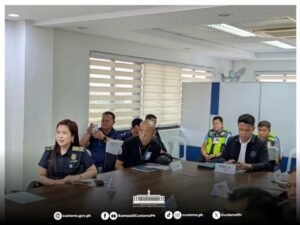
Under the leadership of District Collector Maita S. Acevedo and the guidance of Customs Commissioner Ariel F. Nepomuceno, the Port of General Santos continues to strengthen its partnerships with law enforcement and other government agencies.
The Bureau of Customs has a critical responsibility in protecting the country’s borders against illegal drugs, smuggled goods, and other prohibited commodities. That responsibility requires constant vigilance, professional integrity, and strict adherence to established laws and procedures.
But let us be blunt: meetings and coordination are only the beginning.
The real test comes when intelligence leads to effective interdiction, when suspicious shipments receive proper scrutiny, and when enforcement operations produce lawful, documented results that protect the public.
The public deserves more than assurances. It deserves a customs service that remains alert, accountable, and relentless in carrying out its mandate.
And that is where Collector Rojo’s leadership at the Port of General Santos will continue to face the real test—not merely in attending inter-agency meetings, but in helping sustain a culture of readiness, cooperation, and enforcement.
THE BOTTOM LINE: CLOSE RANKS, PROTECT THE PEOPLE!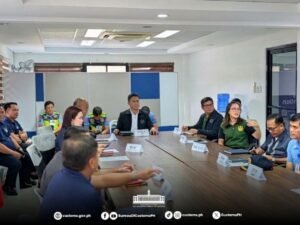
The war against illegal drugs cannot be won by one agency alone. It demands a united front involving the Bureau of Customs, the Philippine Drug Enforcement Agency, airport authorities, intelligence units, and other law enforcement partners.
For Port Collector Ralph Antone S. Rojo and the Port of General Santos, the message is clear: coordination must remain strong, intelligence must be shared responsibly, and every enforcement action must stand on a solid legal foundation.
The enemies of public safety thrive on gaps in enforcement. Government agencies must work together to close those gaps.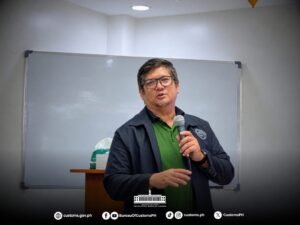
With Commissioner Ariel F. Nepomuceno’s guidance, District Collector Maita S. Acevedo’s leadership, and the Port of General Santos’ continued engagement with its law enforcement partners, the fight for stronger border protection must remain relentless.
No shortcuts. No complacency. No compromise with criminal activity.
Because when it comes to illegal drugs, protecting the Filipino people must always come first!

 Morning Standard News Team