 Jimmy Saberon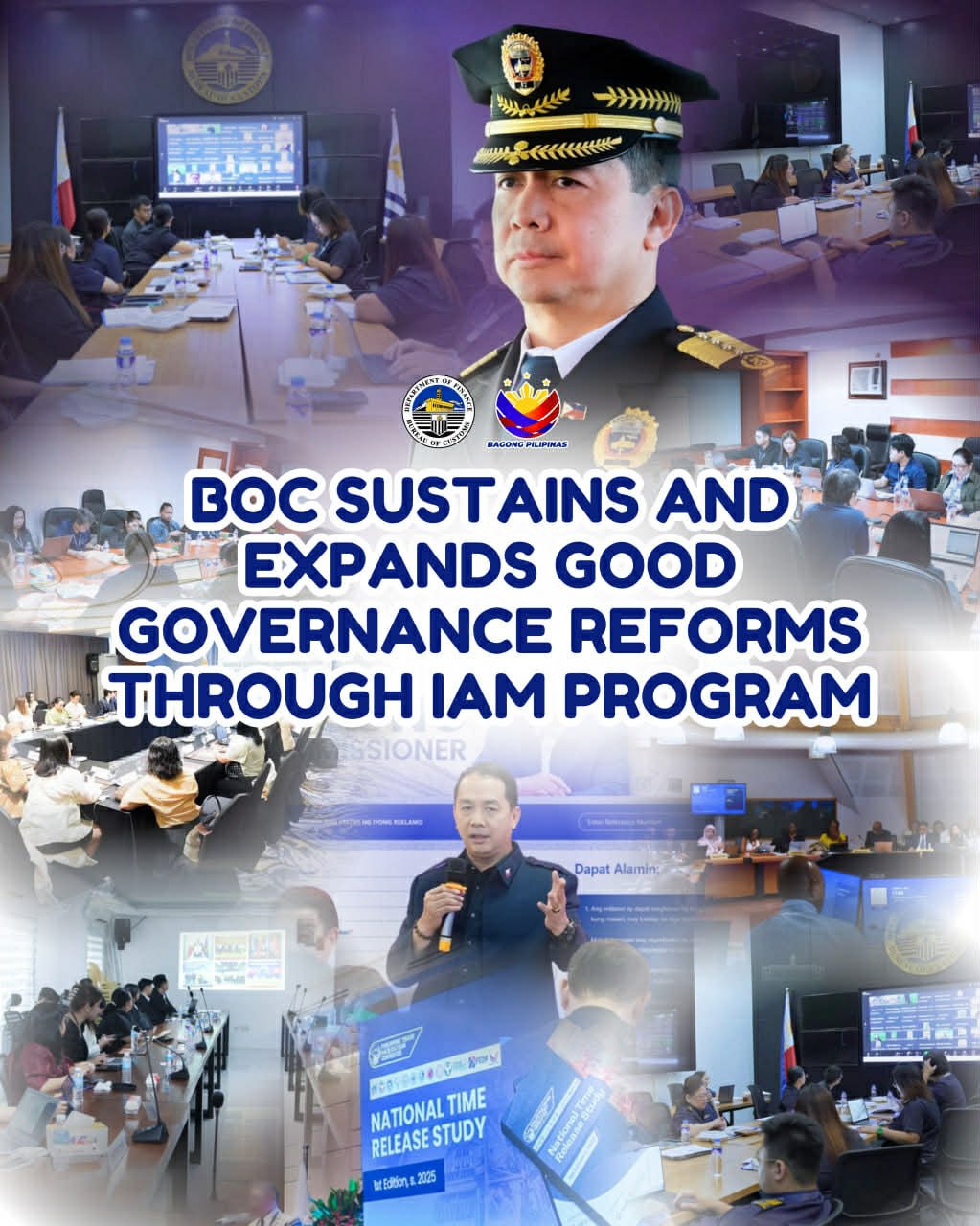
The Bureau of Customs (BOC) has carried forward and intensified its good governance reforms into 2026, institutionalizing anti-corruption and modernization measures under the Integrity, Accountability, and Modernization (IAM) Program led by Commissioner Ariel F. Nepomuceno.
Building on reforms initiated in 2025, the BOC has embedded integrity-driven policies into its core operations, signaling that governance reforms are no longer transitional measures but permanent institutional standards.
Under Commissioner Nepomuceno’s leadership, the Bureau implemented the updated Integrity Action Plan (IAP) across all customs offices nationwide, with technical assistance from the World Customs Organization (WCO). The IAP introduced corruption risk mapping, strengthened audit and investigation mechanisms, modernized customs procedures, and reinforced internal controls to reduce discretion, prevent fraud, and enhance accountability.
BOC officials said the full rollout of the IAP marked a decisive shift from policy intent to operational enforcement, tightening oversight mechanisms at every level of the organization.
In April 2025, the Bureau approved a revised Code of Conduct, aligned with national laws and the WCO Model Code of Ethics. The Code was formally cascaded across the Bureau through mandatory briefings and the distribution of printed copies to ensure compliance and institutional adoption.
Customs leadership emphasized that the revised Code is intended to reshape organizational culture by setting enforceable standards of behavior and ethical responsibility for all personnel.
Transparency measures were further strengthened through Memorandum No. 39-2025, which imposed stricter disclosure and conflict-of-interest rules. The memorandum prohibits customs personnel from engaging in business with customs brokers and requires the declaration of familial relationships that may affect impartiality in official duties.
According to the BOC, these measures were designed to close long-standing loopholes and eliminate conflicts that have historically undermined public trust in customs operations.
The Bureau also expanded citizen engagement mechanisms as part of its accountability drive. The “Isumbong kay Commissioner” platform, launched in 2025, continues to operate as a direct reporting channel for complaints and information, enabling faster response and action from Customs leadership.
In addition, the revised Citizens’ Charter, rolled out in September 2025, clarified service standards, simplified procedures, and established enforceable timelines for transactions—measures aimed at improving transparency and reducing opportunities for corruption.
Complementing governance reforms, the BOC pursued workforce expansion, enforced merit-based human resource policies, and invested in extensive local and international training programs. Organizational restructuring under the Government Optimization Act was also implemented to improve efficiency and ensure institutional sustainability.
Customs officials said these structural and personnel reforms support the long-term objectives of the IAM Program by aligning governance, capacity-building, and modernization efforts.
Under Commissioner Nepomuceno, the Bureau said it remains committed to sustaining reforms in line with President Ferdinand R. Marcos Jr.’s directive for transparent, efficient, and accountable public service.
The BOC stressed that the continuation of the IAM Program into 2026 underscores a clear policy direction: integrity, accountability, and modernization are now embedded in the Bureau’s operational framework, with reforms expected to be enforced consistently across all ports and offices nationwide.