 Bernie Anabo Jr.
By all indications, the Bureau of Customs is no longer content with merely meeting expectations—it is now moving with the urgency of an institution determined to prove that efficiency, integrity, and performance are non-negotiable.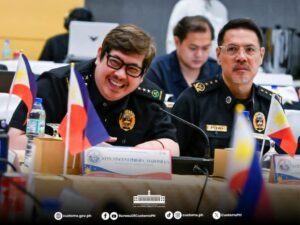
At the center of this drive is Commissioner Ariel F. Nepomuceno, who used the June 2026 Collectors Conference at the Port of Limay not as a ceremonial gathering, but as a war room for reform.
His message was unmistakable: move the cargo, protect the revenue, and hold people accountable.
For too long, Philippine ports have suffered from congestion caused by shipments left unpaid, unclaimed, or unreleased despite having completed customs processes. Nepomuceno drew a hard line. District Collectors were ordered to identify these dormant importations and ensure the immediate and efficient utilization of port facilities.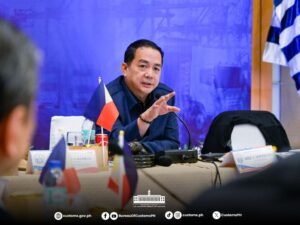
The objective is clear—decongest the ports, accelerate trade, and prevent government revenues from slipping through bureaucratic cracks.
This is leadership that refuses to tolerate inefficiency.
But Nepomuceno is not fighting this battle alone.
Standing firmly beside him is Deputy Commissioner Atty. Agaton Uvero, one of the key figures helping transform policy into operational discipline. Uvero’s steady hand in strengthening internal systems and reinforcing accountability mechanisms has become crucial in ensuring that reforms are not merely announced but actually implemented on the ground.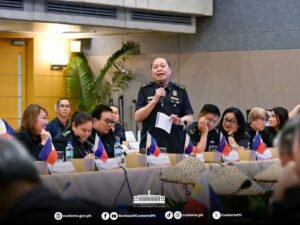
Also playing a pivotal role is Assistant Commissioner Atty. Jet Maronilla, whose deep understanding of customs operations and commitment to modernization continue to support the Bureau’s push toward faster, smarter, and more transparent service delivery. At a time when public trust must be earned daily, Maronilla represents the kind of professionalism that strengthens institutional credibility.
Adding firepower to the Bureau’s leadership team is newly appointed Deputy Commissioner Raul S. Nagrampa, who officially took his oath before Commissioner Nepomuceno during the conference. His appointment comes at a critical period when Customs is expected to maintain its aggressive momentum against inefficiency, revenue leakages, and threats to border security.
The conference also highlighted another strategic move by Nepomuceno—the temporary transfer of the Accounts Management Office under the Post-Clearance Audit Group. This is not a mere reshuffling of offices.
It is a calculated strike designed to accelerate importer and broker accreditation, reinforce transparency, and tighten checks and balances within the agency.
The message is simple: legitimate trade will be facilitated, but loopholes will be closed.
Meanwhile, while reforms grab headlines, the Bureau’s frontline revenue warriors deserve equal recognition.
For five consecutive months, several collection districts have done more than carry their weight—they have delivered.
Leading the charge is the Port of NAIA, whose relentless pursuit of revenue targets continues to demonstrate that the country’s busiest air cargo gateway can combine efficiency with excellence.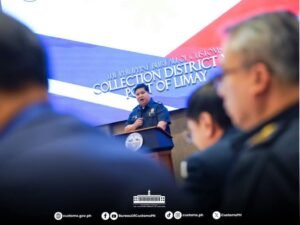
The Port of Iloilo has likewise emerged as a consistent performer, proving that regional ports are indispensable pillars of national revenue generation.
The Port of Clark continues its remarkable rise, maximizing opportunities from one of the country’s fastest-growing logistics hubs.
The Port of Subic remains a powerhouse, capitalizing on its strategic location and operational discipline to deliver results month after month.
The Port of Aparri, often overlooked in the national conversation, has quietly but effectively contributed to the Bureau’s impressive collection performance.
And hosting this month’s conference, the Port of Limay under District Collector Atty. Kriden F. Balgomera has shown why best practices, stakeholder engagement, and a customer-centered approach can translate into real numbers and meaningful impact.
These ports are not merely hitting targets.
They are carrying the Bureau’s banner of credibility.
They are proving that customs collection is not just about collecting duties and taxes. It is about funding schools, hospitals, infrastructure projects, social services, and national development.
Commissioner Nepomuceno perhaps captured the essence of this mission best when he reminded Customs officials:
“Your success is my success, and the success of the Bureau of Customs is, ultimately, the success of our nation.”
Those words carry both praise and warning.
Because in today’s Bureau of Customs, results matter.
Integrity matters.
Accountability matters.
The era of excuses is rapidly losing ground to the era of execution.
And if the Bureau sustains this pace, one thing is becoming increasingly difficult to ignore:
Customs is no longer merely collecting revenue.
It is fighting for relevance, rebuilding public trust, and rewriting its own sto
It is fighting for relevance, rebuilding public trust, and rewriting its own story—one shipment, one reform, and one victory at a time.