
 Bernie Anabo Jr.
At the Bureau of Customs–Port of Manila, there is now one unmistakable message: ignorance has no place in customs service.
While smugglers continue to invent new ways to beat the system, District Collector Rizalino Jose C. Torralba is making sure his frontline assessment personnel stay several steps ahead. His answer is not louder speeches or empty slogans—it is knowledge, discipline, and technical mastery.
That is why the Formal Entry Division (FED) has rolled out the Customs Learning and Assessment Skills Series (CLASS)—an intensive learning program designed to sharpen the minds of customs appraisers and examiners who stand on the frontlines of revenue collection and trade facilitation.
This is not another routine seminar.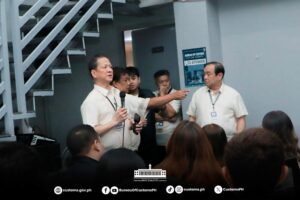
It is a battlefield classroom where customs personnel are trained to identify commodities with precision, apply the correct tariff classification, determine accurate customs valuation, recognize required regulatory permits, and enforce customs laws with confidence. Every lesson strengthens the government’s fight against technical smuggling, undervaluation, and revenue leakage.
Driving this initiative is District Collector Torralba, whose leadership continues to redefine excellence at the country’s premier port. His message is clear: a highly trained workforce is the strongest weapon against corruption, errors, and revenue losses.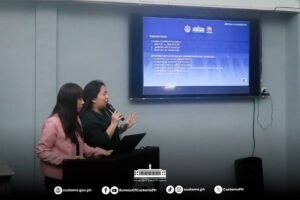
Backing this ambitious program is Deputy Collector for Assessment Florante P. Ricarte, whose hands-on supervision ensures that professional development becomes part of everyday operations rather than an occasional activity. His commitment reflects the growing culture of continuous improvement within the Port of Manila.
The operational backbone of the initiative is Deputy Collector for Operations Atty. Gerard Turiano, whose support helps ensure that operational efficiency goes hand in hand with technical competence. His role reinforces the principle that effective customs operations begin with knowledgeable and well-prepared personnel.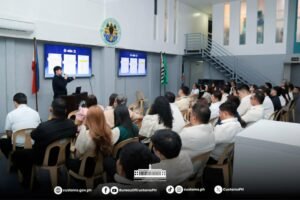
At the center of the learning sessions is FED Chief William Herbert R. Baluyut, whose leadership transformed the CLASS program into an active platform for knowledge-sharing, collaboration, and professional growth. Instead of keeping expertise confined to individual sections, Baluyut has encouraged officers to teach one another—raising the competence of the entire division.
Leading the opening sessions were Principal Appraiser Athena Angeline C. Lajom and Allan V. Guevarra, who demonstrated that experience becomes far more valuable when it is shared. Their discussions on the ASEAN Harmonized Tariff Nomenclature (AHTN), customs valuation, tariff classification, import permits, and commodity identification equipped fellow personnel with practical knowledge they can immediately apply in processing shipments.
This is exactly the kind of reform that produces lasting results.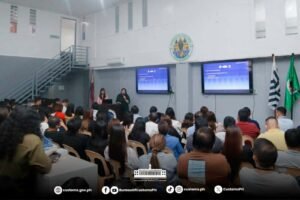
Every correctly classified shipment protects government revenue.
Every accurate valuation blocks attempts at fraud.
Every well-trained appraiser strengthens the country’s borders.
Under the continued guidance of Customs Commissioner Ariel F. Nepomuceno, the Port of Manila is proving that modernization is not measured only by new technology—but by investing in competent, disciplined, and highly skilled customs professionals.
The CLASS initiative sends a powerful warning to smugglers and dishonest importers: the Port of Manila is no longer relying on guesswork. It is building a workforce armed with expertise, integrity, and the confidence to enforce the law without fear or favor.
In today’s customs environment, knowledge is no longer optional.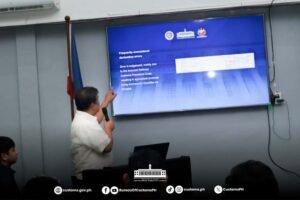
It is the first line of defense. And at the Port of Manila, that defense is growing stronger every single day.