 Bernie Anabo Jr.
Twenty-four tons.
Let that number sink in.
Twenty-four tons of alleged “beef” that turned out to be pork—frozen pork diaphragms mixed with beef fat, allegedly disguised and sold as beef.
And this was not some tiny stash hidden inside a backyard freezer.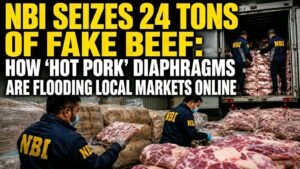
It was sitting inside warehouses in Malabon and Navotas, reportedly being marketed online for as little as ₱200 to ₱250 per kilo.
This is where NBI-NCR Regional Director Atty. Emeterio “Bags” Dongallo Jr. deserves serious credit.
Dongallo and his men did not wait for the contaminated trail to reach every karinderya, paresan and burger maker in Metro Manila.
They hunted it down.
The NBI-NCR cyber patrol spotted the suspicious online selling operation. Operatives conducted two to three weeks of surveillance, bought samples and had them examined by the National Meat Inspection Service.
The result?
Hot meat.
Not legitimate beef.
Not properly documented meat.
Not something consumers should be eating.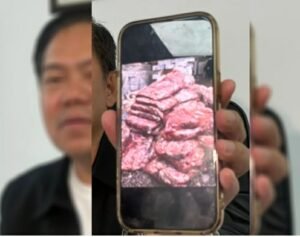
The NBI eventually raided the warehouses and arrested two individuals, including a warehouse owner. The investigation is continuing because, as Dongallo himself indicated, the warehouses may only be the visible tip of a much bigger operation.
And that is precisely where the story gets hotter.
DONGALLO ASKED THE RIGHT QUESTION. NOW CUSTOMS MUST ANSWER ANOTHER.
If this meat was imported from abroad—and if the investigators are now tracing how it entered the Philippines—then there is an obvious question that cannot simply be brushed aside:
HOW DID THIS MUCH MEAT GET INTO THE COUNTRY IN THE FIRST PLACE?
Twenty-four tons does not walk across the border.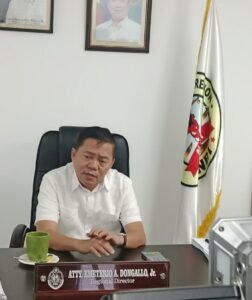
It does not magically appear in a Malabon warehouse.
It does not arrive from overseas without a transportation and importation trail.
Somebody imported it.
Somebody received it.
Somebody moved it.
Somebody stored it.
And somewhere along that chain, the government’s border-control system was supposed to see it.
So the Bureau of Customs must now explain:
Where did Customs lose sight of this shipment?
Was it properly declared?
Was it declared as beef?
Was it declared as something else?
Was there a valid import clearance?
Was there an SPS clearance?
Was the country of origin authorized to export this kind of meat to the Philippines?
Were the shipping documents genuine?
Were the importer, consignee and broker legitimate?
Was the shipment physically examined?
Was it released through a legitimate customs process?
And most importantly:
HOW DID 24 TONS OF SUSPECT MEAT END UP IN METRO MANILA WAREHOUSES IF THE BORDER CONTROLS WORKED AS THEY SHOULD?
These are legitimate questions—not accusations against individual Customs officials.
But they demand answers.
THE LAW IS ALREADY THERE.
Under the Customs Modernization and Tariff Act (CMTA), Republic Act No. 10863, food and animal products are regulated imports that require compliance with the applicable regulatory requirements before importation. The BOC itself identifies food and animal products as regulated goods and states that restricted or prohibited imports may be seized when brought in contrary to law.
Several CMTA provisions may become relevant, depending on what the NBI and Customs investigation establishes.
Section 117 — Regulated Goods.
Regulated goods may be imported only after securing the required permits, clearances, licenses or other requirements imposed by the competent regulatory agency.
Section 1113 — Property Subject to Seizure and Forfeiture.
Goods imported contrary to law, including goods falling under the grounds specified by the CMTA, may be subjected to seizure and forfeiture. The BOC has itself applied Section 1113 to illegally imported agricultural products lacking required regulatory documentation.
Section 1400 — Misdeclaration in Goods Declaration.
If the shipment was deliberately declared as something different from what was actually imported, this provision may come into play.
And if the investigation establishes fraudulent importation or other forms of smuggling, Section 1401 — Unlawful Importation or Exportation becomes particularly important. The CMTA penalizes fraudulent importation and also covers persons who knowingly receive, conceal, buy, sell or facilitate the transportation, concealment or sale of unlawfully imported goods.
That means the investigation should not stop at the warehouse door.
Follow the meat. Follow the documents. Follow the money. Follow the importer. Follow the broker. Follow the vessel. Follow the container. Follow the customs declaration.
And follow whoever signed off on the release.
THIS IS ALSO AN AGRICULTURAL-SMUGGLING QUESTION.
There is an even bigger law that investigators should examine.
Republic Act No. 12022, the Anti-Agricultural Sabotage Act, covers pork and other agricultural products. It defines agricultural smuggling as
The Meat Inspection Code of the Philippines, Republic Act No. 9296, exists precisely to protect consumers against meat-borne diseases and other hazards.
Section 30 requires meat and meat products sold or transported in commerce to be properly marked, labeled or identified to show the kind of animal from which they were derived.
Section 31 is even more direct: meat that has not undergone the required inspection is considered “hot meat” and is subject to seizure, confiscation, condemnation or proper disposal under the law and its implementing rules.
And under RA 10536, which amended the penalties under RA 9296, a person who sells, transports, offers or receives hot meat for sale or transportation may face six years and one day to 12 years imprisonment, or a fine of ₱100,000 to ₱1 million, or both, subject to the law.
So this is not merely a case of somebody trying to make cheap pares.
This is about putting an unidentified and allegedly unsafe animal product into the human food chain.
And the victims could have been anyone.
A customer eating pares.
A family buying burger patties.
A worker eating lunch at a cafeteria.
And potentially members of the Muslim community who may have consumed pork unknowingly.
KUDOS TO “BAGS” DONGALLO—NOW KEEP DIGGING.
Atty. Emeterio “Bags” Dongallo Jr. deserves the spotlight for the NBI-NCR operation.
But he should not stop at the warehouse owners.
Go upstream.
Who supplied the meat?
Who imported it?
Who financed it?
Who arranged the shipment?
Who cleared it?
Who brokered it?
Who transported it?
Who owned the other warehouses?
Who were the regular buyers?
And who else knew that “beef” was actually pork?
The NBI has already pulled the curtain back.
Now somebody has to follow the entire supply chain.
Because if 24 tons made it this far, the terrifying question is not merely how much was seized.
It is:
HOW MUCH ALREADY GOT SOLD?
And there is one more question that the Bureau of Customs cannot afford to dodge:
IF THIS WAS SMUGGLED MEAT, WHERE WAS CUSTOMS WHEN IT CROSSED THE BORDER?
The answer cannot simply be another press release about another seizure.
The public deserves the container number, importer, consignee, broker, port of entry, declaration, permits, inspection history and release trail—subject, of course, to lawful investigative restrictions.
Because border protection is not measured by how loudly government agencies celebrate seizures after the fact.
It is measured by how effectively dangerous contraband is stopped BEFORE it reaches Filipino tables.
NBI-NCR has shown what aggressive intelligence work can uncover.
Now let Customs show the public what happened before those 24 tons reached Malabon and Navotas.
The meat may have been frozen.
The investigation should not be.