 Bernie Anabo Jr.
When rain pours, floods rise and government offices shut down, the easiest thing for public servants to do is stay home.
But at the Paircargo Assessment Composite Division, there was no such luxury—and apparently, no such excuse.
On August 17, 2026, while work in government offices in parts of Luzon, including the NCR, was suspended upon the recommendation of the National Disaster Risk Reduction and Management Council (NDRRMC) amid threats from the Southwest Monsoon, the Paircargo team was fully operational.
Why?
Because cargo does not wait.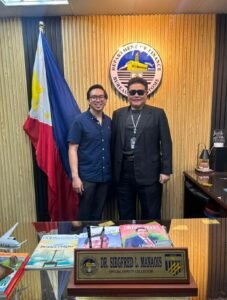
Neither do importers, brokers, businesses and stakeholders whose operations depend on the uninterrupted processing of import entries and Customs services.
This is where leadership matters.
And this is where Port of NAIA District Collector Atty. Maria Yasmin “Yas” M. Obillos-Mapa deserves the spotlight.
YAS MAPA: TRADE FACILITATION MEANS BUSINESS
Under Collector Yas Mapa’s leadership, the Port of NAIA is showing that trade facilitation is not just a slogan printed on a presentation slide.
It is something that must be delivered—even when circumstances are difficult.
The decision to keep the Paircargo Assessment Composite Division operational demonstrates a clear understanding of the economic reality: every hour of unnecessary delay can cost businesses money, disrupt supply chains and create bottlenecks that eventually hit consumers.
This is the kind of leadership that understands the difference between merely occupying an office and actually serving the public.
Collector Yas Mapa’s implementation of Commissioner Ariel F. Nepomuceno’s Enhanced Trade Facilitation Program sends a blunt message:
Disaster preparedness should never become an excuse for administrative paralysis.
YEYE MANAOIS: NO STOPPING THE CARGO PIPELINE
At the frontline was Special Deputy Collector Dr. Siegfred “Yeye” L. Manaois, whose Paircargo team remained on full operational footing.
This is where management is tested—not when everything is normal, but when conditions are anything but normal.
Heavy rains. Flood threats. Government work suspension.
Yet the operation continued.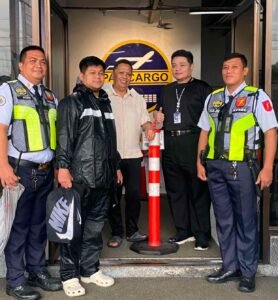
Manaois and his people understood the assignment: keep the processing pipeline moving while maintaining Customs procedures and service delivery.
No drama. No grandstanding.
Just work.
And in government, sometimes the loudest statement is simply showing up when the job needs to be done.
IRENE CONCIO: THE FRONTLINE DOESN’T RUN ON EXCUSES
Assistant Special Deputy Collector Ms. Irene Moreno Concio also deserves recognition for helping keep the operation moving.
Behind every uninterrupted Customs transaction is a team that coordinates, processes, checks, communicates and solves problems—often without the public seeing the pressure behind the scenes.
That is why Concio’s role matters.
Trade facilitation is not powered by slogans.
It is powered by people who make the system work.
THE REAL TEST OF LEADERSHIP
The real measure of government efficiency is not how an agency performs when the skies are clear.
It is how the machine responds when conditions turn ugly.
On August 17, the Paircargo Assessment Composite Division answered that test.
While parts of government temporarily shut their doors because of legitimate weather-related concerns, the Paircargo team kept the service window open for stakeholders.
That does not diminish the need for safety.
It underscores something equally important: where operations can safely continue, government must find ways to keep essential economic services moving.
That is what modern Customs administration should look like.
Not bureaucratic inertia.
Not “balik na lang bukas.”
Not another excuse for another delay.
But continuity, responsiveness and trade facilitation.
Commissioner Nepomuceno has placed modernization, integrity, accountability and trade facilitation at the center of his Customs agenda.
At NAIA, Yas Mapa is putting that agenda into action.
At Paircargo, Yeye Manaois and Irene Concio are helping turn it into daily operational reality.
And that deserves to be said loudly:
WHEN THE RAIN CAME, PAIRCARGO DIDN’T STOP.
That is not just about processing import entries.
That is about keeping the wheels of commerce turning.
And in a country where delays can quickly become economic losses, that kind of government service is not a luxury—it is a necessity.