 Bernie Anabo Jr.
Enough of the usual ceremonial handshakes, photo opportunities and scripted courtesy calls.
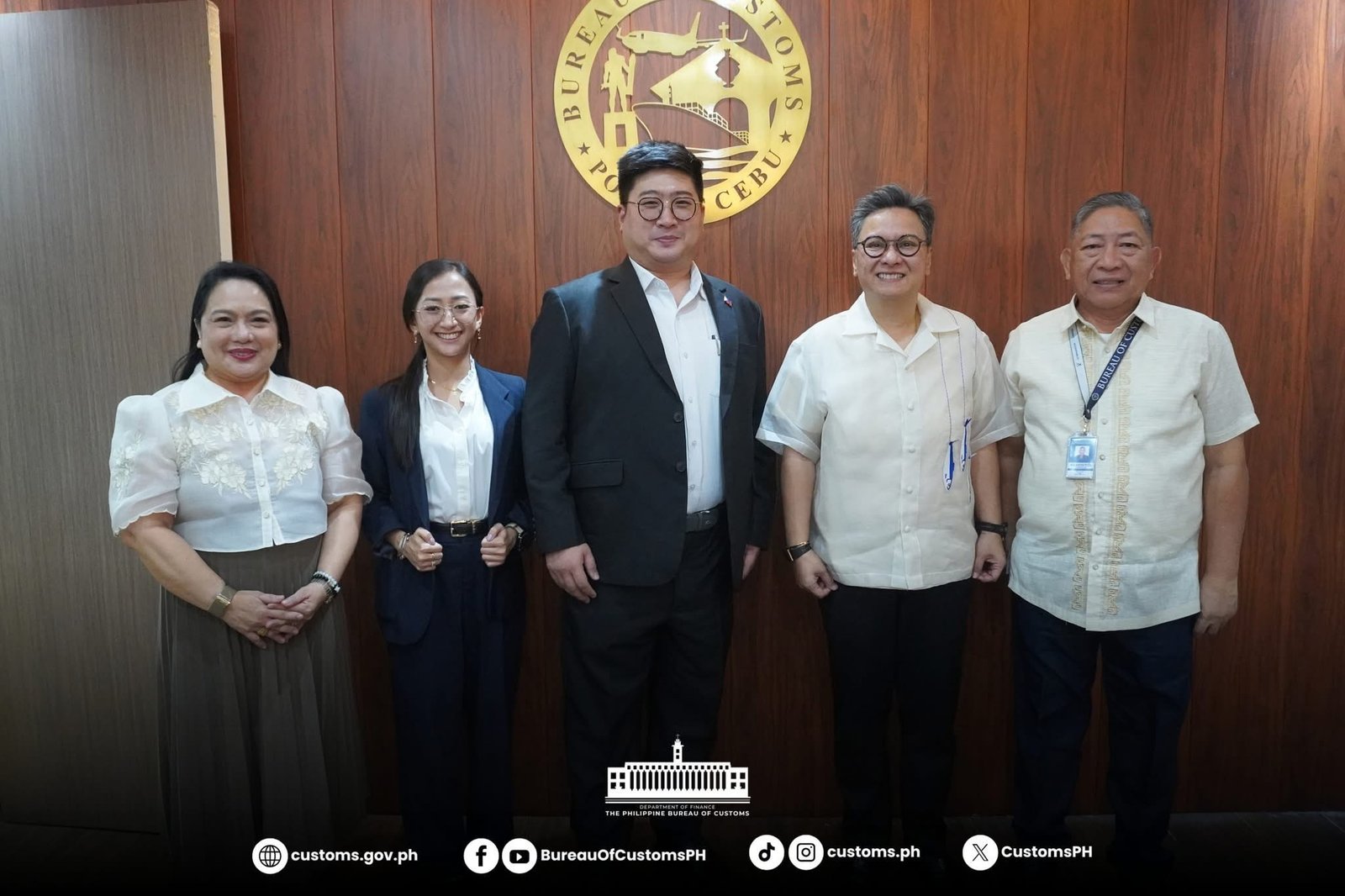
At the Bureau of Customs–Manila International Container Port, District Collector Atty. Felipe Geoffrey K. De Vera IV is showing that a meeting with industry should mean something.
From August 24 to 28, MICP became a revolving door of trade and logistics stakeholders—from Tanduay and LinkAsia to Piaggio & C. S.p.A., the company behind Vespa, DSV, Trans-World International Logistics Corporation and Resolve Global Logistics Corp., as well as representatives from Dassad Warehousing & Port Services Inc. and the Association of Off-Dock CFS Operators of the Philippines Inc.
Different companies. Different businesses. Different headaches.
But one common demand:
KEEP TRADE MOVING.
And this is where Geoff De Vera’s leadership deserves the spotlight.
Instead of allowing these engagements to become another item on an official’s calendar, De Vera put the stakeholders directly across the table with the Customs officials who actually deal with assessment, formal entries and frontline implementation.
That matters.
Because the real test of Customs leadership is not how impressive the speeches sound inside conference rooms.
The real test is what happens when businessmen, brokers, logistics operators and service providers encounter the system.
Is the process clear?
Is the assessment fair?
Are concerns heard?
Are legitimate shipments moving?
Are problems resolved before they become bottlenecks?
These are the questions that matter to the trading community.
And De Vera appears determined to bring those questions closer to the people responsible for answering them.
NOT JUST A “COURTESY CALL”
Let’s call it what it really is.
These meetings are not merely about exchanging pleasantries.
They are an opportunity for industry to speak directly—and for Customs to listen directly.
That is a powerful combination.
The presence of officials and personnel from the Office of the Deputy Collector for Assessment, the Formal Entry Division and concerned FED sections gave the discussions an operational backbone.
No passing the buck.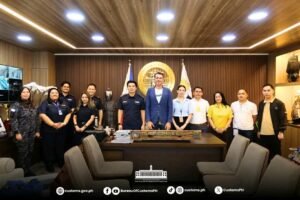
No hiding behind layers of bureaucracy.
No “we’ll get back to you” without putting the right people in the room.
When technical concerns are discussed with the technical people present, problems have a better chance of being understood—and solved.
That is how an efficient Customs bureau should operate.
GEOFF DE VERA’S MESSAGE IS SIMPLE: COME TALK TO US
There is a bigger message behind De Vera’s approach.
Customs cannot facilitate trade from behind a desk.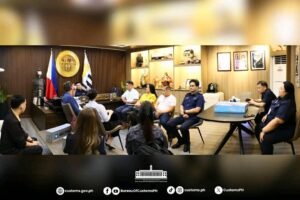
It has to understand the realities confronting the private sector.
A shipment does not exist merely as an entry number on a computer screen. Behind every declaration is a company, a supply chain, workers, consumers, investments and, ultimately, economic activity.
When Customs procedures become unnecessarily difficult, the cost does not magically disappear.
Somebody pays.
That is why stakeholder dialogue is not weakness.
It is enforcement through understanding.
It is facilitation through accountability.
It is modernization through listening.
And at MICP, De Vera is putting that principle into practice.
FIVE DAYS. MULTIPLE INDUSTRIES. ONE MESSAGE.
The week-long series of engagements sent a message that should reverberate throughout the Port:
MICP IS OPEN FOR BUSINESS—AND OPEN FOR DIALOGUE.
That does not mean Customs is surrendering its mandate.
Quite the opposite.
A stronger relationship between Customs and legitimate industry can make it easier to identify legitimate trade, expose irregularities, eliminate unnecessary friction and concentrate enforcement where it belongs.
The goal is not to make Customs soft.
The goal is to make Customs smarter, faster and more responsive.
And that is precisely where De Vera’s role becomes critical.
As District Collector, he sits at the point where national policy meets the messy, complicated reality of day-to-day port operations.
Finance Secretary Frederick D. Go has been pushing the government’s economic agenda.
Customs Commissioner Ariel F. Nepomuceno is carrying that direction into the country’s borders under a reform-driven administration.
At MICP, De Vera is bringing that agenda down to the operational ground.
Not through slogans.
Through conversations.
THE TABLE IS NOW THE BATTLEGROUND
Trade facilitation is often discussed in lofty terms—modernization, efficiency, digitalization, competitiveness.
But sometimes the most important reforms begin with something much more basic:
Put the right people around the same table.
Let industry talk.
Let Customs explain.
Let technical people clarify.
Let concerns be challenged.
Let solutions emerge.
And then—most importantly—
ACT.
Pinned ·
Edited
That is where stakeholder dialogue stops being public relations and starts becoming public service.
For five days, MICP opened its doors to industries that depend on Customs every day.
They came with different concerns.
They represented different sectors.
They operate at different points in the supply chain.
But under De Vera’s watch, they were given something increasingly valuable in government:
A direct line to the people who can actually do something about the problems.
That is not just courtesy.
That is leadership.
And if Geoff De Vera keeps this door open, keeps the dialogue direct and keeps his people engaged with legitimate stakeholders, MICP could prove that a Customs port can be both firm on enforcement and aggressive on trade facilitation.
Because in the end, the best Collector is not the one who simply sits at the head of the table.
It is the one who knows when to listen, when to act—and when to make everyone at the table deliver.
**That is the Geoff De Vera challenge.
And at MICP, the table is already set.**