
 Bernie Anabo Jr.
The Philippines did not merely attend the 55th Annual Meeting of the Study Group on Asia-Pacific Tax Administration and Research (SGATAR).
The Philippine tax reform agenda took center stage.
Bureau of Internal Revenue (BIR) Commissioner Atty. Charlito Martin R. Mendoza led the Philippine delegation in presenting the country’s experience in rebuilding taxpayer trust, modernizing tax administration and pushing reforms designed to make the tax system more responsive to the needs of taxpayers and the government.
Held September 8 to 10 in Singapore under the theme “Shaping the Future of Tax: Advancing Technology, Building Trust, Cultivating Talents,” the gathering brought together 202 delegates and participants from 19 SGATAR member jurisdictions, three observer jurisdictions and 10 international organizations.
And Mendoza was right in the thick of it.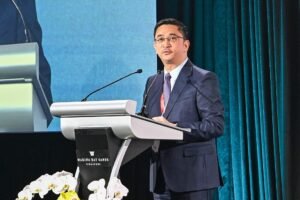
MENDOZA: LISTEN FIRST, REFORM NEXT!
At the Heads of Delegation Forum, Commissioner Mendoza delivered a message centered on strengthening tax morale and rebuilding trust between taxpayers and the tax administration.
His message was blunt: reforms cannot succeed by simply issuing more rules. The tax administration has to listen.
“When we began our reforms, we started by listening—to taxpayers, business organizations, tax practitioners, and our own revenue officers.”
That philosophy is reflected in the BIR’s DARES reform agenda, which puts emphasis on digitalization, audit administration, revenue enhancement, employee empowerment and stakeholder engagement.
For Mendoza, tax reform is not just about collecting more money.
It is about rebuilding confidence in the system that collects it.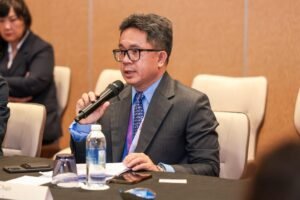
BROTO: THE TECHNICAL FORCE BEHIND THE REFORM DRIVE
Also deserving the spotlight is Director Atty. Marlon Fritz Broto, who joined Commissioner Mendoza and Deputy Commissioner Marissa O. Cabreros at the Heads of Delegation Forum.
Broto’s participation underscores the importance of technical leadership as the BIR moves toward a more modern, data-driven and taxpayer-focused administration.
In today’s tax battlefield, paper alone will not win the war.
Data, technology, transparency and competent people are becoming the weapons of modern revenue administration.
And that is precisely where the BIR’s reform agenda is heading.
PHILIPPINES JOINS THE REGIONAL TAX BATTLE
The Philippine delegation also participated in three major technical working groups.
Working Group 1 tackled tax transparency, including exchange-of-information standards, data quality, governance and regional cooperation.
Working Group 2 focused on the Global Minimum Tax, administrative readiness, tax certainty and mechanisms for preventing and resolving tax disputes.
Working Group 3 examined digital transformation—from digital services and e-invoicing to automation, artificial intelligence, data governance, process redesign and human oversight.
These are not merely technical buzzwords.
They are the issues that will determine how tax administrations operate in the digital economy.
SGATAR: PHILIPPINES WAS THERE FROM THE BEGINNING
Mendoza also highlighted the Philippines’ long connection with SGATAR.
The Philippine delegation was instrumental in proposing the creation of the Study Group in 1970, with the Philippines hosting its first meeting the following year.
That history gave Mendoza’s closing remarks added significance.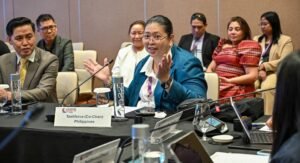
Attending SGATAR for the first time as BIR Commissioner, he emphasized that tax administrations must learn from one another—not simply copy another jurisdiction’s system, but adapt useful practices to local realities.
“We come here not only to share what we know, but also to learn what others may be doing better.”
That is the real test of reform:
Not the speeches. Not the slogans. Not the PowerPoint presentations.
Implementation.
THE NEXT CHALLENGE: BRING THE LESSONS HOME
New Zealand was confirmed as host of the 56th SGATAR Annual Meeting in 2027, while the Philippines proposed to host the 57th Annual Meeting.
But beyond the international meetings and diplomatic exchanges lies the bigger challenge.
What happens after Singapore?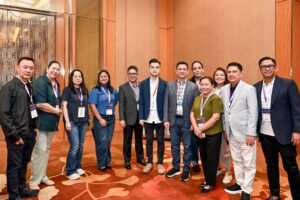
The real measure of Mendoza’s reform agenda will be seen when the lessons learned from regional tax administrations are converted into concrete improvements in the Philippines—faster services, stronger compliance, better use of data, modernized processes, capable personnel and a tax administration that taxpayers can understand and engage with.
Commissioner Atty. Charlito Martin R. Mendoza has put the BIR’s reform message before the Asia-Pacific tax community.
Director Atty. Marlon Fritz Broto, together with the BIR delegation, has likewise helped put the Philippines into the technical discussions shaping the future of tax administration.
Now comes the hard part.
Bring the ideas home.
Because in the end, the Filipino taxpayer will not judge tax reform by what was said in Singapore.
They will judge it by what they experience at home.
