 Dr. Bernie Anabo Jr. and Jimmy Saberon
DE VERA OPENS THE FLOOR—CUSTOMS, INDUSTRY PUT PROBLEMS ON THE TABLE
No more scripted smiles. No more polite nods. No more meetings where everybody talks and nobody really listens.
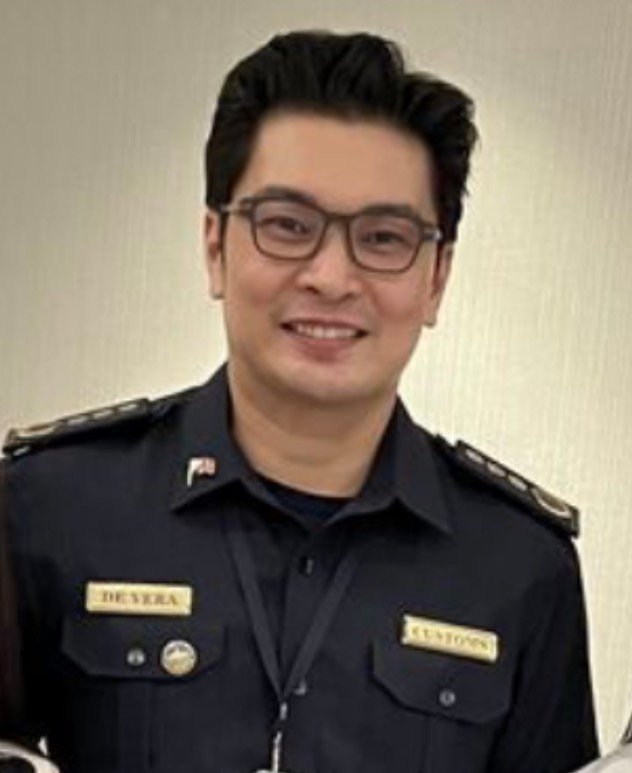
At the Manila International Container Port, the message from District Collector Atty. Felipe Geoffrey K. De Vera IV was blunt: if there are problems in Customs, put them on the table!
That was the defining tone of the 2nd Local Customs Industry Consultative and Advisory Council (CICAC) Meeting for 2026, held September 16 at the Dr. Jose P. Rizal Hall of the MICP Building.
And De Vera made it clear that CICAC was not created to become another ceremonial gathering.
“We want to hear what is working. More importantly, we want to hear what is not working,” De Vera told stakeholders.
That statement effectively opened the door for the real conversation.
Importers, customs brokers, logistics players, government agencies and other industry representatives were given an opportunity to raise concerns, seek clarification and offer suggestions on the procedures they encounter every day.
DE VERA: SPEAK UP!
Under De Vera’s leadership, the MICP consultation took on a more direct character.
His message was simple: Customs cannot fix problems it does not hear about.
“We want your ideas. We want your experience. We want your questions. And yes, we even want your criticisms. Just make them constructive,” De Vera told the Council.
That is precisely where CICAC becomes important.
The port is a massive operational machine. When one part of the process slows down or becomes unclear, the impact can travel through the entire cargo chain.
So the meeting did not merely discuss rules.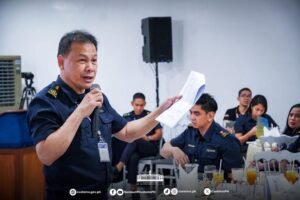
It opened up the machinery of Customs itself for scrutiny, explanation and dialogue.
BANZON PUTS ACCREDITATION UNDER THE SPOTLIGHT
Leading the presentations was Atty. Melvin Joseph L. Banzon, Executive Officer of the Accounts Management Office (AMO), who tackled the accreditation process for importers and customs brokers.
Accreditation is not a minor administrative detail. It is among the critical gateways through which legitimate traders enter the Customs process.
Banzon’s presentation gave stakeholders an opportunity to better understand the requirements and procedures involved—and, importantly, where questions may arise.
SENEN EXPLAINS WHAT HAPPENS TO CARGO UNDER CUSTOMS CUSTODY
Also taking center stage was Anna Liza Senen of the Assessment and Collection District Division (ACDD), who discussed the disposition of property under Customs custody.
For stakeholders dealing with shipments that cannot proceed through the normal clearance process, understanding disposition procedures can be crucial.
The discussion helped put a clearer face on what happens to goods once they fall under Customs custody and what processes govern their eventual disposition.
X-RAY INSPECTION: SEEING WHAT THE EYE CAN’T
Then came the cargo inspection side.
Aris Chris Cascalla of the X-Ray Inspection Project (XIP) walked participants through the cargo clearance and X-ray inspection process.
Non-intrusive inspection remains an important component of modern Customs enforcement, allowing authorities to examine cargo using technology as part of risk-based verification.
For industry, understanding how the X-ray process works can mean understanding why a shipment is subjected to additional scrutiny and how inspection fits into the larger clearance chain.
CIIS: INTELLIGENCE MEETS ENFORCEMENT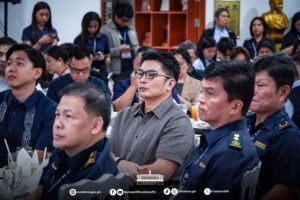
Meanwhile, Maribel Mendoza of the Customs Intelligence and Investigation Service (CIIS) tackled intelligence-driven shipment verification and enforcement.
This is where the conversation moves from ordinary processing to the protection side of Customs.
Behind every shipment are declarations, documents, cargo descriptions and risk indicators.
When questions emerge, intelligence and verification become critical tools in determining whether a shipment requires closer examination.
LGICT: THE CARGO FLOW BATTLEFIELD
Adding another important perspective was Carmela Rodriguez, General Manager of LGICT, who presented the terminal’s operations, services, cargo flow and Customs Facility Warehouse (CFW) process.
For importers and logistics stakeholders, the terminal is where Customs procedures meet the physical reality of moving containers.
Cargo cannot simply exist on paper.
It has to move.
And every delay, inspection, documentation requirement or operational issue can affect the movement of goods.
Rodriguez’s presentation therefore added the logistics perspective to the Customs discussion.
FIVE NEW VOICES JOIN THE FIGHT
The CICAC also welcomed five new members:
Asia Cargo Container Line, Inc. (ACCLI)
MBT International Freight Forwarder, Inc.
Muji Philippines Corporation
Bricolage Phils.
Aduana Business Club Inc. (ABCI)
The new members took their pledge and participated in the signing of the Manifesto of Support.
That means more industry voices—and potentially more issues, questions and recommendations—coming into succeeding consultations.
And that is exactly what De Vera appears to want.
Not applause.
Participation.
Not silence.
Feedback.
Not simply signatures.
Accountability and engagement.
THE REAL TEST STARTS AFTER THE MEETING
The biggest question now is not whether another CICAC meeting was held.
The real test is what happens after everyone leaves the room.
Were concerns properly documented?
Will recurring problems be addressed?
Will unclear procedures be clarified?
Will legitimate industry recommendations reach the offices responsible for action?
Those are the questions that determine whether consultation becomes meaningful.
At MICP, De Vera has placed the emphasis on dialogue—and the message coming from the meeting was unmistakable:
CUSTOMS AND INDUSTRY CANNOT OPERATE IN SEPARATE WORLDS.
They meet at the same ports, the same containers, the same documents and the same processes.
And when those processes create friction, the answer cannot simply be another meeting.
It has to be a conversation that leads to understanding—and, where warranted, improvement.
With De Vera opening the floor, Banzon explaining accreditation, Senen addressing Customs custody and disposition, Cascalla tackling X-ray inspection, Mendoza covering intelligence and enforcement, and Rodriguez laying out terminal operations and cargo flow, the MICP CICAC meeting put the entire chain under one roof.
Now comes the hard part:
LISTEN. ACT. FIX WHAT NEEDS FIXING.
Because a consultative council that is afraid of difficult questions is nothing more than a photo opportunity.
But a council willing to confront difficult issues?
That is where real Customs-industry dialogue begins.