
 Jimmy Saberon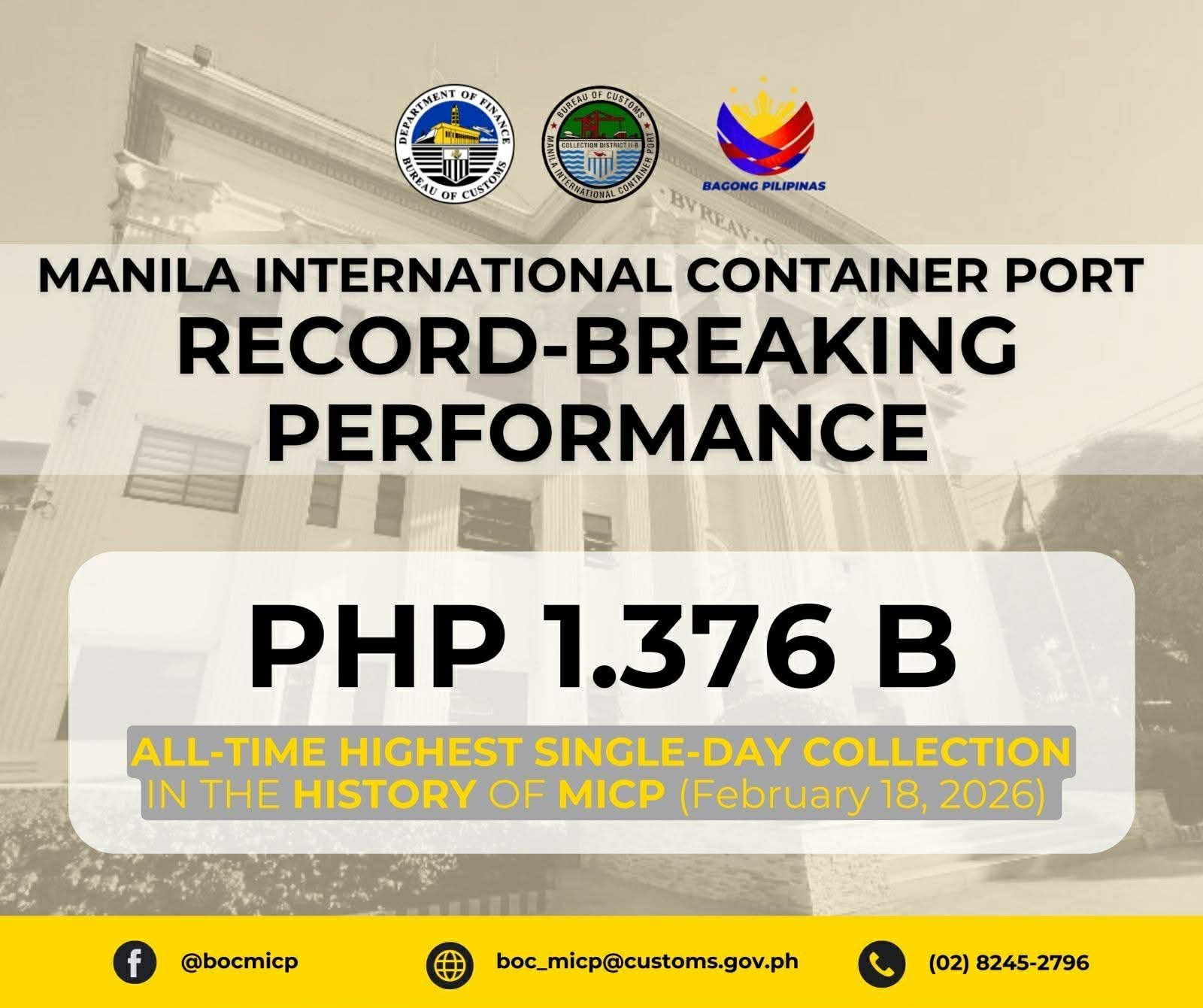
MANILA — The Bureau of Customs–Manila International Container Port (BOC–MICP) has recorded the highest single-day revenue collection in its history after generating ₱1.376 billion on February 18, 2026, marking a major milestone for the country’s largest container port.
As of mid-February, the MICP has collected ₱11.36 billion, exceeding its mid-month revenue target by 3.8 percent, according to port officials.
The port attributed the strong performance to a series of operational improvements, including logistics optimization with port and terminal operators, closer coordination with shipping lines, implementation of data-driven reforms based on trade release studies, strategic personnel deployment to ensure uninterrupted service, and strengthened collaboration with partner banks that extended operating hours, including weekends.
At the forefront of the achievement is MICP District Collector Atty. Felipe Geoffrey K. De Vera IV, who commended the port’s personnel for delivering what he described as a historic performance.
“This record-breaking performance is more than just numbers; it reflects the efficiency, integrity, and commitment of the men and women of MICP,” De Vera said.
He emphasized that the accomplishment aligns with the Bureau’s broader mandate to maximize revenue collection in support of national development.
Under the leadership of Customs Commissioner Ariel F. Nepomuceno, and in line with the directives of President Ferdinand “Bongbong” R. Marcos Jr. and Finance Secretary Frederick D. Go, the Bureau continues to strengthen enforcement and streamline trade facilitation processes to ensure steady revenue growth.
The MICP remains the Bureau’s top revenue-generating port, handling the bulk of containerized cargo entering the country. Officials expressed confidence that sustained operational reforms and stakeholder cooperation will further boost collection performance in the coming months.
With its latest milestone, the MICP reinforces its critical role in supporting the government’s fiscal targets and overall economic agenda.