 Dr. Bernie Anabo Jr. Jimmy Saberon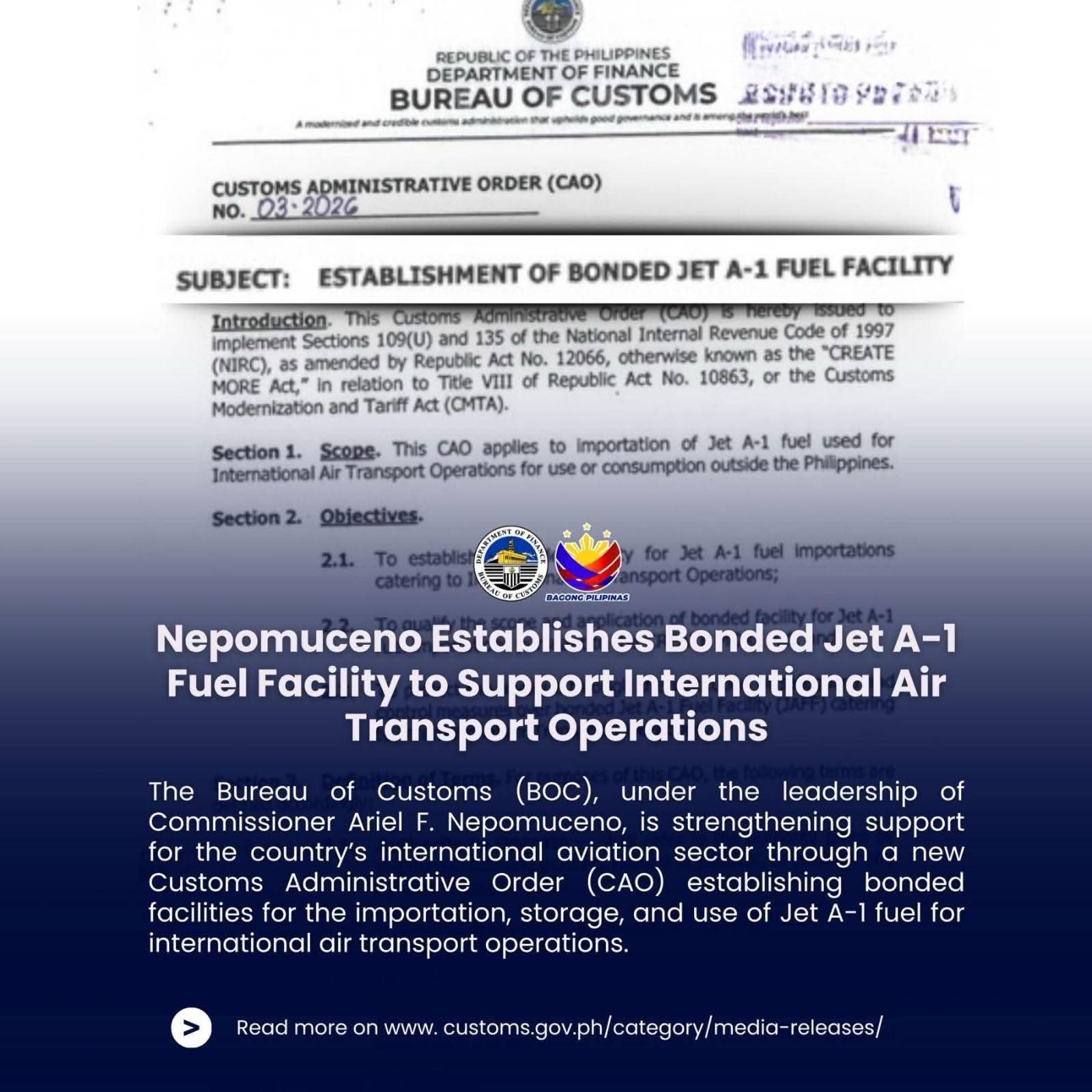
MANILA — The Bureau of Customs (BOC), under Commissioner Ariel F. Nepomuceno, is putting stronger customs controls behind the country’s international aviation operations with the establishment of Bonded Jet A-1 Fuel Facilities (JAFFs).
Through Customs Administrative Order (CAO) No. 03-2026, the BOC is creating a clear regulatory framework for the importation, storage and use of Jet A-1 fuel intended exclusively for international air transport operations.
The message from Commissioner Nepomuceno is straightforward: facilitate legitimate aviation—but protect government revenue at every turn.
JET FUEL UNDER TIGHTER CUSTOMS WATCH
The new order allows qualified international air transport operators and fuel suppliers to import and store Jet A-1 fuel for international operations, subject to strict customs requirements and safeguards.
Qualified importations may be entered conditionally free from VAT and excise tax, provided all prescribed requirements are met.
But there is a critical line in the new system: imported Jet A-1 covered by the bonded facility cannot simply be diverted to domestic operations.
Fuel intended for international aviation must remain for that purpose.
Any Jet A-1 diverted or used for domestic operations will be subject to the applicable duties and taxes.
NEPOMUCENO: FACILITATE TRADE, PROTECT REVENUE
Commissioner Nepomuceno is emphasizing a two-pronged approach—faster legitimate trade and tougher accountability.
“Mas mapapadali natin ang legitimate international aviation operations habang sinisiguro na protektado ang pondo ng gobyerno. With proper monitoring and safeguards in place, we can facilitate legitimate operations while ensuring accountability and compliance with customs laws,” Nepomuceno said.
Under CAO No. 03-2026, operators and suppliers must comply with eligibility and operational requirements, including dedicated storage facilities, security requirements, monitoring, transport controls and liquidation procedures.
The system also provides for performance, security and transport security bonds designed to protect the government against potential violations and revenue losses.
NO FREE PASS FOR VIOLATORS
The bonded arrangement may provide tax treatment for qualified Jet A-1 imports, but it does not mean a free pass.
The fuel remains under customs supervision, and violations can trigger duties, taxes and penalties under applicable laws and regulations.
That puts the spotlight squarely on enforcement and monitoring—the areas where the BOC under Nepomuceno is seeking to strengthen regulatory discipline while keeping legitimate international commerce moving.
AVIATION BOOST, REVENUE SHIELD
For the aviation industry, the framework is intended to make legitimate international operations more efficient.
For government, the safeguards are designed to ensure that preferential treatment for international aviation fuel is not abused.
Under Nepomuceno’s watch, the equation is clear: facilitate what is legitimate, monitor what is bonded, and collect what becomes liable for taxation.