 Bernie Anabo Jr.
The battle for government revenue is far from over—and at the Bureau of Customs–Port of Manila (BOC-POM), District Collector Rizalino Jose C. “RJ” Torralba is keeping his team on its toes, determined to sustain the port’s revenue performance and sharpen its operational edge!
With Deputy Collector for Assessment Mr. Florante Ricarte and Deputy Collector for Operations Atty. Gerard Turiano playing key roles in their respective areas, the Port of Manila is pushing forward with a clear mission: protect government revenues, strengthen operational discipline, and deliver efficient customs services without compromising enforcement.
The message is loud and clear: NO ROOM FOR COMPLACENCY WHEN PUBLIC REVENUE IS AT STAKE!
TORRALBA: LEADERSHIP THAT DEMANDS RESULTS!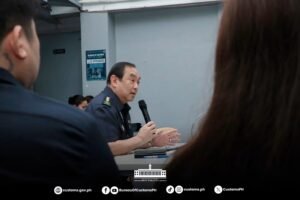
At the Division Heads Meeting held on October 7, 2026, Collector Torralba brought together deputy collectors, subport collectors, division chiefs, and support unit heads to evaluate performance, address operational concerns, and map out priorities for the continuing revenue campaign.
This was no ordinary gathering. It was an opportunity to put the numbers under scrutiny, confront operational challenges, and ensure that every office understands its responsibility in keeping the Port of Manila on track.
Torralba congratulated the POM offices for their hard work and teamwork in achieving the September 2026 revenue target—a milestone that reflects the collective efforts of personnel across the port.
But the district collector’s message was not simply about celebrating a job well done. It was also a call to maintain discipline, sustain momentum, and prepare for the next round of challenges.
His guiding words struck a balance between determination and faith: “Staying focused, working hard, and praying harder.”
In the demanding world of customs operations, where revenue targets, trade facilitation, enforcement, and public service must move together, Torralba’s challenge is to turn one month’s achievement into a sustained record of performance.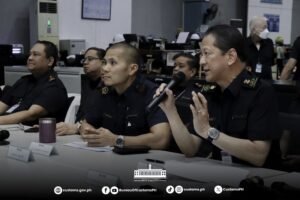
ONE TARGET ACHIEVED—THE NEXT CHALLENGE BEGINS!
RICARTE: ASSESSMENT IS A FRONTLINE DEFENSE OF GOVERNMENT REVENUE!
Deputy Collector for Assessment Florante Ricarte occupies a critical position in the Port of Manila’s revenue mission.
Assessment is not merely about processing import entries or computing duties and taxes. It requires careful examination of declarations, proper application of customs rules, and vigilance against undervaluation, misdeclaration, and other practices that could deprive the government of lawful revenues.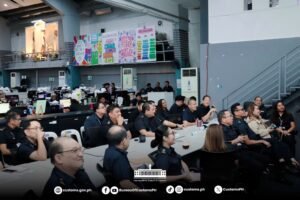
Every assessment decision matters. Every shipment must receive the scrutiny required under applicable customs regulations. And every peso legally due to the government must be protected.
Under the port’s collective revenue drive, the challenge for the assessment team is to maintain accuracy, consistency, and efficiency while ensuring that legitimate trade is not unnecessarily delayed.
The objective is clear: MAKE EVERY LAWFUL DUTY COUNT, CLOSE THE DOOR ON REVENUE LEAKAGES, AND KEEP LEGITIMATE TRADE MOVING!
Ricarte’s assessment team remains an important part of the broader effort to balance revenue collection with responsive customs service. Sustained results will depend on sound risk assessment, professional judgment, and strict adherence to established procedures.
TURIANO: OPERATIONS MUST DELIVER—NOT JUST PROMISE!
If assessment determines the proper collection of duties and taxes, operational management helps keep the port’s day-to-day machinery moving.
That is where Deputy Collector for Operations Atty. Gerard Turiano comes into the picture.
The operational challenge is enormous: coordinate frontline activities, address bottlenecks, maintain accountability, and ensure that customs processes move efficiently without weakening border protection or enforcement safeguards.
A well-managed port must be capable of facilitating legitimate commerce while remaining alert to attempts to circumvent customs laws. Speed and security must work hand in hand—not against each other.
For Turiano and the operations team, the continuing test is whether operational coordination can translate into faster, more reliable processing, stronger compliance, and better service for importers and other legitimate stakeholders.
NO UNNECESSARY DELAYS. NO WEAKENING OF SAFEGUARDS. NO COMPROMISE ON LAWFUL CUSTOMS PROCEDURES!
These are the standards that should define effective port operations—and the expectations against which performance must continually be measured.
TEAMWORK IS THE REAL WEAPON!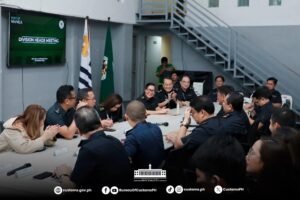
The October 7 meeting also underscored a fundamental truth: no district collector can achieve sustained results alone.
Revenue collection depends on coordinated work among assessment personnel, operations teams, subports, division chiefs, and support units. A weakness in one area can affect the performance of the entire port; effective coordination, meanwhile, can help resolve problems before they undermine operations.
The Port of Manila’s September achievement provides a foundation to build on, but continued success will require more than congratulatory messages. It will demand constant monitoring, disciplined execution, transparent accountability, and the willingness to address problems directly.
For Torralba, Ricarte, Turiano, and the entire POM workforce, the challenge is to keep every unit aligned with the port’s revenue and service objectives.
NEPOMUCENO’S REFORM AGENDA: RESULTS MUST MATCH THE MISSION!
The Port of Manila’s efforts are aligned with the broader strategic direction of the Bureau of Customs under Commissioner Ariel F. Nepomuceno, whose leadership places the agency’s revenue mission and public-service responsibilities in sharp focus.
As one of the country’s major customs gateways, the Port of Manila carries substantial responsibility. Its performance affects government revenue, import processing, business confidence, and the integrity of border controls.
That responsibility demands a customs service that is efficient but not careless, firm but fair, and focused on revenue without losing sight of the law.
The challenge for POM is to demonstrate that strong collection performance can go hand in hand with transparent procedures, professional conduct, and effective enforcement.
Targets must be met through lawful and sustainable methods. Legitimate traders must receive responsive service, while violations must be addressed through proper procedures and evidence-based enforcement.
THE NEXT TEST: SUSTAIN THE MOMENTUM!
The September 2026 target achievement is a welcome development for the Port of Manila. But the real measure of leadership is not a single month’s performance—it is the ability to sustain results, respond to changing conditions, and keep the organization accountable.
Collector RJ Torralba has set the tone. Deputy Collector Florante Ricarte’s assessment responsibilities and Deputy Collector Atty. Gerard Turiano’s operational role are vital components of the effort.
Now comes the harder part: keeping the entire port focused on the next target.
THE BOTTOM LINE: Revenue collection is not a one-man show. It is a collective mission that requires leadership, technical competence, operational discipline, and unwavering commitment to public service.
At the Port of Manila, the marching orders are straightforward: stay focused, work harder, strengthen coordination, and protect every peso legally due to the Filipino people.
Because when it comes to government revenue, THE JOB IS NOT FINISHED WHEN THE TARGET IS MET—THE JOB IS TO KEEP DELIVERING!