 Bernie Anabo Jr.
The game is changing at the Bureau of Customs (BOC) Port of Cagayan de Oro—and District Collector Arnaldo “Arnie” M. Saulong is positioning the port for a major international cargo breakthrough!
No sitting on the sidelines. No waiting for opportunities to knock. Saulong is moving to prepare Macabalan Port for a new chapter in international containerized cargo operations, a development that could inject fresh economic energy into Northern Mindanao and strengthen the revenue-generating capability of the Port of Cagayan de Oro.
The stakes are high. The opportunity is enormous. And the challenge is clear: get the port ready, get the procedures right, and make legitimate international trade move without unnecessary delays!
On October 7, 2026, Saulong met with executives of Oroport Cargo Handling Services, Inc. to thresh out the operational requirements for handling international cargoes at Macabalan Port. The discussions came as shipping giant CMA CGM Philippines signified its plan to begin loading and discharging international containerized shipments at the port, with an expected volume of approximately 2,000 containers per month.
That is no small development!
For a port that has primarily handled bulk shipments, the planned arrival of regular international containerized cargo operations presents a significant opportunity to expand commercial activity, strengthen trade connectivity, and improve customs revenue performance.
And Saulong is making sure that preparation—not improvisation—will be the order of the day.
2,000 CONTAINERS A MONTH: A GOLDEN OPPORTUNITY!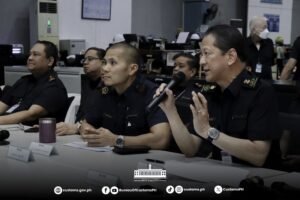
Imagine the potential economic activity generated by a steady flow of international containers: more efficient cargo movement, stronger logistics connections, expanded business opportunities, and a potentially broader base for customs revenue collection.
But opportunities of this magnitude demand serious preparation.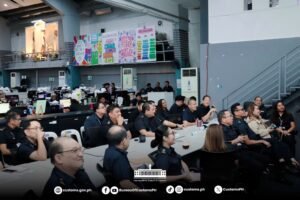
Customs procedures must be clear. Cargo-handling facilities must be ready. Designated offices and operational areas for the BOC must be properly arranged. Coordination between customs personnel, port operators, shipping lines, and other stakeholders must be tight.
One weak link in the chain could create delays, disrupt operations, and frustrate legitimate traders.
That is why Saulong’s meeting with Oroport President Johnny Ng and Vice President Michael Martin Teotico matters. The discussion was not simply about welcoming international vessels. It was about working through the operational details needed to make international container handling orderly, efficient, and compliant with customs requirements.
The message is unmistakable: prepare before the ships arrive, not after problems begin!
SAULONG: TRADE FACILITATION WITH TEETH!
Efficient customs operations do not mean abandoning enforcement. They mean striking the right balance between facilitating legitimate trade and enforcing the country’s customs laws.
That is where Saulong must deliver.
A modern, responsive port should help compliant importers and exporters move their cargo efficiently while maintaining effective controls against misdeclaration, undervaluation, smuggling, and other customs violations.
Fast processing must go hand in hand with proper documentation, risk assessment, inspection protocols, and accountability.
There must be no confusion over responsibilities, no avoidable procedural bottlenecks, and no compromise in enforcing the law.
Saulong’s challenge is to help build a system where legitimate cargo moves efficiently while questionable shipments receive the scrutiny required under applicable customs rules and regulations.
Trade facilitation must be fast—but never careless. Enforcement must be firm—but never arbitrary.
That is the standard the business community deserves.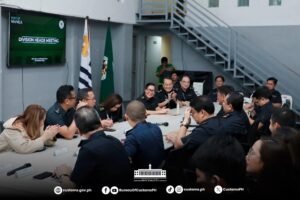
WALK-THROUGH INSPECTION: NO ROOM FOR LAST-MINUTE SURPRISES!
Another critical step is the planned walk-through inspection of the cargo-handling procedures and facilities before international vessel operations commence.
This is where plans must be tested against actual conditions.
Are the designated customs offices ready? Are the cargo-handling arrangements workable? Are the procedures coordinated? Can the port accommodate the expected volume without compromising safety, efficiency, and regulatory compliance?
These questions must be answered before operations begin.
The walk-through should identify weaknesses, clarify responsibilities, and resolve operational gaps while there is still time to act.
For Saulong, this is an opportunity to demonstrate that effective port leadership means anticipating problems, demanding readiness, and coordinating with stakeholders before commercial operations are placed under pressure.
A port cannot afford to discover its weaknesses only after cargo begins piling up.
REVENUE GENERATION: THE BIG TEST!
Saulong has emphasized that the planned international container operations are expected to boost revenue generation at the Port of Cagayan de Oro.
That expectation now carries a responsibility.
More containers may mean greater commercial activity and additional opportunities for revenue collection, but actual results will depend on cargo volume, valuation, classification, compliance, and broader trade conditions.
The challenge is to translate the anticipated increase in activity into lawful, sustainable customs revenue without creating unnecessary obstacles for legitimate business.
Every properly processed shipment matters. Every correctly assessed duty and tax matters. Every effective enforcement action against violations matters.
The objective is not simply to attract more containers. It is to ensure that the port handles them efficiently, assesses them correctly, and protects government revenue in accordance with the law.
More trade, stronger compliance, better service, and improved revenue performance—that is the winning formula!
COMMISSIONER NEPOMUCENO’S DIRECTIVES IN FOCUS
The initiative also supports the directives of Customs Commissioner Ariel F. Nepomuceno to strengthen stakeholder collaboration, facilitate legitimate trade, improve port efficiency, and advance revenue collection while ensuring the effective implementation of customs laws and regulations.
For the Port of Cagayan de Oro, the planned expansion of international containerized cargo operations offers a concrete opportunity to put those priorities into action.
The BOC and Oroport must now turn coordination into execution. Facilities must be prepared, procedures must be clarified, and operational responsibilities must be properly aligned before the first vessels begin the planned service.
This is where leadership is measured—not by the number of meetings held, but by the quality of implementation and the results delivered.
THE BOTTOM LINE: SAULONG MUST MAKE THE OPPORTUNITY COUNT!
The planned entry of international containerized cargo operations at Macabalan Port could become an important milestone for Cagayan de Oro’s logistics sector.
For District Collector Arnaldo “Arnie” Saulong, it is both an opportunity and a test: an opportunity to strengthen the port’s role in international trade, and a test of his ability to turn preparation, coordination, and enforcement into measurable operational results.
The business community needs a customs administration that understands the urgency of trade. The government needs accurate assessments and protected revenues. The public needs assurance that customs laws will be enforced without fear or favor.
Those objectives must move together.
Saulong has taken a step by bringing Oroport’s executives to the table and addressing the procedures required for the planned operations. The next battle is implementation—and the results must speak for themselves.
Macabalan Port is preparing for a bigger role. Now the challenge is to make every container count, every procedure work, and every legitimate peso due to the government properly collected.
In the high-stakes world of international trade, preparation is power—and execution is everything!