 Bernie Anabo Jr.
If anyone still doubts who’s steering the ship at the Bureau of Customs’ biggest gateways, the 1st Customs Industry Consultative and Advisory Council (CICAC) Meeting for CY 2026 at the Manila International Container Port (MICP) just delivered a loud, unmistakable answer.
This was not your usual polite, coffee-sipping consultation.
This was Customs power on full display.
Front and center was Port of Manila (POM) District Collector Rizalino Jose C. Torralba, flanked by his Deputy Collectors, Subport Collectors, and key division chiefs, taking the heat head-on from industry players who know exactly where the bottlenecks hurt. No dodging. No sugarcoating. Issues were raised, confronted, and addressed right there and then—proof that under Torralba, dialogue is not just a buzzword but a working weapon for reform.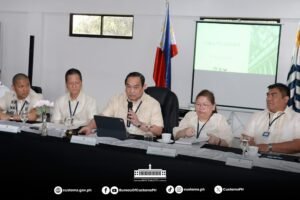
And the message was clear: Customs is listening—but it’s also in charge.
Holding the CICAC at the MICP Multi-Purpose Hall was no accident. It was a strategic statement of unity and muscle, spotlighting the rock-solid partnership between POM and MICP. At Torralba’s side stood MICP District Collector Atty. Felipe Geoffrey K. De Vera, whose firm grip on one of the country’s busiest container ports has kept operations tight, disciplined, and moving despite relentless trade pressures.
Together, Torralba and De Vera sent a blunt signal to both allies and critics: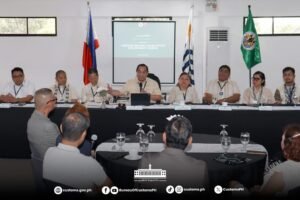
👉 Coordination is real.
👉 Leadership is synchronized.
👉 Excuses are no longer welcome.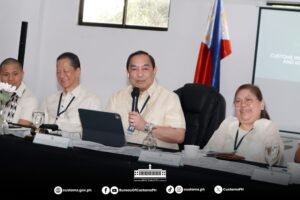
The presence and active participation of POM’s Deputy Collectors further reinforced the point—this is a command team aligned from top to bottom, ready to translate policy into action and talk into results.
Collector Torralba drove the point home by anchoring the consultative meeting to the vision of BOC Commissioner Ariel F. Nepomuceno, whose push for strong public-private partnerships is fast becoming the backbone of Customs’ reform narrative. Under this leadership triangle—Nepomuceno, Torralba, and De Vera—the Bureau is aggressively reclaiming its role as both trade facilitator and enforcer, without fear or favor.
Bottom line?
This CICAC was not just a meeting. It was a warning shot and a promise rolled into one.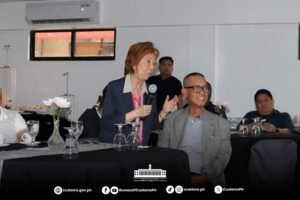
To stakeholders: Customs is open for business—but only clean, efficient, and transparent business.
To smugglers, fixers, and chronic complainers: the old games won’t survive 2026.
At the Port of Manila and MICP, the tone has been set—and it’s loud, clear, and unapologetically tough.

 Morning Standard News Team