 Dr. Bernie Anabo Jr.
In the ruthless world of customs operations where smugglers strike fast and corruption can cripple trade, weak leadership is simply not an option.
At the Port of Clark, one man is making it crystal clear that discipline is back — and his name is District Collector Jairus Reyes.
While other ports struggle with delays, loopholes, and operational chaos, Reyes is aggressively transforming the Port of Clark into a high-performing, tightly managed, and investor-ready gateway that reflects the hardline reform agenda of Ariel Nepomuceno.
And make no mistake about it — this is not cosmetic reform. This is boots-on-the-ground, hard-hitting operational leadership.
Located inside the booming Clark Freeport Zone and directly connected to the rapidly expanding Clark International Airport, the Port of Clark has become one of the country’s most critical trade and logistics hubs. High-value electronics, aviation equipment, time-sensitive cargo, and investment-driven shipments move through the port daily.
One mistake, one weak link, and millions could be lost.
That is exactly why Reyes’ leadership is drawing serious attention.
Under his watch, operational discipline has tightened, cargo processing has become more structured, and enforcement measures have grown sharper and more aggressive.
Insiders say the atmosphere inside the port has changed — systems are being enforced, accountability is being demanded, and complacency is no longer tolerated.
At a time when the Bureau of Customs is under enormous pressure to modernize and restore public trust, Reyes has positioned Clark as one of the clearest examples of what happens when reform is actually implemented instead of merely discussed.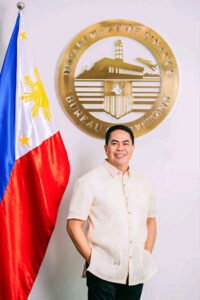
The marching orders from Commissioner Nepomuceno are loud and uncompromising: modernization, transparency, integrity, and zero tolerance for irregularities. Reyes appears to have embraced that mandate with full force.
What separates his leadership from ordinary bureaucratic management is his ability to balance two difficult missions at the same time — facilitating trade while protecting the country’s borders.
On one side, investors and locators demand speed, predictability, and efficiency. On the other, the government demands tighter border security and relentless anti-smuggling enforcement. Many fail to balance both.
But at Clark, Reyes is proving that facilitation and enforcement can work hand-in-hand.
The result? A port that is becoming faster without becoming vulnerable.
More efficient without sacrificing vigilance. More investor-friendly without surrendering regulatory control.
Even more critical is the culture shift happening inside the port itself.
Reyes has reportedly pushed stronger professionalism, operational clarity, and stricter accountability among personnel — creating an environment where discipline is not optional but expected.
That matters.
Because customs reform is never won through speeches alone. It is won at the district level, where cargo is inspected, rules are enforced, and decisions are made every single day.
And right now, the Port of Clark is sending a strong message across the customs community: disciplined leadership delivers results.
With Commissioner Nepomuceno driving national reforms and District Collector Jairus Reyes enforcing them with iron resolve on the ground, the Port of Clark is rapidly emerging as a symbol of aggressive modernization, stronger enforcement, and no-nonsense governance.
In an era where the country needs faster trade, stronger borders, and restored public confidence, Reyes is proving that real leadership in customs is not about noise — it is about control, direction, and results.