 Bernie Anabo Jr.
If the sanctions imposed by the Communist Party of China against Defense Secretary Atty. Gilberto “Gibo” Teodoro Jr. and his family were meant to silence him, Beijing made a serious miscalculation.
They picked the wrong Filipino.
Secretary Teodoro did not commit a crime. He did not spread lies. He did not invent stories. He simply spoke uncomfortable truths that many nations already recognize: the continued aggression in the West Philippine Sea, the blatant disregard of international law, and the growing concern over illegal operations linked to Chinese syndicates operating on Philippine soil.
The message from Beijing is clear: criticize them, expose them, defend your country—and expect retaliation.
But the Philippines is not a province of China.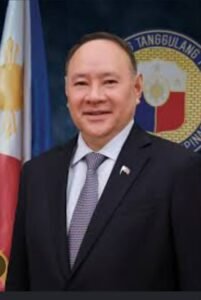
It is a sovereign republic.
Teodoro has consistently drawn a distinction that critics deliberately ignore. This is not an attack against Chinese nationals.
It is a fight against lawlessness, foreign interference, and activities that weaken the Filipino nation.
The West Philippine Sea issue is not a product of imagination.
The 2016 arbitral ruling under UNCLOS invalidated China’s sweeping nine-dash line claim. The international community knows it.
Many governments support it. Maritime experts affirm it.
Yet Beijing continues to act as if the law applies only when convenient.
That is not diplomacy.
That is coercion.
And Teodoro refuses to normalize it.
His determination also extends to rooting out illegal activities that have flourished under the shadows of influence and intimidation.
The Bamban scam hub exposed how foreign-backed criminal networks could infiltrate local communities. The controversy surrounding Alice Guo raised disturbing questions about identity, influence, and national security.
Then came Sanjia.
The now-shuttered steel operation allegedly linked to Tony Yang, brother of the controversial Michael Yang, became another symbol of how powerful interests could exploit Philippine institutions.
Tony Yang himself admitted before the Senate that his citizenship documents were fake.
Even more alarming were reports that senior officials from the Chinese Embassy allegedly intervened to shield the operation from scrutiny.
If true, Filipinos have every right to be outraged.
What business does any foreign embassy have interfering in the enforcement of Philippine laws?
Why should the safety of Filipinos be sacrificed to protect those accused of flooding the market with substandard products?
Why should a massive private pier connect to controversial personalities escape public scrutiny?
These are not racist questions.
They are patriotic ones.
Teodoro’s critics would rather weaponize accusations of discrimination than confront the uncomfortable reality that organized criminal activity and foreign influence operations pose genuine threats to national security.
The Defense Secretary refuses to look away.
And that is precisely why he has become a target.
The bigger issue here is simple.
China wants compliance.
The Philippines chooses resistance.
Teodoro has repeatedly said he would prefer healthy and productive defense relations with China. Filipinos are not enemies of the Chinese people. But genuine friendship cannot exist when one side insists on redrawing maritime boundaries through intimidation and military pressure.
Accepting the illegal nine-dash line would not be diplomacy.
It would be betrayal.
No Filipino official who values national dignity can endorse it.
While Beijing sanctions and threatens, the Philippines strengthens its defenses. The Department of National Defense continues modernizing the Armed Forces of the Philippines, expanding strategic partnerships, and building credible deterrence.
That is not warmongering.
That is survival.
History has taught nations a painful lesson:
appeasement only invites greater aggression.
India learned it.
Other countries in the region learned it.
The Philippines must not learn it the hard way.
If China can punish foreign officials for speaking out, imagine what it can do to its own citizens who dare dissent. Imagine the fate of communities living in territories it seeks to dominate.
Silence has never protected freedom.
Courage does.
Secretary Gibo Teodoro’s response sends a message beyond Philippine shores:
The Filipino people can be pressured, but they cannot be bought.
They can be threatened, but they cannot be intimidated.
They can be sanctioned, but they will never surrender their sovereignty.
The Philippine flag is not for sale.
The West Philippine Sea is not negotiable.
And this nation, despite all its imperfections, will never kneel before foreign powers demanding obedience.
Mabuhay ang Pilipinas.
Hindi tayo pasisiil.
Hindi tayo uurong. At lalong hindi tayo yuyuko