 Bernie Anabo Jr.
BUSINESS SECTOR PUT ON NOTICE: ELECTRONIC INVOICING MUST WORK—NOT JUST LOOK GOOD ON PAPER!
MANILA — The Bureau of Internal Revenue (BIR) is turning the heat up on its electronic invoicing drive as it moves to tighten the rules, listen to the business sector and prepare taxpayers for a major shift toward a more digital, transparent and accountable tax system.
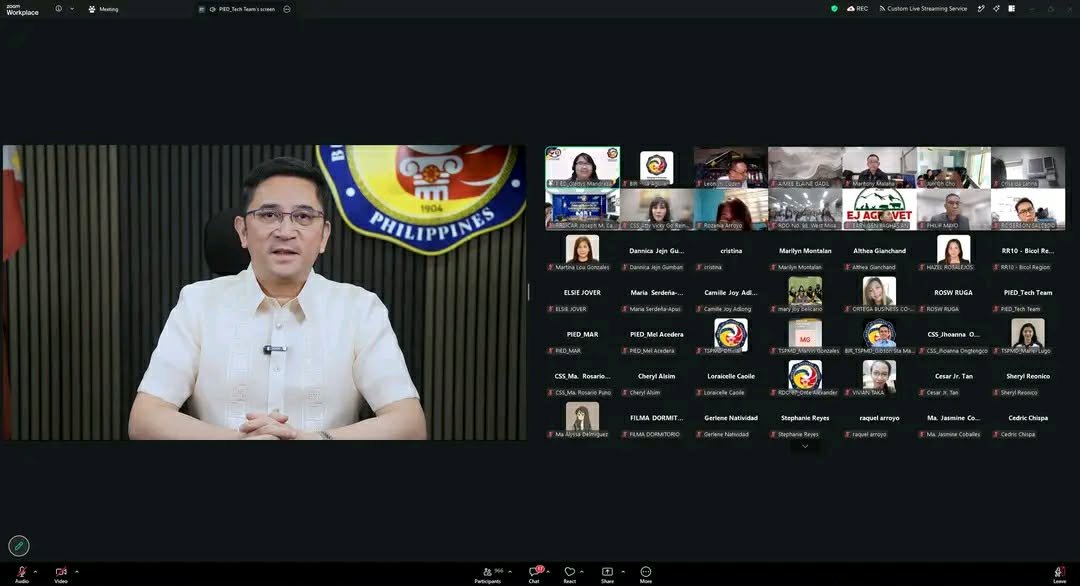
Led by BIR Commissioner Atty. Charlito Martin R. Mendoza, the bureau held its Public Consultation on the draft Revenue Memorandum Circular (RMC) covering the policies and guidelines on the issuance of electronic invoices under Revenue Regulations Nos. 8-2022 and 11-2025, as amended by RR No. 26-2025.
The consultation was held August 25 at the BIR National Office Training Center Auditorium.
But this was no ordinary government meeting.
This was a warning shot—and a reality check.
With representatives from 15 BIR Partnership with the Multisectoral Group (BIR-PMSG) organizations representing business, accounting, taxation, finance, export, technology, petroleum and foreign chambers, the BIR placed the proposed electronic invoicing framework under the microscope.
And Commissioner Mendoza made it clear: digital taxation is coming, and the BIR intends to make it work.
MENDOZA: NO ROOM FOR DIGITAL CHAOS
The challenge for the BIR is not simply to issue another regulation.
The real battle is implementation.
Electronic invoicing can potentially make transactions easier to monitor, improve compliance and strengthen tax administration—but if the rules are confusing, costly or disconnected from actual business operations, the system could create another bureaucratic headache.
That is precisely why Mendoza’s leadership in pushing consultation with stakeholders is crucial.
The message is simple:
Modernize—but listen. Digitize—but make it workable. Enforce—but make the system clear.
The BIR cannot afford an electronic invoicing system that looks impressive in presentations but collapses when confronted with the complicated realities of thousands of businesses.
BAQUIRAN ON THE FRONT LINE
Helping drive the BIR’s operational machinery is Deputy Commissioner for Operations Atty. Vener Baquiran, whose role is critical in translating policy into actual field implementation.
This is where the rubber meets the road.
A regulation may be perfect on paper, but if taxpayers, accountants, businesses and BIR personnel cannot implement it properly, the system will fail.
Baquiran and the Operations Group therefore face a critical assignment: turn the electronic invoicing policy into a system that works from the boardroom to the smallest compliant taxpayer.
No shortcuts.
No confusion.
No endless interpretation.
FROM PAPER TRAILS TO DIGITAL TRAILS
Electronic invoicing represents a major transformation in how commercial transactions can be recorded, monitored and ultimately subjected to tax administration.
It can strengthen the government’s ability to detect discrepancies, improve audit trails and reduce opportunities for underreporting.
But the BIR must also ensure that legitimate businesses are not buried under unnecessary compliance burdens.
That is why the public consultation matters.
The participation of business and professional groups gives Mendoza and Baquiran an opportunity to identify loopholes, operational problems and unintended consequences before the rules hit the entire business community.
This is where consultation becomes more than ceremony.
It becomes a stress test.
THE REAL TEST BEGINS AFTER THE CONSULTATION
The BIR has already made its direction clear: the tax system is going digital.
Now comes the harder part.
Will the final guidelines be simple enough to understand?
Will businesses have sufficient time and capability to comply?
Will the BIR provide clear technical guidance?
Will its systems be ready?
And most importantly—will enforcement be fair and consistent?
Those are the questions Mendoza and Baquiran must answer as electronic invoicing moves closer to full implementation.
Because at the end of the day, digitalization is not about computers. It is about credibility.
If done right, electronic invoicing can become a powerful weapon against tax leakage and improve voluntary compliance.
If done badly, it could become another layer of red tape wearing a digital disguise.
For Mendoza and Baquiran, the mandate is therefore crystal clear:
Make electronic invoicing work. Make it fair. Make it enforceable. And make sure nobody is left behind.
The BIR is entering the digital battlefield.
This time, there should be no turning back.