 Bernie Anabo Jr.
BOC–PORT OF MANILA CRUSHES 7 CONTAINERS IN NO-RETURN-TO-MARKET DRIVE
Seven containers. More than ₱1.650 million worth of seized and forfeited goods. And not a single item was allowed another shot at the market.
That is the message coming out of the Bureau of Customs–Port of Manila (BOC-POM) under District Collector Rizalino Jose “R.J.” C. Torralba.
The Port of Manila has completed the condemnation of seven containers packed with various seized and forfeited commodities, putting a definitive end to their possible unauthorized circulation.
The operation, conducted through the Auction and Cargo Disposal Division (ACDD) in Biñan, Laguna, lasted 10 days and concluded on September 15.
This was not simply a disposal exercise.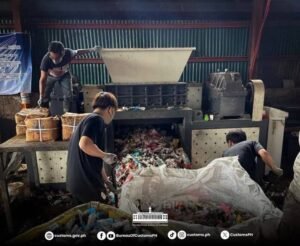
It was a hard stop.
Among the condemned goods were grocery products, deteriorated LED lighting fixtures, furniture, medical supplies, mattresses, toothbrushes, household goods and personal effects.
Some had been sitting under customs custody for years, covered by Warrants of Seizure and Detention (WSDs) issued in various years.
Now, they are gone.
NO SECOND CHANCE
Under Order of Condemnation No. 01-2026, the goods were ordered destroyed/disposed of in accordance with applicable customs rules and procedures.
The seizures and forfeitures involved violations cited under Section 1400 in relation to Section 1113 of the Customs Modernization and Tariff Act (CMTA), as well as Republic Act No. 8293, or the Intellectual Property Code of the Philippines.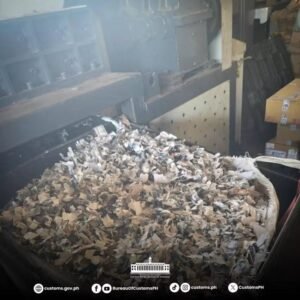
The significance is clear:
Goods that have been legally forfeited in favor of the government cannot simply be allowed to re-enter commerce through the back door.
That is where Torralba’s leadership at the Port of Manila comes into sharp focus.
TORRALBA: NO ROOM FOR SHORTCUTS
Under Collector R.J. Torralba, the condemnation operation demonstrates that enforcement does not end when Customs intercepts questionable shipments.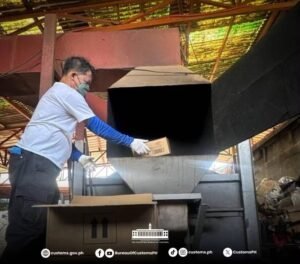
It continues until the forfeited goods are lawfully and properly disposed of.
That final step matters.
A seizure without proper disposition can leave opportunities for goods to remain in storage, become a logistical burden, or potentially find their way into unauthorized channels.
The Port’s latest operation sends the opposite signal:
SEIZED MEANS SEIZED. FORFEITED MEANS FORFEITED. AND CONDEMNED MEANS OUT OF THE MARKET.
₱1.65 MILLION — WIPED OFF THE SUPPLY CHAIN
The value involved—more than ₱1.650 million—may represent different commodities, but the enforcement message is one and the same.
The government will not allow forfeited shipments to become somebody else’s merchandise.
From deteriorated lighting fixtures to household goods, medical supplies and other commodities, the items were subjected to the prescribed condemnation process rather than left hanging indefinitely.
This is precisely where the work of the Port’s disposal personnel becomes part of the broader anti-smuggling campaign.
THE TORRALBA STANDARD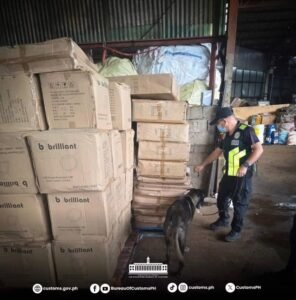
The operation was conducted pursuant to the directives of Collector Torralba, reinforcing the Port of Manila’s stated commitment to lawful, transparent and accountable disposition of seized and forfeited goods.
And under Commissioner Ariel F. Nepomuceno, the BOC continues to emphasize enforcement, border protection and the fight against smuggling.
But at the port level, implementation is where policies are tested.
In Manila, Torralba’s name is now attached to another message:
NO SHORTCUTS. NO BACK DOORS. NO FREE PASS.
Seven containers have been condemned.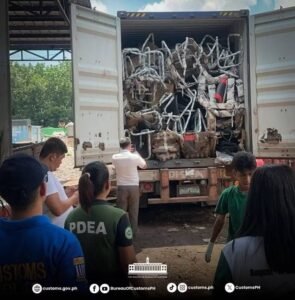
More than ₱1.65 million worth of goods have been removed from the possibility of unauthorized circulation.
And the Port of Manila has once again demonstrated that the battle against illicit trade does not stop at the seizure point.
IT ENDS WHEN THE FORFEITED GOODS ARE FINALLY OUT OF THE MARKET.
That is the Torralba line—and this time, seven containers crossed it.