 Dr. Bernie Anabo Jr
District Collector Alexander Gerard E. Alviar once again demonstrated steady leadership as he presided over the Division Heads Meeting of the Bureau of Customs – Port of Manila (POM) last August 20. At first glance, such meetings may seem routine, but beneath the surface lies a deeper narrative—a collective reaffirmation of discipline, direction, and accountability.
Alviar’s acknowledgment of POM’s exceptional collection performance in the previous month was not merely ceremonial praise. Surpassing revenue targets is a matter of national interest; it reflects how efficiently government institutions perform their mandates in the service of the Filipino people. For a port as strategic as Manila, success is measured not just by numbers, but by the trust it cultivates among stakeholders who depend on its stability.
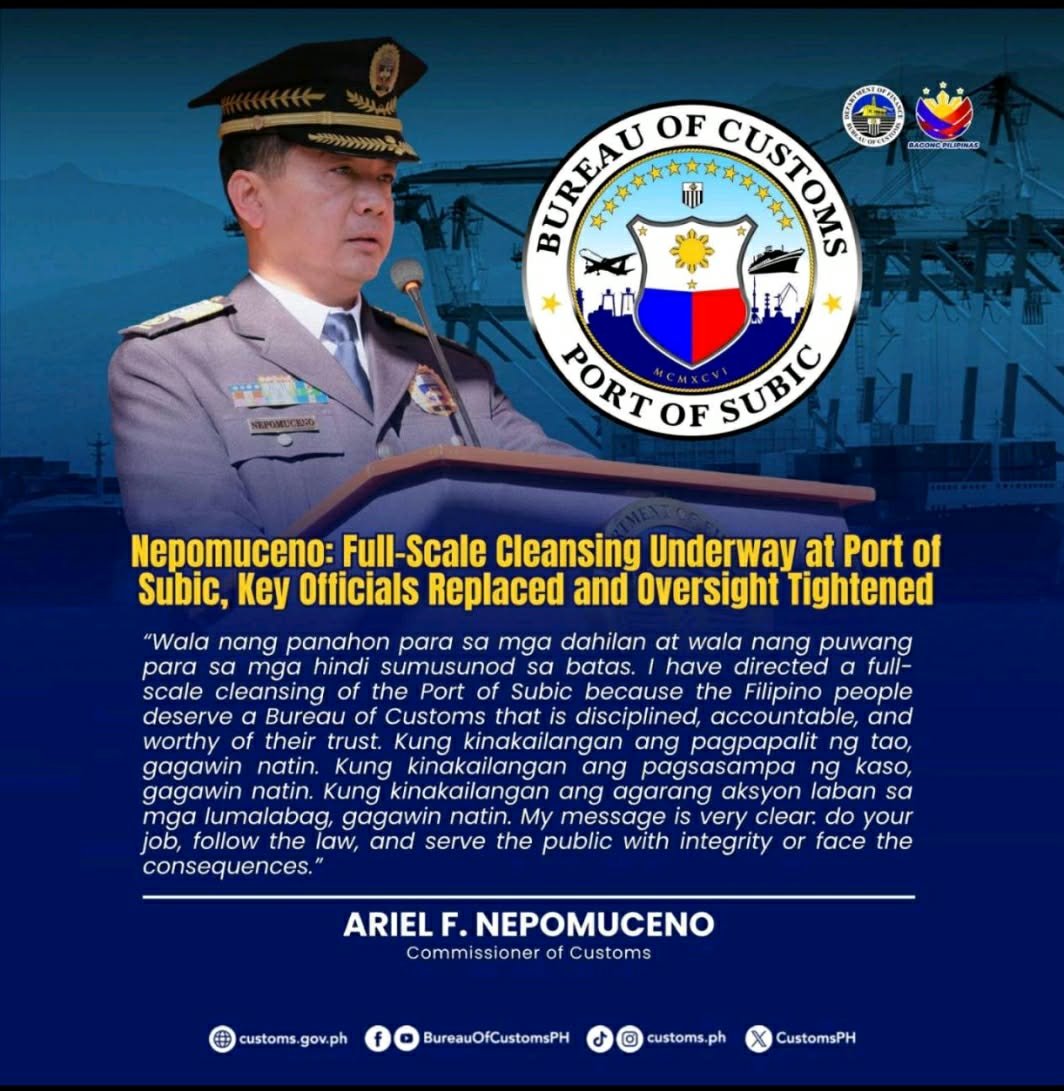
What makes this meeting significant is how Alviar connected local performance with the broader vision of BOC Commissioner Ariel F. Nepomuceno. The Commissioner’s directives—good governance, efficiency, enforcement, and stakeholder engagement—are not abstract ideals; they are pillars meant to recalibrate the Bureau into a modern, credible, and corruption-free institution.
The challenge, of course, lies in execution. Governance reforms and operational efficiency demand more than compliance—they require collective willpower. Enforcement, on the other hand, must walk the delicate line of firmness without alienating stakeholders. And engagement, often underestimated, is the bridge that sustains trust between government and private partners.
At the core of all these is leadership. Alviar’s approach shows an understanding that leadership is not only about targets but also about cultivating a culture of excellence—one where discipline, transparency, and collaboration thrive.
The Port of Manila is not just a gateway of trade; it is a litmus test of institutional integrity. Meetings such as this remind us that beyond the technicalities of customs work lies a deeper responsibility: to assure the public that the agency is capable, trustworthy, and reform-driven.
If sustained, this convergence of vision and execution may very well strengthen not only the Port of Manila’s operational backbone but also the Bureau of Customs’ long-standing bid to reclaim public confidence