 Bernie Anabo Jr.
The Bureau of Customs is no longer waiting for the future—it is preparing to dominate it.
In a high-level meeting that signals a major shift in how Customs intends to handle the country’s growing trade volume, Deputy Commissioner Agaton Teodoro O. Uvero of the Assessment and Operations Coordinating Group (AOCG) took the lead in engaging global logistics giants UPS Philippines and FedEx Philippines as they push forward with expansion projects in the country.
The message was loud and clear: Customs is ready, and it intends to stay ahead of the curve.
While international cargo volumes continue to surge, Uvero is making sure the Bureau is not caught flat-footed. Instead of reacting to problems after they happen, the AOCG chief is aggressively building partnerships and strengthening coordination with industry players before bottlenecks can even emerge.
For businesses investing billions in logistics and supply chain infrastructure, that kind of leadership matters.
Under Uvero’s watch, Customs is sending a powerful signal to investors: the Philippines is open for business, and government is prepared to facilitate growth—not hinder it.
The meeting focused on ensuring faster customs clearance, smoother cargo movement, and uninterrupted supply chain operations as express cargo traffic continues to expand.
These are not mere talking points. They are critical factors that determine whether investors stay, expand, or take their business elsewhere.
And Uvero appears determined to make sure they stay.
Observers say the Deputy Commissioner has been steadily positioning the AOCG as one of the key engines driving operational efficiency within the Bureau. His approach is simple but effective—engage stakeholders, identify challenges early, and eliminate obstacles before they disrupt trade.
If Uvero is preparing the battlefield at the national level, Jairus S. Reyes is delivering results on the front lines.
At the Port of Clark, Reyes continues to emerge as one of the Bureau’s most dynamic field commanders, translating policy into action and ensuring that Commissioner Ariel F. Nepomuceno’s reform agenda gains real traction on the ground.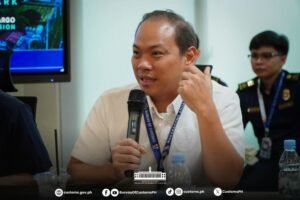
With Clark rapidly transforming into a major logistics and aviation hub, Reyes has embraced a hands-on approach focused on client service, operational efficiency, and strong stakeholder relations. His proactive engagement with industry partners has helped strengthen confidence in Clark as a strategic gateway for trade and investment.
In an era where delays can cost millions and inefficiency can drive away investors, Reyes understands that speed, reliability, and responsiveness are no longer optional—they are essential.
The combined efforts of Uvero and Reyes reflect a broader transformation taking place within Customs under the leadership of Commissioner Nepomuceno. Gone are the days when Customs was viewed solely as a revenue collector.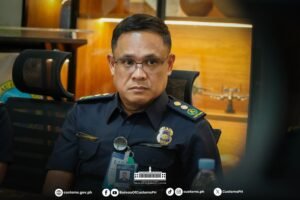
Today, the agency is increasingly positioning itself as a vital partner in economic development.
Their work also directly supports the vision of Ferdinand R. Marcos Jr. to attract investments, improve the ease of doing business, and strengthen the country’s competitiveness in the global market.
As multinational logistics companies expand and international trade accelerates, one thing is becoming increasingly evident:
Customs officials like Uvero and Reyes are not merely keeping pace with growth—they are helping drive it.
And in the fiercely competitive world of global commerce, that may be the difference between leading the race and being left behind.