 Bernie Anabo Jr.
The paper trail is finally facing extinction.
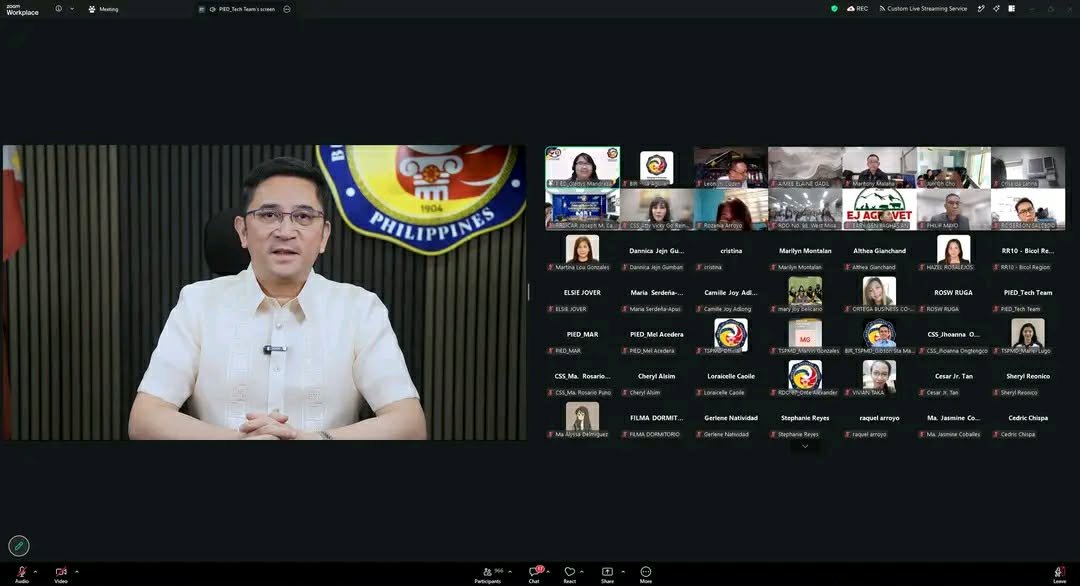
Bureau of Internal Revenue (BIR) Commissioner Atty. Charlito Martin R. Mendoza is pushing a major digital transformation that could finally eliminate one of the most stubborn bottlenecks in government transactions—the requirement to return an otherwise fully digital document to paper just to satisfy Documentary Stamp Tax (DST) rules.
Mendoza, together with Supreme Court Associate Justice Alfredo Benjamin S. Caguioa, is spearheading efforts to connect the BIR’s Electronic Documentary Stamp Tax (eDST) system with the Supreme Court’s Electronic Notarization (eNotarization) facilities.
And this is not simply another government “digitalization” project.
This is an assault on red tape.
During their August 11 meeting, BIR and Supreme Court officials tackled the integration of systems that would allow DST to be paid and constructively affixed electronically keeping documents digital from execution, signing and notarization all the way to verification.
Mendoza’s message is blunt:
If government allows a document to be created, signed, notarized and verified electronically, why force citizens and businesses to print it out just to comply with DST?
That is precisely the absurdity the BIR chief wants to eliminate.
« “If a document can be executed, signed, notarized, and verified electronically, it should not have to go back to paper just to comply with the Documentary Stamp Tax.” »
That statement captures the heart of Mendoza’s reform agenda.
MENDOZA: NO MORE DIGITAL-TO-PAPER-TO-DIGITAL NONSENSE
The BIR chief is effectively challenging an outdated process that can undermine the very efficiency that digital government is supposed to deliver.
Imagine a transaction completed electronically—only to be printed because of a tax stamp requirement.
That is not modernization. That is digital bureaucracy wearing a new uniform.
Mendoza wants to break that cycle.
The proposed alignment between eDST and eNotarization could create a genuine end-to-end electronic transaction, making documents easier to process, faster to verify and less vulnerable to lost paperwork, manual handling and unnecessary administrative delays.
The initiative builds on two major reforms: the Supreme Court’s Rules on Electronic Notarization, approved on February 4, 2025, and the BIR’s Revenue Regulations No. 28-2025, issued on December 22, 2025, which implemented the enhanced eDST system and mandated its use by covered taxpayers, including notaries public.
MENDOZA’S BIR: DIGITAL MEANS DIGITAL
This is where Mendoza deserves the spotlight.
The BIR commissioner is not merely digitizing existing procedures.
He is pushing agencies to redesign how government works.
Under the BIR DARES framework—particularly its Digital and Data Transformation, Service Excellence, and Stakeholder Engagement pillars—the objective is clear: government systems should communicate with one another instead of forcing the public to become the “bridge” between disconnected agencies.
For taxpayers, lawyers, notaries, businesses and ordinary citizens, that could mean fewer documents to print, fewer manual steps and fewer opportunities for delays and errors.
For government, it means stronger traceability and more verifiable transactions.
And for the BIR, it demonstrates that tax administration can be both tough on compliance and smart in service delivery.
THE REAL TEST: MAKE GOVERNMENT WORK FOR THE PEOPLE
Mendoza’s challenge now is execution.
Technology alone does not kill red tape.
Integration does.
If the BIR and Supreme Court successfully connect their digital systems, the reform could become a model for other government agencies still trapped in fragmented, paper-heavy procedures.
The message from Mendoza is therefore bigger than eDST.
It is about changing the mindset of government:
Stop making people print what government already knows how to process electronically.
The taxpayer should not have to carry paper from one government office to another simply because agencies cannot make their systems talk to each other.
That era should be ending.
And if Mendoza has his way, the last paper roadblock in electronic notarization may soon be history.
Mendoza is not just collecting taxes. He is pushing the BIR into the digital age—one paperless reform at a time.