 Dr. Bernie Anabo Jr
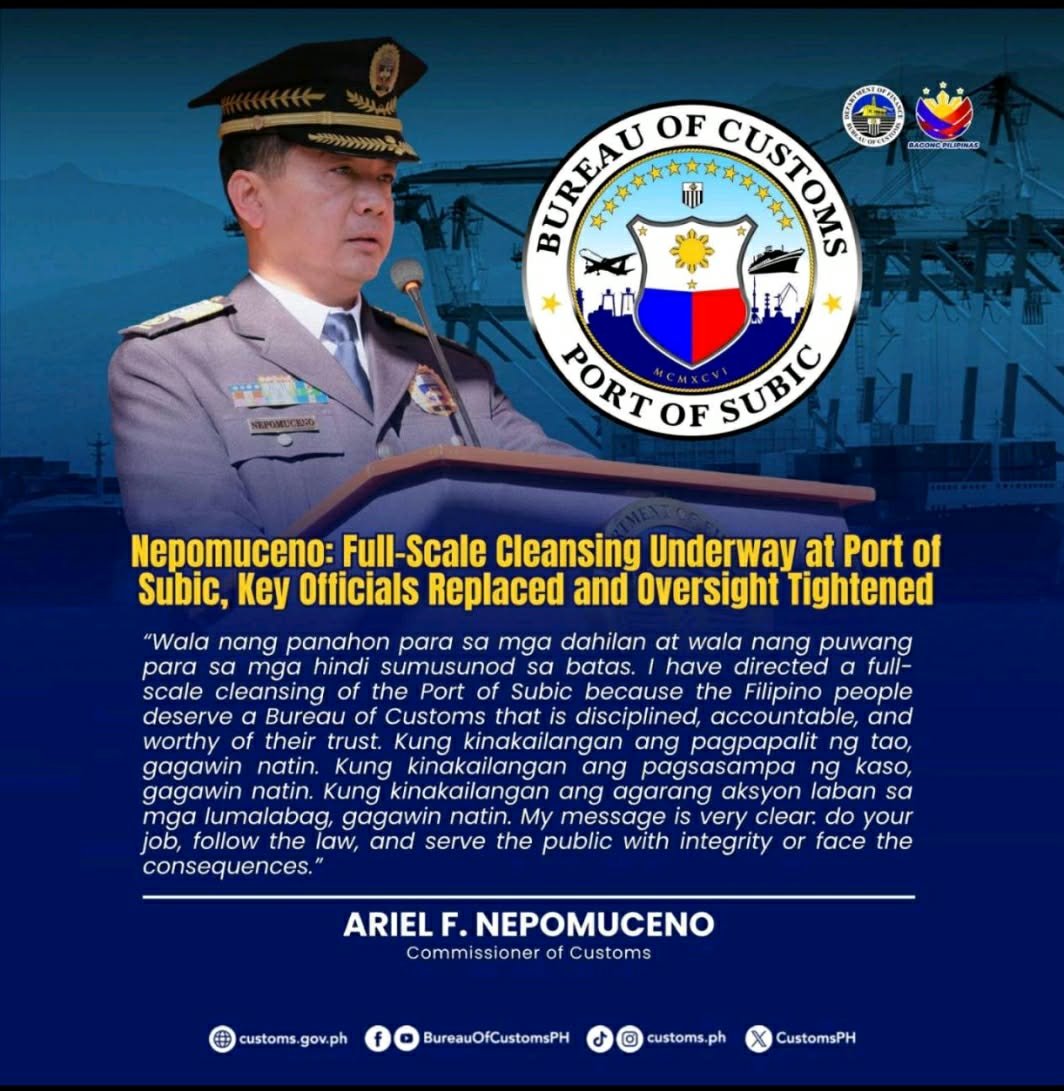
The Bureau of Customs (BOC) is on the move again — and leading the charge are Commissioner Ariel F. Nepomuceno and Deputy Commissioner Atty. Agaton Teodoro O. Uvero, two reform-minded officials who are quietly but decisively reshaping the agency’s image from red tape to reliability.
This week, the BOC unveiled the Authorized Economic Operator (AEO) Operational Guidelines, a major game-changer aimed at cutting delays, rewarding compliant traders, and modernizing the way Customs handles trade. The move, done in partnership with the Department of Trade and Industry (DTI) and the ARISE Plus Philippines Project, marks another victory in the Bureau’s push for efficiency and transparency.
“This is more than a manual — it’s a roadmap toward a cleaner, faster, and more trusted Customs,” insiders say, echoing the leadership vision of Commissioner Nepomuceno, who has made digitalization and global competitiveness the hallmarks of his administration.
The AEO Guidelines lay out clear, standardized rules that will allow trusted importers and exporters to enjoy faster processing, fewer inspections, and lower costs — benefits earned through compliance and integrity. In other words, honest traders win, smugglers lose.
Speaking on behalf of the Commissioner, Deputy Commissioner Atty. Agaton Uvero delivered a message that captured the spirit of the reform.
“This turnover is not just the end of a project — it’s the start of a new chapter for the Bureau,” Uvero declared. “The AEO Guidelines are a symbol of what meaningful partnership can achieve when driven by trust, shared vision, and real commitment to reform.”
And that’s exactly what Nepomuceno and Uvero have been pushing for since day one — a Customs that works for both the government and the people, not one bogged down by bureaucracy and corruption.
The AEO Program, backed by the EU-funded ARISE Plus Philippines Project, gives compliant businesses “trusted partner” status — ensuring quicker customs clearance and smoother cross-border trade. It’s the kind of reform that cuts costs, builds investor confidence, and strengthens the country’s competitiveness — all under the watch of Nepomuceno’s reform agenda.
The guidelines, now publicly available at customs.gov.ph, also mark the culmination of four years of collaboration between Customs, DTI, and international partners. But as Uvero stressed, “the real work begins now” — in making sure every port, every district, and every stakeholder walks the talk of reform.
Commissioner Nepomuceno has long said that Customs reform isn’t just about cleaning up — it’s about building a culture of trust. With his steady leadership and Uvero’s operational drive, the BOC seems poised to finally shed its old skin and become what it was always meant to be: a professional, transparent, and dependable guardian of trade.
Nepomuceno’s message is clear: partnership, not politics, drives progress.
And under his watch, the Bureau of Customs is finally proving that change — real, lasting change — is possible.