 Jimmy Saberon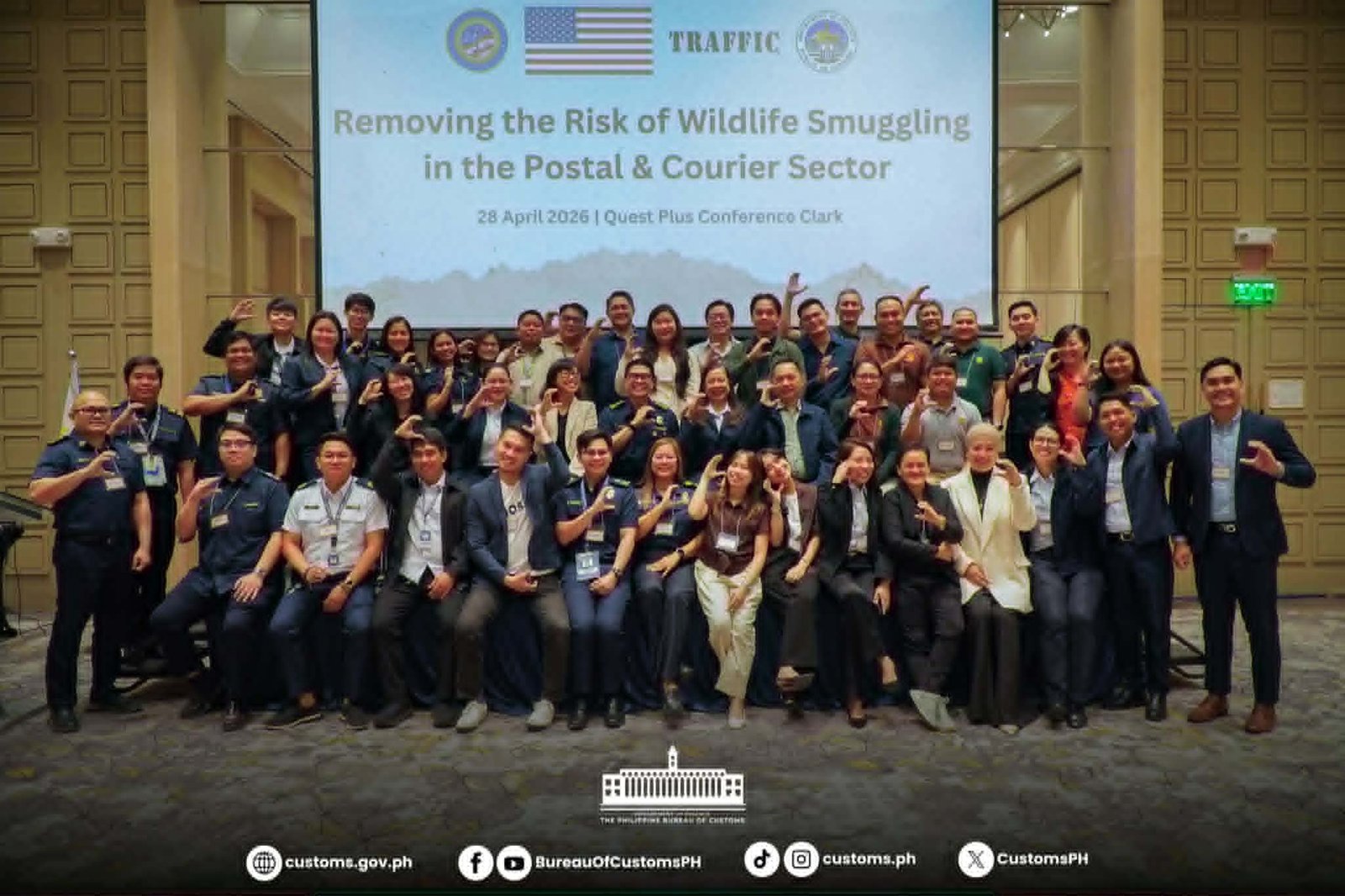
CLARK FREEPORT — The Bureau of Customs (BOC) – Port of Clark has intensified its campaign against wildlife trafficking, reinforcing enforcement capabilities amid growing concerns over the misuse of air express and courier systems for illegal trade.
In partnership with TRAFFIC International Southeast Asia, the Port of Clark convened Customs Examiners from both Clark and the Ninoy Aquino International Airport (NAIA), along with representatives from private courier and cargo companies, for a focused engagement on emerging wildlife trafficking trends and enforcement strategies.
The activity highlighted how traffickers exploit fast-moving logistics channels by concealing endangered species in small parcels, misdeclaring shipments, and taking advantage of gaps in inspection processes. Officials emphasized that such methods pose serious risks to biodiversity and border security.
Participants were oriented on the legal framework governing wildlife protection and anti-smuggling efforts, particularly Republic Act No. 9147 (Wildlife Resources Conservation and Protection Act), Republic Act No. 10863 (Customs Modernization and Tariff Act), and international obligations under the Convention on International Trade in Endangered Species of Wild Fauna and Flora (CITES).
The engagement also provided practical guidance on identifying red flags associated with wildlife trafficking, including irregular shipment patterns, unusual packaging, and discrepancies in cargo declarations.
Through scenario-based exercises and workshops, participants assessed operational vulnerabilities and proposed measures to strengthen inspection protocols, intelligence sharing, and inter-agency coordination.
District Collector Jairus S. Reyes underscored the importance of adapting to evolving smuggling tactics, noting that enhanced frontline capabilities are crucial in addressing high-risk channels such as air express cargo.
Meanwhile, Customs Commissioner Ariel Nepomuceno reaffirmed the Bureau’s commitment to a more proactive and intelligence-driven enforcement approach, emphasizing the need for sustained vigilance and institutional strengthening.
The initiative reflects the Port of Clark’s continuing efforts to build capacity and foster collaboration in combating transnational environmental crimes, particularly wildlife trafficking.