 Dr. Bernie Anabo Jr
There’s a new sheriff at the Bureau of Customs — and his message to smugglers, fixers, and all who’ve grown fat off the system is loud and clear: your time is up.
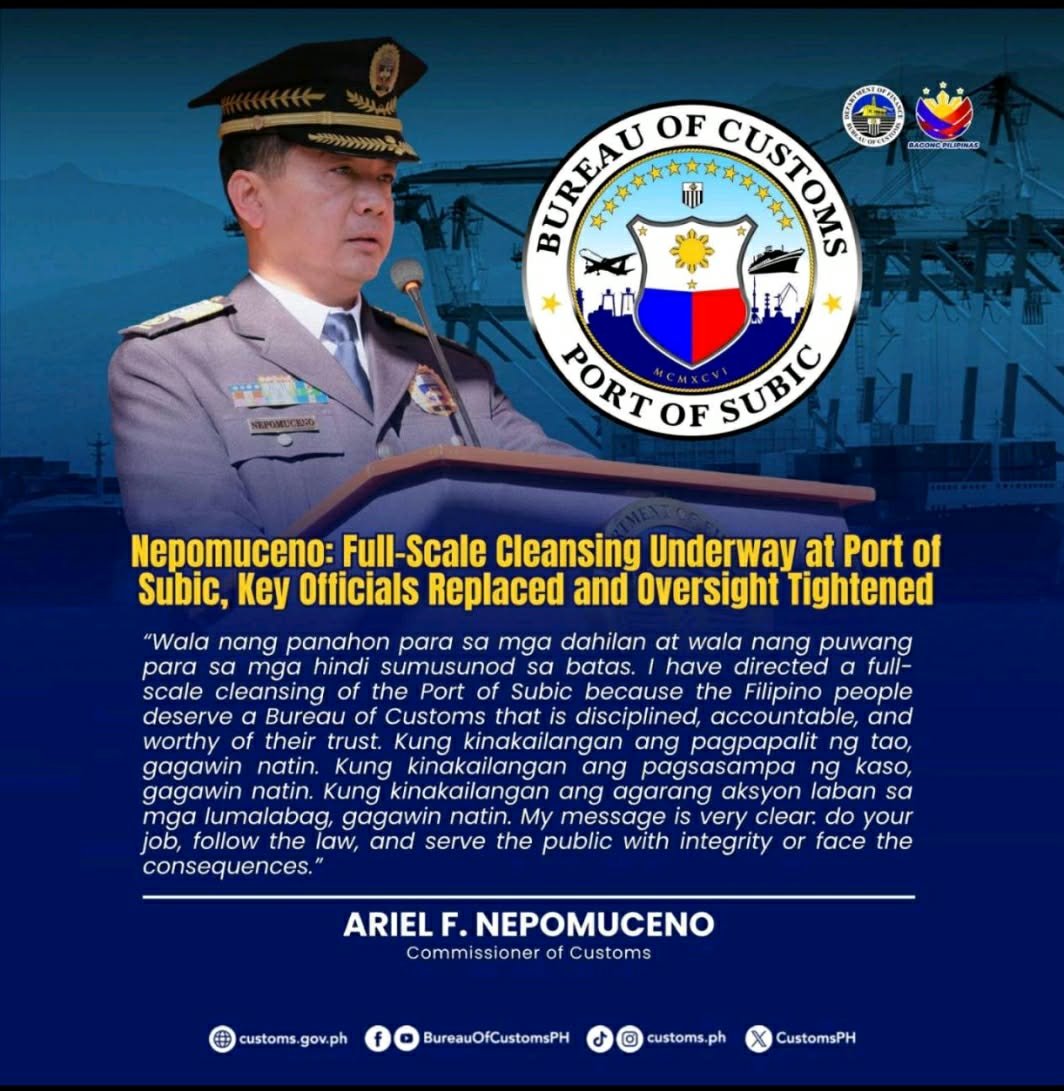
During a high-level meeting with the EU-ASEAN Business Council and the European Chamber of Commerce, BOC Commissioner Ariel F. Nepomuceno didn’t mince words.
“We understand the need for faster, clearer, and more consistent processes,” he said. “That’s what we are working to deliver.”
Strong words — and backed by action. Since taking the helm in July 2025, Nepomuceno has been on a mission: to clean up Customs, crush smuggling, and drag the agency into the 21st century through full digitalization.
For decades, the Bureau of Customs has been branded as one of the “most corrupt” government agencies — a favorite punching bag of critics and a symbol of bureaucratic decay. But this time, insiders and industry players are starting to see something different: discipline, direction, and delivery.
At the meeting, presided over by DOF Undersecretary Charlito Martin R. Mendoza, discussions revolved around trade facilitation and preparations for the country’s ASEAN chairmanship in 2026. Mendoza struck a hopeful tone, urging cooperation between the public and private sectors.
“We look to you to support our human and technical capacity-building efforts by sharing global best practices,” Mendoza said.
But it was Nepomuceno’s words that carried weight — and conviction.
He laid out his two-pronged reform agenda: tighten the fight against smuggling and digitize everything that can be digitized. His point? The more automated the system, the fewer the chances for corruption.
The Customs Processing System (CPS) — now in development — promises to simplify import and export transactions, cut down on red tape, and close the cracks that smugglers have long exploited. It’s the backbone of BOC’s modernization push, supported by new systems such as pre-border technical verification and electronic invoicing.
And if you think digitalization is just about collecting more taxes, Nepomuceno sets the record straight:
“The main goals of full digitalization are not only to ensure proper revenue collection — that’s the immediate impact — but also to close the gaps that allow smuggling to persist.”
In plain talk, that means this: plug the leaks, choke the smugglers, and protect the honest traders.
Nepomuceno adds, “Once we control smuggling, the benefits ripple out — collections rise, efficiency improves, and, most important, investor confidence returns.”
He’s right. For too long, smugglers have undercut legitimate businesses, stealing jobs, profits, and billions in government revenue. Every illegal shipment that slips through is money taken away from schools, hospitals, and infrastructure.
That’s why Nepomuceno’s brand of leadership — quiet, methodical, no-nonsense — is winning cautious praise even from old industry hands. They say it’s been years since they’ve heard a Customs chief talk about digitalization and macroeconomic impact in the same breath — and actually mean it.
The Bureau also encouraged firms to join the Authorized Economic Operator (AEO) Program, which rewards honest players with smoother transactions and fewer inspections — a clear incentive for those who play fair.
As the meeting ended, both the DOF and BOC reaffirmed their partnership in driving customs modernization and restoring investor trust.
Nepomuceno’s message stood above the rest:
This isn’t just a tech upgrade — it’s a moral overhaul.
For a bureau long mired in controversy, that’s the kind of talk that makes crooks nervous — and taxpayers hopeful.