 Dr. Bernie Anabo Jr
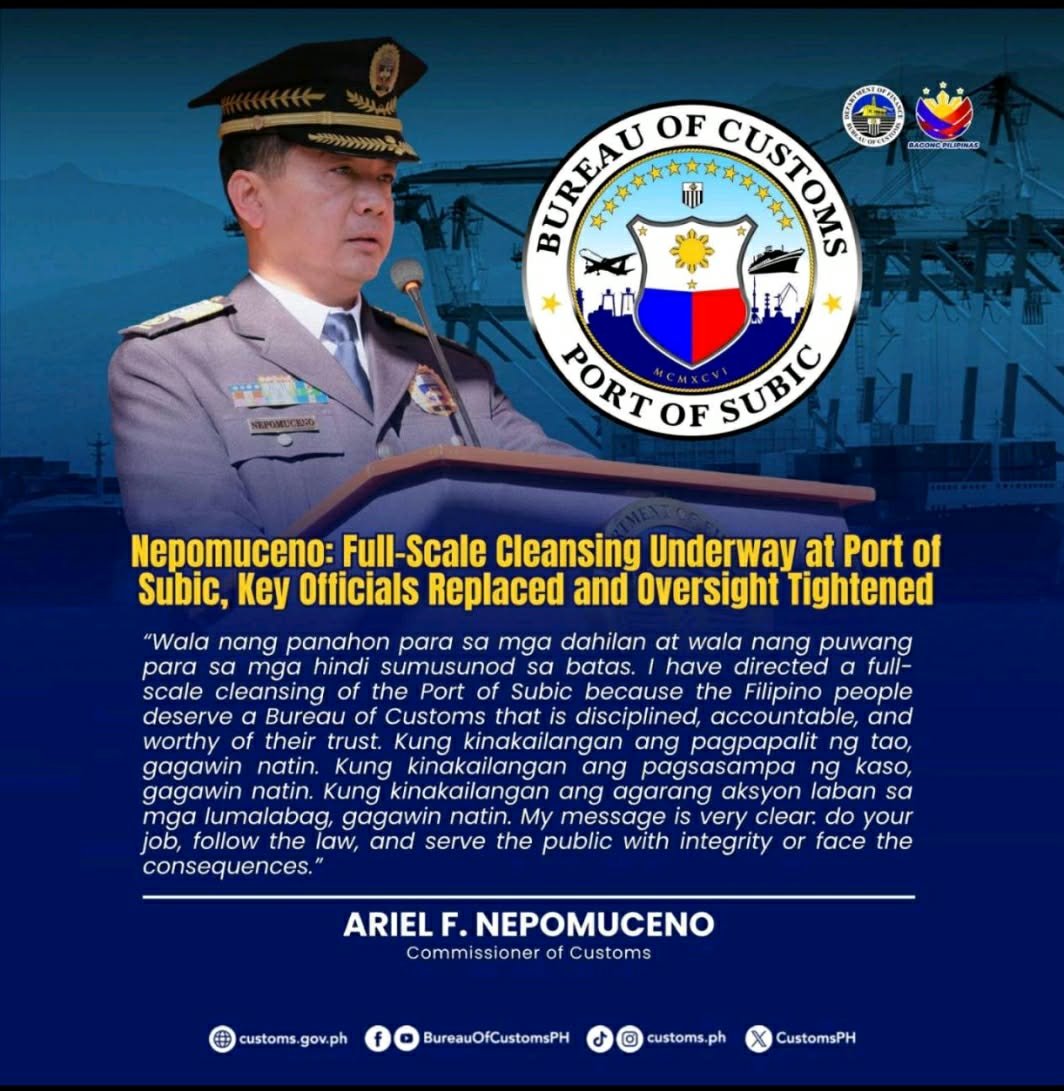
If there’s one official in government who refuses to turn a blind eye to the country’s long-running vehicle smuggling racket, it’s Customs Commissioner Ariel F. Nepomuceno.
On Monday, the Bureau of Customs (BOC) and the Land Transportation Office (LTO) sealed a landmark partnership aimed at plugging one of the biggest leakages in government revenue — the importation and registration of smuggled or underdeclared luxury vehicles.

Under the Memorandum of Agreement (MOA) signed on October 21, 2025, the two agencies committed to tighten coordination, sharing data, and run after errant importers and fixers who have long manipulated the system to sneak in high-end cars without paying the right taxes.
“This cooperation with the LTO reinforces our shared goal of ensuring transparency, efficiency, and strict compliance with customs laws,” Nepomuceno declared. “By working together, we want to make sure that every vehicle import and registration process is handled with the highest standards of integrity.”
Strong words — and even stronger action.
As part of the MOA, the BOC and LTO will exchange key documents such as Certificates of Payment and Registration to ensure full traceability of imported vehicles. A joint task force will also be formed to pursue enforcement operations against unlawfully imported cars, especially those misdeclared or misclassified to evade duties under the Customs Modernization and Tariff Act.
The agreement isn’t just paperwork. It’s a clear signal that under Nepomuceno’s watch, Customs is shedding its old image and going full throttle in support of President Ferdinand R. Marcos Jr.’s call for a united front against smuggling.
In a symbolic act that drove home the message, LTO Assistant Secretary Markus V. Lacanilao turned over a Lamborghini Urus — a smuggled unit recently intercepted by LTO personnel in Bonifacio Global City — to the BOC for proper legal and customs proceedings.
That handover wasn’t just ceremonial. It was a statement: the days of impunity for luxury car smugglers are numbered.
Within 30 days, a Joint Technical Working Group (TWG) will roll out the implementation guidelines, making the partnership fully operational.
For Nepomuceno, this is just another step in his ongoing campaign to modernize Customs, strengthen institutional integrity, and restore public confidence in one of the country’s most critical — and often criticized — revenue agencies.
In an era when corruption has long been treated as business as usual, Nepomuceno’s brand of no-nonsense leadership is a breath of fresh air. His push for inter-agency cooperation, digitalization, and accountability is turning the BOC into what it was always meant to be — a guardian of the nation’s borders, not a gatekeeper for smugglers.
If this is the kind of decisive leadership we can expect moving forward, smugglers might want to start looking for a new hobby.